
 By Titik Puspa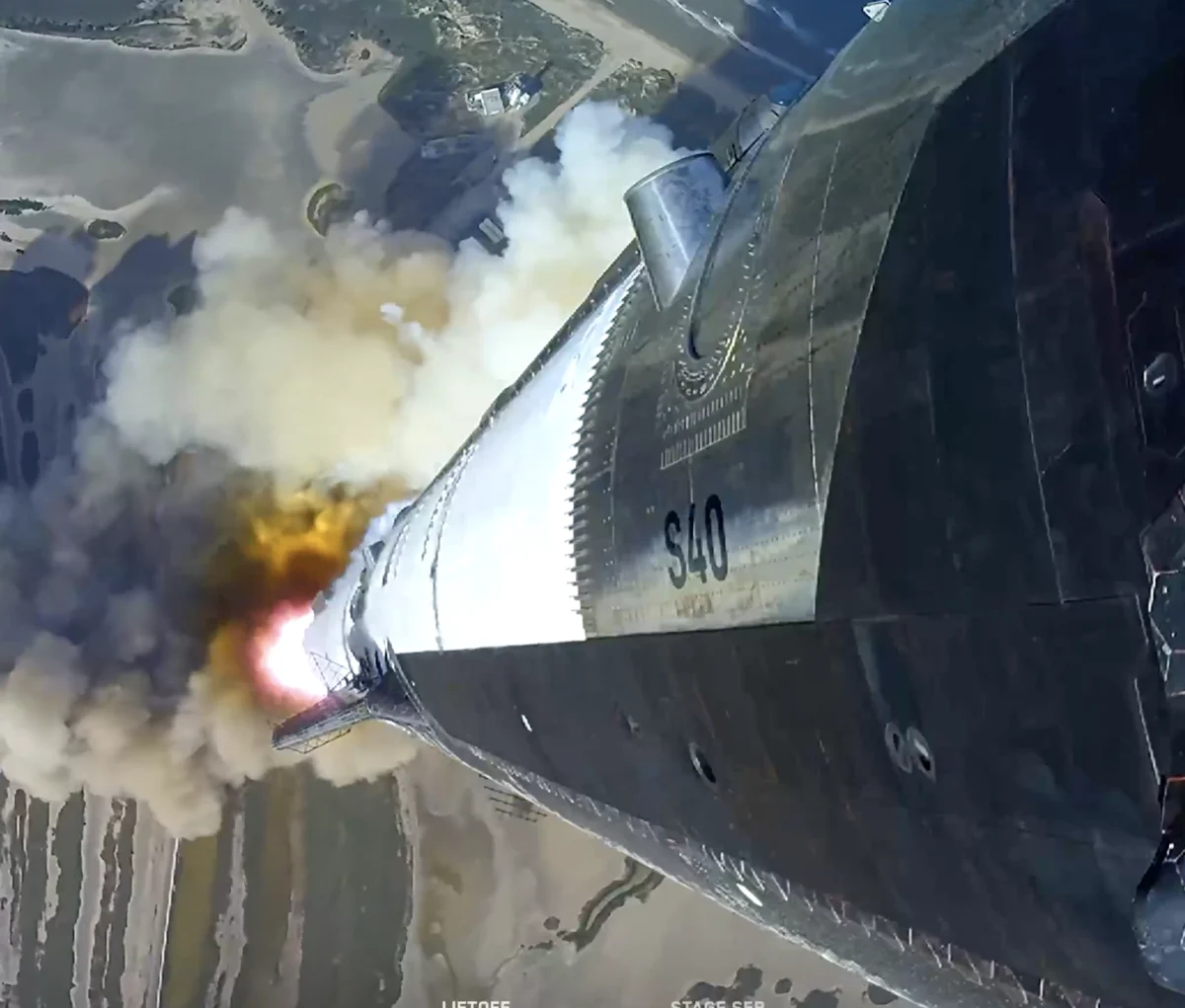
In a pivotal moment for its ambitious Starlink constellation and a crucial step in the development of its next-generation Starship mega-rocket, SpaceX successfully launched and deployed the first third-generation Starlink satellites on Friday. This landmark achievement was realized using an upgraded iteration of the company’s Starship prototype, marking the 13th test flight of the revolutionary vehicle. However, the triumph was tempered by a significant setback, as the Super Heavy booster, the first stage of the Starship system, experienced a catastrophic failure during its planned simulated landing maneuver in the Gulf of Mexico. This incident marks the second time this specific V3 iteration of the Starship’s Super Heavy booster has encountered critical issues, following a similar failure during the first V3 flight in May, which involved the booster separating from the upper stage.
The successful deployment of the Starlink satellites, while a major win for SpaceX’s broadband internet service, occurred against a backdrop of persistent challenges in perfecting the Starship program. This latest launch attempt was particularly scrutinized due to a near-disaster just over a week prior. A planned 13th Starship launch had to be aborted at the very last second, immediately after ignition, due to a cascade of rocket engine failures. This aborted flight led to a swift and decisive response from SpaceX, with the company reporting that six engines were meticulously replaced in the days leading up to Friday’s flight in an effort to rectify the underlying issues. The successful ignition and ascent on Friday demonstrated that these engine problems had been addressed, at least for the initial stages of the flight.
The critical phase of the mission, the Super Heavy booster’s simulated landing burn, proved to be its undoing. While the booster managed to progress further into its planned flight trajectory than in some previous attempts, it ultimately failed to properly ignite all the necessary engines for the crucial deceleration maneuver. The consequences were severe, culminating in an explosion shortly before impact with the water. The landing burn is a complex sequence of engine firings designed to slow the massive booster down for a controlled splashdown, allowing for potential recovery and reuse. The failure to execute this burn effectively suggests ongoing challenges in the precise control and reliability of the Super Heavy’s propulsion system during these high-stakes maneuvers.
This launch was also the first under the spotlight of SpaceX’s public company status. The company made its highly anticipated debut on the stock market in June, achieving the largest initial public offering (IPO) in history. The volatile nature of Starship development, often characterized by SpaceX’s "fly, fail, fix" mantra, was starkly illustrated in the market’s reaction to the launch abort just the week prior. Following that aborted flight, SpaceX’s stock experienced a notable decline in the trading day immediately after the incident. This dip contributed to a broader downward trend observed since the IPO, with the company’s share price falling from a peak exceeding $200 per share to $115 at the close of trading on Friday. The subsequent booster failure on Friday evening further impacted investor sentiment, with SpaceX shares experiencing an additional 2% drop in after-hours trading, although some of those losses were later recovered. This financial scrutiny underscores the immense pressure on SpaceX to demonstrate consistent progress and reliability in its Starship program, especially as a publicly traded entity.
In contrast to the booster’s fate, the Starship V3 upper stage demonstrated considerable resilience and success during Friday’s mission. During the first V3 launch in May, the upper stage had lost a rocket engine, a significant concern for mission integrity. However, on this occasion, the Starship upper stage performed flawlessly on its journey to deploy the new generation of Starlink satellites. This indicates that the improvements made to the upper stage, or the successful resolution of issues that plagued its earlier flight, have yielded positive results. The successful deployment of the satellites themselves is a testament to the upper stage’s performance.
The newly deployed Starlink satellites are designed to eventually burn up in the Earth’s atmosphere approximately 20 minutes after their release. This is a consequence of Starship’s current capabilities; it is not yet capable of achieving a stable Earth orbit for its payload. The focus of these test flights remains on mastering the ascent, stage separation, and controlled descent of the Starship system. The deployment of satellites, while a valuable payload delivery, is secondary to the primary objective of proving the rocket’s full operational potential for future deep-space missions. The eventual goal is for Starship to not only reach orbit but to do so with regularity and for its components to be reusable, drastically reducing the cost of space access.
This developing story highlights the intricate and often high-stakes nature of SpaceX’s ambitious endeavors. The company’s iterative approach to development, while fostering rapid innovation, inherently involves risk and occasional setbacks. The successful deployment of Starlink satellites represents a tangible step forward in bolstering SpaceX’s global internet service, a significant revenue stream that helps fund its more audacious projects like Mars colonization. Conversely, the repeated failures of the Super Heavy booster during landing attempts underscore the immense engineering challenges that remain in achieving routine and reliable reusability for the first stage of Starship. The lessons learned from each launch, whether successful or catastrophic, are invaluable data points that SpaceX’s engineers meticulously analyze to refine the design and operational procedures of their groundbreaking rocket system. The company’s ability to quickly diagnose issues, implement solutions, and return to flight is a core tenet of its operational philosophy and a key factor in its historical success. The market’s reaction, while sensitive to immediate failures, also acknowledges the long-term vision and disruptive potential that SpaceX represents. The path to realizing Starship’s full capabilities, including orbital deployment and eventual lunar and Martian missions, is undoubtedly a marathon, not a sprint, and Friday’s flight, with its mixture of success and failure, is another chapter in that ongoing saga.
