
 By Titik Puspa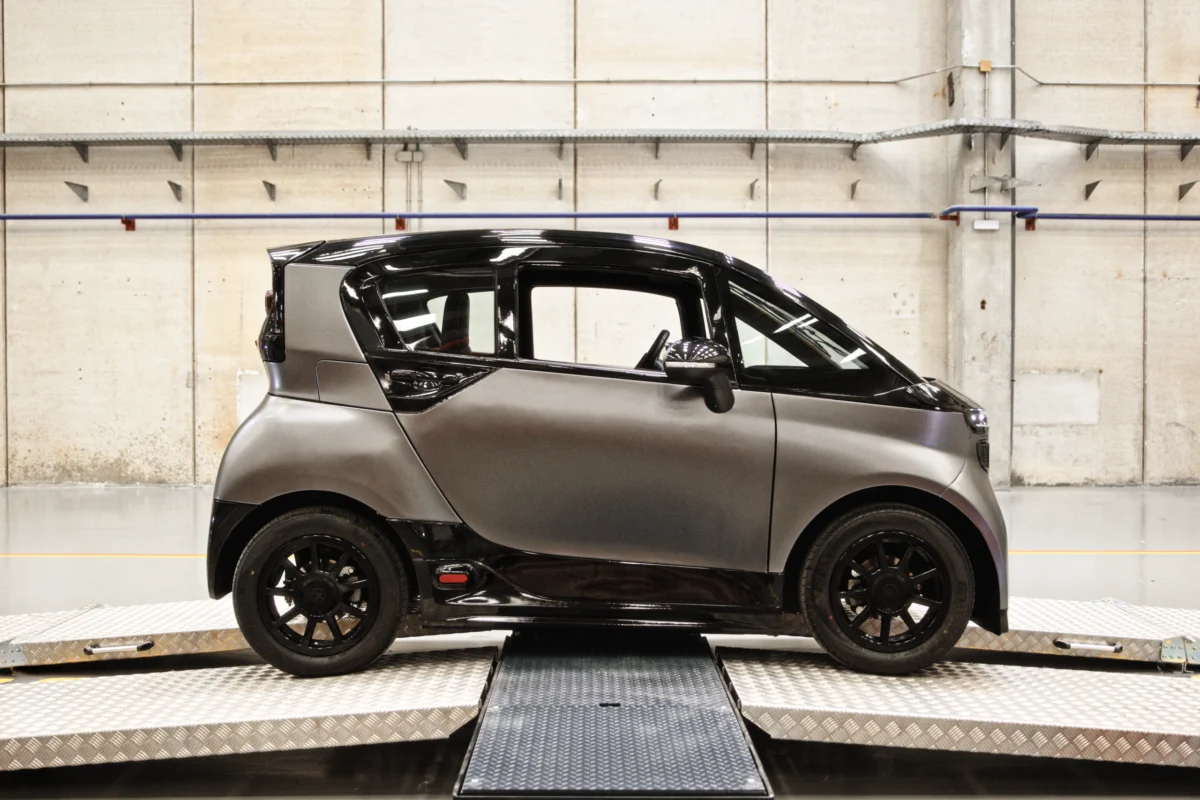
The automotive landscape in European cities is undergoing a significant transformation, marked by a decisive shift towards smaller vehicles. Gone are the days when the charming Italian "yoghurt pots" – the iconic microcars that once dominated urban streets – held sway. Today, their dominance has largely been ceded to nimble electric vehicles originating from China. Even Smart, a brand synonymous with ultracompact urban mobility, has relocated its manufacturing operations to China, signaling a broader trend in the industry. Amidst this evolving market, a Spanish startup named Liux is emerging with a bold proposition: to compete with a tiny electric car engineered with sustainability as its paramount principle.
Liux is not venturing into uncharted territory alone. Following in the tire tracks of the Swiss-based Microlino, another entrant in the burgeoning microcar segment, Liux is meticulously carving out its niche with an upcoming microcar dubbed the Liux Big. The seemingly paradoxical "Big" moniker is, in fact, a deliberate jest. While the vehicle is indeed compact enough to be parked perpendicular to the curb, a feat that underscores its urban agility, the name also serves as a testament to the ambitious aspirations of a team that consistently eschews conventional paths.
Antonio Espinosa de los Monteros, co-founder of Liux, articulated a surprisingly candid perspective on the notion of a "European car" in an interview with TechCrunch. "The idea of ‘a European car does not exist’," he stated. This declaration, emanating from the CEO of a startup whose vehicles are already garnering attention for their Spanish origins, offers a profound insight into the company’s core values and strategic priorities. While Liux has indeed established Spain’s first new car plant in over three decades, Espinosa and his co-founder David Sancho acknowledge the practical realities of global manufacturing. Their conclusion is that a completely sovereign supply chain is an unattainable ideal. Instead, Liux is navigating this complex landscape by placing sustainability at the forefront of its operations.
The Liux Big’s commitment to sustainability is evident in various aspects of its design and manufacturing. While its batteries are not produced within Europe, they are designed for convenient home recharging, even utilizing power generated from solar panels. The vehicle is engineered for ease of maintenance, aiming to counteract the accelerated obsolescence cycles that plague many modern automobiles. Perhaps its most revolutionary feature is its fiber body, constructed from a novel linen-based biocomposite. This innovative material is specifically designed to facilitate the extraction and recycling of its components, embodying a truly circular approach to automotive manufacturing.

"One thing that’s very clear for David and me is that recycling isn’t just a lab concept," Espinosa emphasized. "You can recycle almost anything in a lab. What makes something recyclable has to do with how it’s built. When you build something, you have to try to preserve the integrity of the material and the components so that a second life is possible." This philosophy of "real circularity" is deeply ingrained in Espinosa’s entrepreneurial DNA. He previously co-founded Auara, a Spanish B Corp renowned for its commitment to sustainability, which sold natural mineral water in bottles that were both recycled and recyclable. Following the acquisition of this successful venture by a larger entity, Espinosa embarked on a new chapter, this time with Sancho as his co-driver in the automotive realm.
David Sancho, a seasoned engineer with a passion for low-emission vehicles, brings a wealth of expertise in electric vehicle engineering to Liux. His previous notable achievement was the Bóreas, a hybrid supercar that made its debut at the 24 Hours of Le Mans in 2017. However, after a disagreement with his former partners, Sancho joined forces with Espinosa to establish Liux.
The genesis of Liux’s sustainable automotive vision can be traced back to their first prototype, the Animal. This fully electric five-seater SUV was a testament to their combined expertise, featuring a construction composed almost entirely of recycled or plant-based materials. Despite the initial success and recognition of the Animal in 2022, the co-founders made a strategic pivot. They determined that their chances of successfully navigating the complex homologation process would be significantly enhanced with a smaller vehicle. This realization led to the conceptualization and development of the Liux Big.
Fast forward to 2026, and Liux has achieved a significant milestone: Europe-wide homologation for the Liux Big. The company is poised to commence sales in the first half of the upcoming year. In the interim, Liux has experienced substantial growth, expanding its workforce to 65 employees and preparing to scale up production across three facilities strategically located throughout Spain.
One of these key facilities is the plant in Azuqueca de Henares, situated approximately an hour’s drive from the bustling center of Madrid. This facility, visited by TechCrunch, operates on lean management principles inspired by Toyota, focusing on the final stages of the assembly process. Beatriz Belda González, the head of production and a Spanish-born engineer with prior experience at BMW in Munich, explained that the factory’s compact size is a deliberate choice, enabling a more efficient and streamlined operation. Despite its modest footprint, Liux projects a potential production capacity of up to 20,000 vehicles annually by 2030, a testament to their scalable manufacturing strategy.

While it remains premature to definitively gauge market demand, Liux has already amassed a waiting list of over 7,500 individuals for the Liux Big. Although joining the list requires no financial commitment, it has provided the startup with valuable insights into its potential customer base. The most prevalent demographic profile identified is individuals aged 55 to 60 residing in urban areas. Liux is therefore anticipating that the Liux Big will often serve as a secondary vehicle within households, complementing existing transportation arrangements.
This observation might temper expectations of microcars fundamentally challenging traditional car ownership models. However, Espinosa maintains that Liux must strategically choose its battles. Rather than attempting to predict market shifts or their velocity, the startup is actively cultivating partnerships with companies managing B2B fleets and other entities that could facilitate the integration of autonomous driving capabilities into their vehicles.
For Espinosa, the Liux Big represents a tangible step towards offering a more sustainable and accessible mobility solution. While the final price has not been officially confirmed, Liux anticipates it will retail below €18,000 (approximately $21,000) before any applicable EV subsidies. This positions the Liux Big at the higher end of the microcar price spectrum, but the company is confident that its value proposition will exceed its size.
Celso Fernández Llorens, Liux’s head of R&D, highlights the inherent constraints of weight and size limitations within the microcar category. He notes that while European authorities differentiate between ultralight L6e four-wheelers and slightly heavier L7e vehicles, most microcars offer similar performance characteristics. Liux, however, has strategically leveraged its L7e homologation to maximize the vehicle’s capabilities and appeal.
Through a series of thoughtful design and engineering decisions, Liux has managed to incorporate a surprisingly capacious 260-liter trunk into the Liux Big. A significant portion of their development efforts has been dedicated to ensuring that occupants experience the sensation of driving a car, rather than a less substantial vehicle. Sancho emphasizes that this is intrinsically linked to safety; the goal is to avoid a vehicle that is merely lightweight due to an inadequate frame or prone to instability.

Despite the fact that vehicles in its category are not typically subjected to rigorous crash testing, Liux has proactively tested and showcased the Liux Big’s agility, braking capabilities, and other performance metrics. During a brief test drive of an upcoming off-road variant, Liux demonstrated these attributes to TechCrunch, further underscoring the vehicle’s robust engineering.
The initial launch will feature two primary versions of the Liux Big, equipped with either 15 kWh or 20 kWh battery packs. A cargo variant is also in development, and given Sancho’s engineering background, the possibility of a performance-oriented supercar variant remains a tantalizing prospect. The company has publicly stated its intention to avoid being a "one-car brand," hinting at future diversification of its product line.
Liux has secured €16 million (approximately $18.5 million, including European funding) to date, which will be instrumental in bringing the urban version of the Liux Big to market. This will be achieved through strategic partnerships with car dealerships across Europe.
Ana Terrado Leyva, Liux’s head of brand, provided a glimpse into the company’s future retail experience. The showroom, where the interview took place, is designed to be an immersive showcase, featuring textile screens, 3D models illustrating the Liux Big’s three available color options (a notable expansion from the Ford T’s single offering), and linoleum flooring as a subtle nod to the car’s linen-based construction. These aesthetic choices, Leyva explained, are a deliberate strategy to differentiate Liux from its Chinese competitors and to reinforce its unique European identity. In this carefully crafted environment, the idea of "a European car" begins to take shape.
