
 By admin
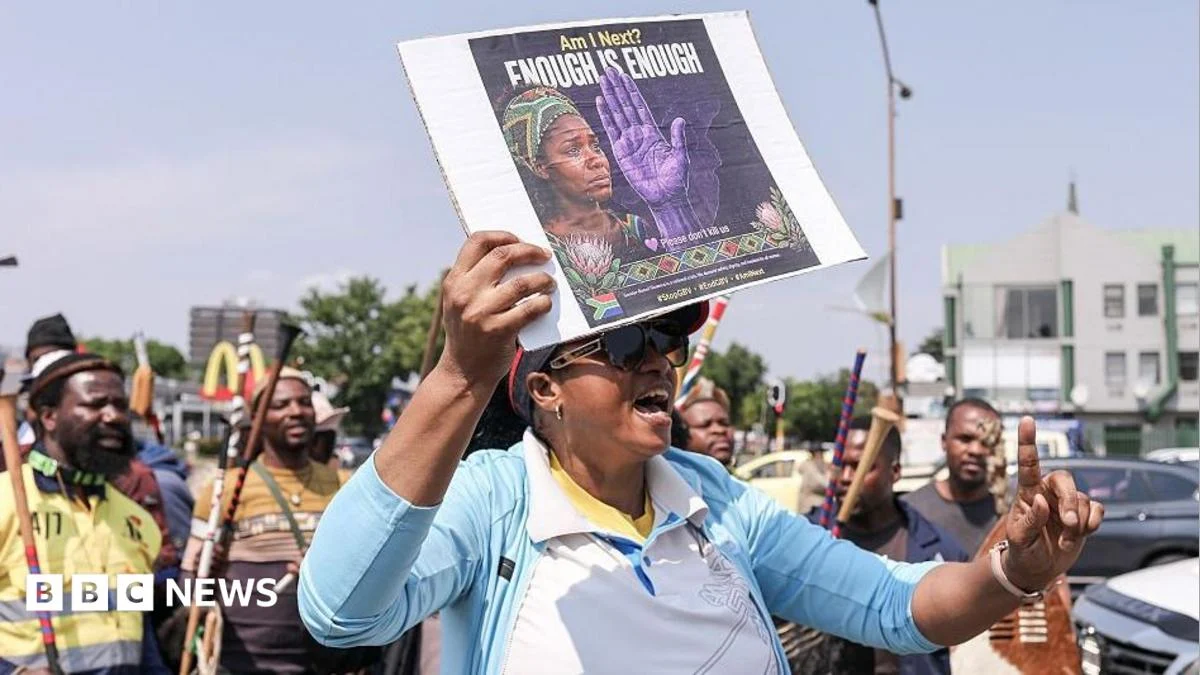
The chilling discovery of Boitumelo Gift Mashita, a 23-year-old woman senselessly gunned down on her way to work in Tembisa, Ekurhuleni, on Monday, has sent shockwaves across South Africa, adding another grim chapter to the nation’s escalating crisis of gender-based violence. Her murder, characterized by the brazen theft of her belongings, is not an isolated incident. It paints a stark picture of the pervasive fear and insecurity many women face daily. The subsequent discovery of her estranged husband dead in his vehicle in Midrand, with police suspecting his involvement, adds a layer of tragic complexity to an already devastating event. While authorities are working to unravel the intricate web of circumstances surrounding Mashita’s death, they have explicitly stated that no immediate link has been found between this case and a disturbing series of other bodies discovered in the region.
This lack of immediate connection, however, does little to alleviate the growing national unease. The discovery of another young woman’s body, believed to be in her early twenties, wrapped in a duvet and found in a dam in Soweto, approximately 63 kilometers (39 miles) away from the Ekurhuleni cluster, further amplifies the sense of pervasive danger. The geographical separation, while significant, does not entirely dismiss the possibility of a broader pattern of violence, especially given the historical tendency for perpetrators to move across regions to evade detection. The ambiguity surrounding the Soweto victim’s case, with no clear link established to the Ekurhuleni incidents, only deepens the mystery and fuels public anxiety. The fact that most bodies were found in the same general area in Ekurhuleni suggests a potential localized pattern, yet the Soweto discovery complicates this narrative, hinting at a more widespread or perhaps opportunistically dispersed series of violent acts.
The gravity of these killings has not gone unnoticed by the highest office in the land. President Cyril Ramaphosa’s poignant declaration that the killing of these women and others constitutes a "stain on our national conscience" underscores the profound moral and societal implications of this violence. His words resonate with the deep-seated frustration and anguish felt by citizens who are witnessing a relentless onslaught against women. This sentiment is amplified by stark statistical realities. South Africa consistently ranks among nations with alarmingly high homicide rates. The period between April and June of the current year alone saw 5,427 people murdered, a staggering figure that reflects a pervasive culture of violence. While official police statistics do not disaggregate victims by gender, the South African Human Rights Commission has provided a chilling breakdown, reporting that 569 women were killed during the same three-month period. This translates to an average of six women losing their lives every single day, a statistic that is both horrifying and unsustainable.
The systemic nature of this crisis demands a robust and multifaceted response. In recognition of the urgency, South African police have established a dedicated task team, specifically mandated to investigate these murders. This proactive measure signifies the seriousness with which the authorities are treating these incidents, acknowledging that a coordinated and specialized approach is necessary to untangle the complex motives and networks that may be at play. Furthermore, a substantial reward of 400,000 rand (approximately $24,000 USD or £18,000 GBP) has been offered for any information that can lead to arrests. This financial incentive is a clear signal that the police are seeking public assistance and are committed to apprehending those responsible. The effectiveness of such rewards can vary, but in cases where public trust may be eroded, it can serve as a crucial catalyst for information flow.
To fully comprehend the context of these murders, it is imperative to delve into the broader societal issues that contribute to South Africa’s high rates of gender-based violence. This is not a phenomenon that emerged overnight; it is deeply rooted in historical inequalities, patriarchal structures, and socio-economic disparities. For decades, South Africa has struggled with the pervasive impact of gender-based violence, which encompasses not only murder but also rape, domestic abuse, and femicide. Activist groups and researchers have long highlighted how systemic issues such as poverty, unemployment, the legacy of apartheid, and a culture of toxic masculinity create an environment where violence against women is normalized and, in some instances, even tolerated. The normalization of such violence can be seen in the casual acceptance of aggressive behavior, the objectification of women in media and everyday interactions, and the often-inadequate response from justice systems.
The socio-economic landscape of South Africa, characterized by vast income inequality and high unemployment rates, particularly among young people, plays a significant role in exacerbating social tensions and contributing to crime. Communities in areas like Tembisa and Soweto often face immense pressure due to limited economic opportunities, which can fuel frustration and lead to increased instances of crime, including violent offenses. When coupled with readily available firearms, the consequences can be devastating. The proliferation of illegal firearms in South Africa is a critical factor contributing to the high murder rate. Addressing this issue requires a concerted effort involving stricter gun control measures and efforts to disrupt illegal arms trafficking networks.
Furthermore, the psychological impact of widespread violence on society cannot be overstated. The constant exposure to news of murders and assaults creates a climate of fear and trauma, particularly for women and vulnerable communities. This pervasive fear can lead to a sense of helplessness and disempowerment, making it even more challenging to combat the root causes of violence. The mental health toll on survivors of violence and on communities living under the constant threat of crime is a significant, often overlooked, aspect of the crisis.
The role of the justice system in addressing gender-based violence is also under scrutiny. While laws and policies may exist on paper, their effective implementation and enforcement are crucial. Concerns have been raised in the past regarding the efficiency of police investigations, the conviction rates for perpetrators, and the perceived leniency of sentencing in some cases. A robust and responsive justice system that ensures accountability and provides justice for victims is paramount in deterring future crimes and rebuilding public trust. The establishment of specialized courts and the training of law enforcement officials to handle gender-based violence cases with sensitivity and expertise are critical steps in this direction.
The South African Human Rights Commission’s statistics, while grim, serve as a vital reminder of the scale of the problem. The fact that an average of six women are killed daily is not just a number; it represents 2,190 mothers, daughters, sisters, and friends lost each year. This is a national tragedy that demands an immediate and sustained response from all sectors of society. The Commission’s proactive role in highlighting these statistics is crucial for raising public awareness and holding government accountable.
The response from civil society organizations and advocacy groups has been instrumental in keeping the issue of gender-based violence at the forefront of public discourse. These organizations often work directly with survivors, providing support services, raising awareness, and lobbying for policy changes. Their efforts complement the work of the police and government by providing a grassroots perspective and advocating for the needs of those most affected by violence. However, these organizations often operate with limited resources and face significant challenges in their work.
Looking ahead, addressing this multifaceted crisis requires a comprehensive strategy that goes beyond law enforcement. It necessitates a societal shift in attitudes and behaviors towards women, challenging patriarchal norms, and promoting gender equality from an early age. Educational programs that foster respect and empathy, coupled with economic empowerment initiatives for women, can contribute to creating a more equitable and safer society. The government, in collaboration with civil society, academic institutions, and the private sector, must work together to develop and implement long-term solutions that address the root causes of gender-based violence. This includes investing in social programs, strengthening educational systems, and promoting a culture of accountability and respect for human rights. The current situation in Tembisa and Soweto, while specific in their tragic details, serves as a stark reminder that the fight against gender-based violence is an ongoing and urgent battle that requires the collective commitment of all South Africans. The nation’s conscience has been pricked, and the call for action is louder than ever.
