
 By admin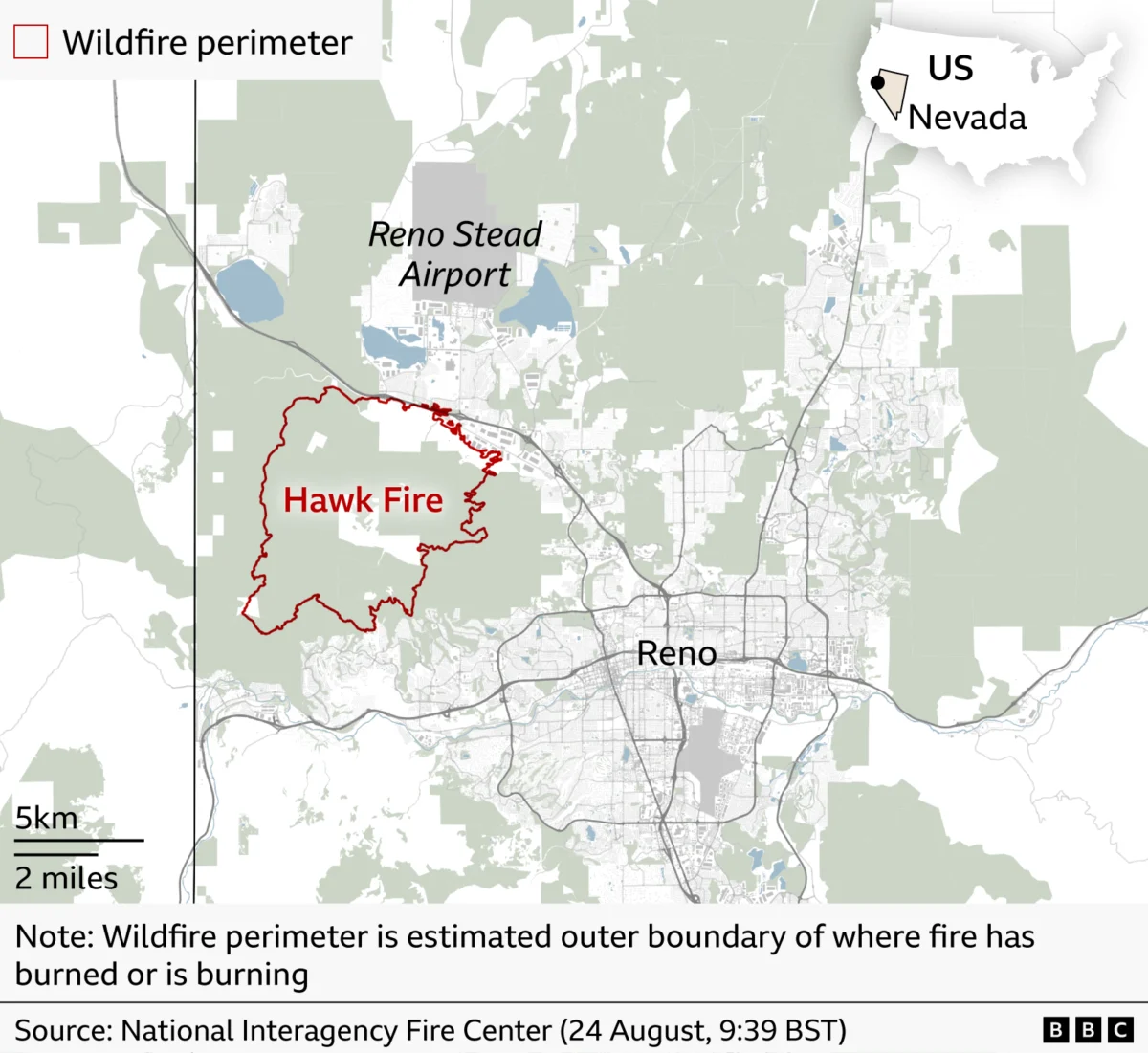
Reno, Nevada – A rapidly spreading wildfire, now dubbed the Hawk Fire, has forced the immediate evacuation of tens of thousands of residents from the outskirts of Reno, Nevada, as it barrels towards the urban landscape. The blaze, which ignited on Saturday morning, has already consumed approximately 15,000 acres (23 square miles) and shows no signs of containment, prompting Governor Joe Lombardo to declare a state of emergency in Washoe County. Around 42,000 people have been ordered to flee their homes, with an additional 45,000 residents on high alert and urged to prepare for imminent evacuation.
The human-caused fire, first reported at 11:15 local time on Saturday, has been fueled by a dangerous combination of high winds and extremely dry conditions, characteristic of the arid southwestern United States. This volatile weather pattern has allowed the fire to spread with alarming speed, transforming a relatively small ignition into a major regional crisis. As of Sunday lunchtime, officials confirmed that no part of the fire’s perimeter had been successfully contained, a stark indicator of the challenges faced by the thousands of personnel battling the inferno.
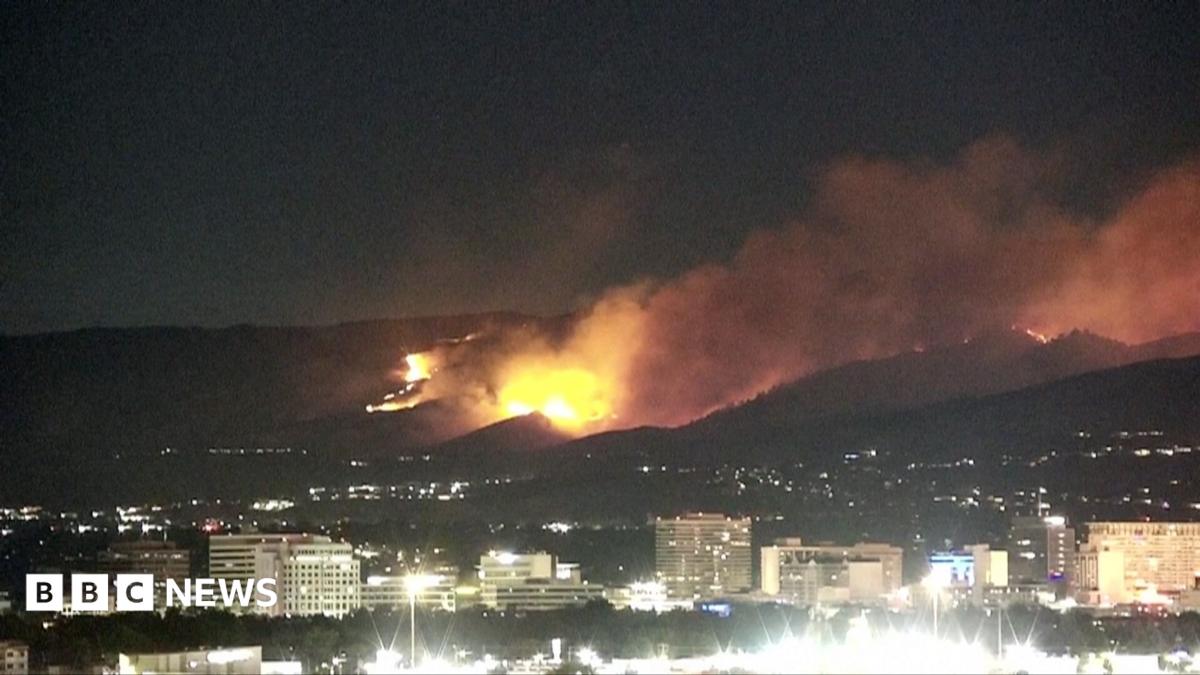
The scale of the threat is underscored by the sheer number of homes directly in the path of the flames. Local emergency services have identified approximately 13,700 homes within the mandatory evacuation zones. To accommodate the influx of displaced residents, two emergency shelters have been established, providing a temporary refuge for those forced to abandon their properties. Tragically, the fire has not been without casualties. Six people have sustained injuries, with three of those being emergency responders who were bravely engaged in the fight against the conflagration.
Lucia Starbuck, a local reporter for KUNR Public Radio, described the fire’s explosive growth to the BBC, stating, "The fire has definitely exploded in size." She painted a grim picture of the scene, noting, "It’s burning these dry desert hills with neighbourhoods at the bottom. We know some homes have been burned, we don’t know the exact number yet." This uncertainty over property loss adds to the anxiety and distress of the affected communities.
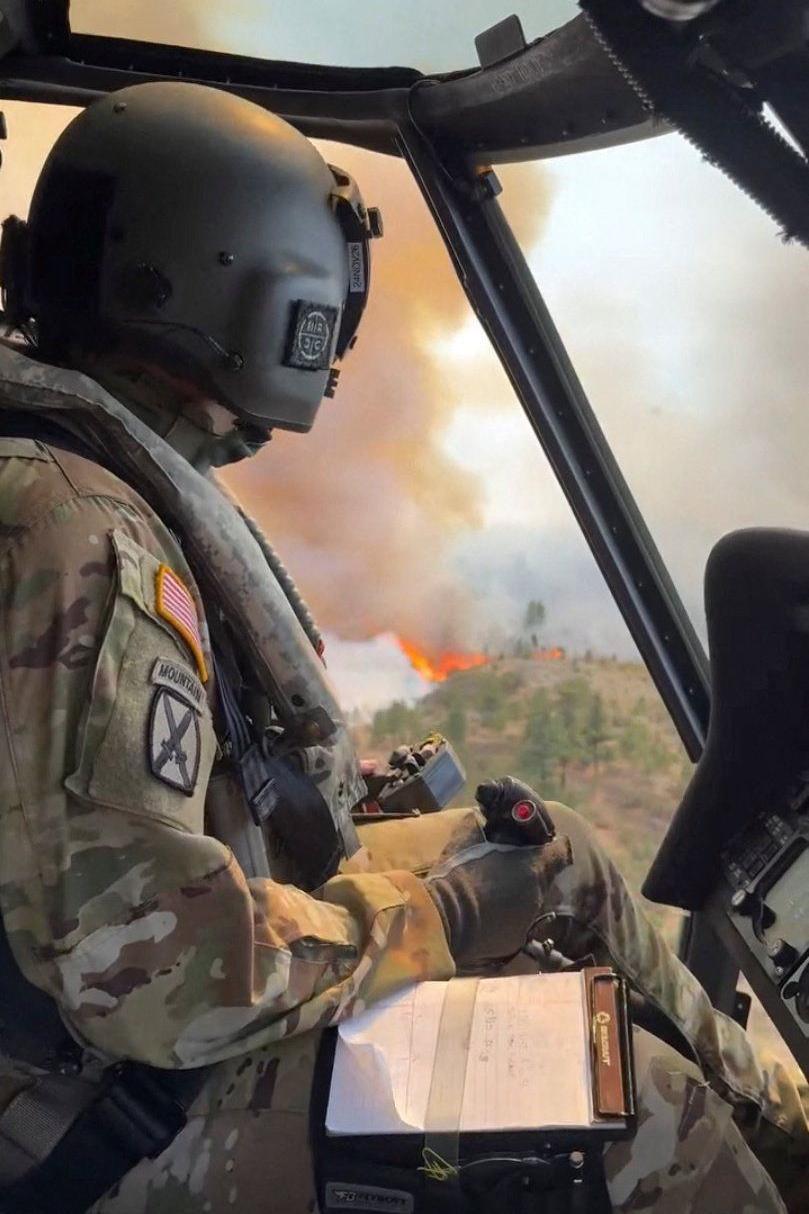
In response to the escalating emergency, Governor Lombardo has mobilized the Nevada National Guard to bolster the efforts of local firefighting and law enforcement agencies. "This is an active and rapidly evolving situation and I urge everyone in the affected areas to remain vigilant and follow the direction of local officials," the Governor stated, emphasizing the critical need for public cooperation and adherence to safety directives. The Nevada National Guard confirmed that 72 personnel, along with a Chinook and a Black Hawk helicopter, have been deployed to assist in the response operations, demonstrating the significant resources being marshaled to combat the blaze.
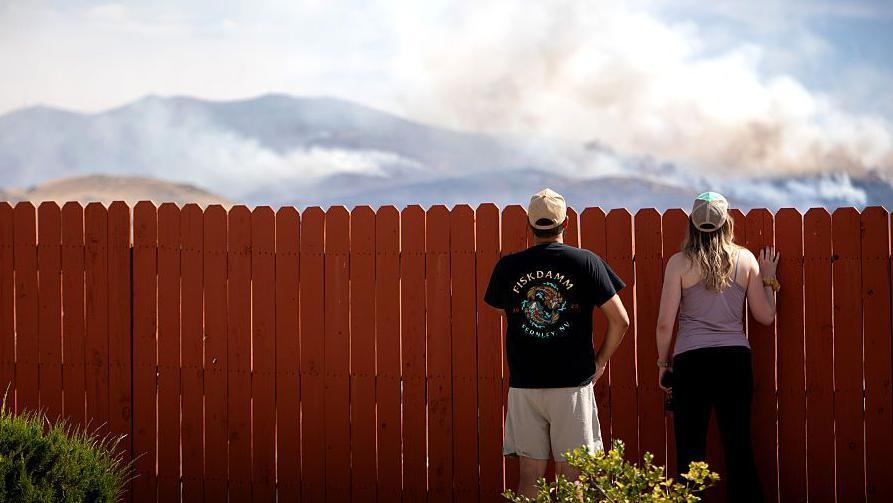
The impact of the Hawk Fire extends beyond immediate evacuations and property threats. All Washoe County schools are scheduled to be closed on Monday, with the exception of a single institution, as the region grapples with the widespread disruption. Significant road closures are also in effect, further complicating travel and access for residents and emergency services alike. While the immediate "go now" evacuation zone and the wider "get set" warning area do not encompass the very center of Reno, they do extend into substantial urbanized areas and impact a vital section of a major highway, highlighting the fire’s proximity to populated centers.
The University of Nevada, Reno, located just outside the "get set" warning area, has announced that regular campus operations will continue. However, the university is closely monitoring the evolving situation, acknowledging the potential for further impact. Aerial firefighting efforts are in full swing, with large air tankers and helicopters continuously flying over the affected regions, dropping water and fire retardants in a desperate attempt to gain the upper hand against the relentless flames.
The designation of the blaze as the "Hawk Fire" stems from its origin near the Hawk Meadow Trail, a location situated to the west of Reno. Reno itself, a city of approximately 280,000 residents, is strategically positioned in western Nevada, bordering California. This geographic location places it within a region historically prone to wildfires.
Wildfires are a recurring and increasingly severe phenomenon in the southwestern United States, including Nevada. According to data from the National Oceanic and Atmospheric Administration (NOAA), the frequency and intensity of these blazes are on the rise. Currently, Nevada is contending with three large fires, contributing to a national total of 79 significant wildfires. While many of these fires typically occur in more remote, less populated areas, the Hawk Fire serves as a stark reminder of the growing risk of urban encroachment by these destructive forces.
Scientists widely attribute the increasing severity of wildfires to human-induced climate change. The warming global temperatures contribute to drier conditions, creating a tinderbox environment where fires can ignite and spread with unprecedented speed and ferocity. Richard Edwards, Fire Chief at Truckee Meadows Fire and Rescue, echoed this concern, describing the conditions faced by firefighters as "extreme fire conditions." The combination of dry fuel, high winds, and higher temperatures creates a dangerous trifecta that makes firefighting operations exceptionally challenging and increases the likelihood of devastating losses.
The long-term implications of such fires are profound. Beyond the immediate destruction of homes and natural habitats, they contribute to air pollution, pose risks to public health, and can have lasting economic impacts on affected communities. The ongoing battle against the Hawk Fire underscores the critical need for comprehensive wildfire prevention strategies, including responsible land management practices, community preparedness initiatives, and sustained efforts to mitigate the effects of climate change. As the situation continues to unfold, the resilience and determination of the firefighters and the cooperation of the public will be paramount in navigating this challenging crisis. The image of smoke-laden skies over Reno serves as a potent visual testament to the destructive power of nature, amplified by the environmental shifts that are increasingly shaping our planet. The focus remains on containment, protecting lives and property, and beginning the long process of recovery once the immediate threat has subsided.
