
 By Titik Puspa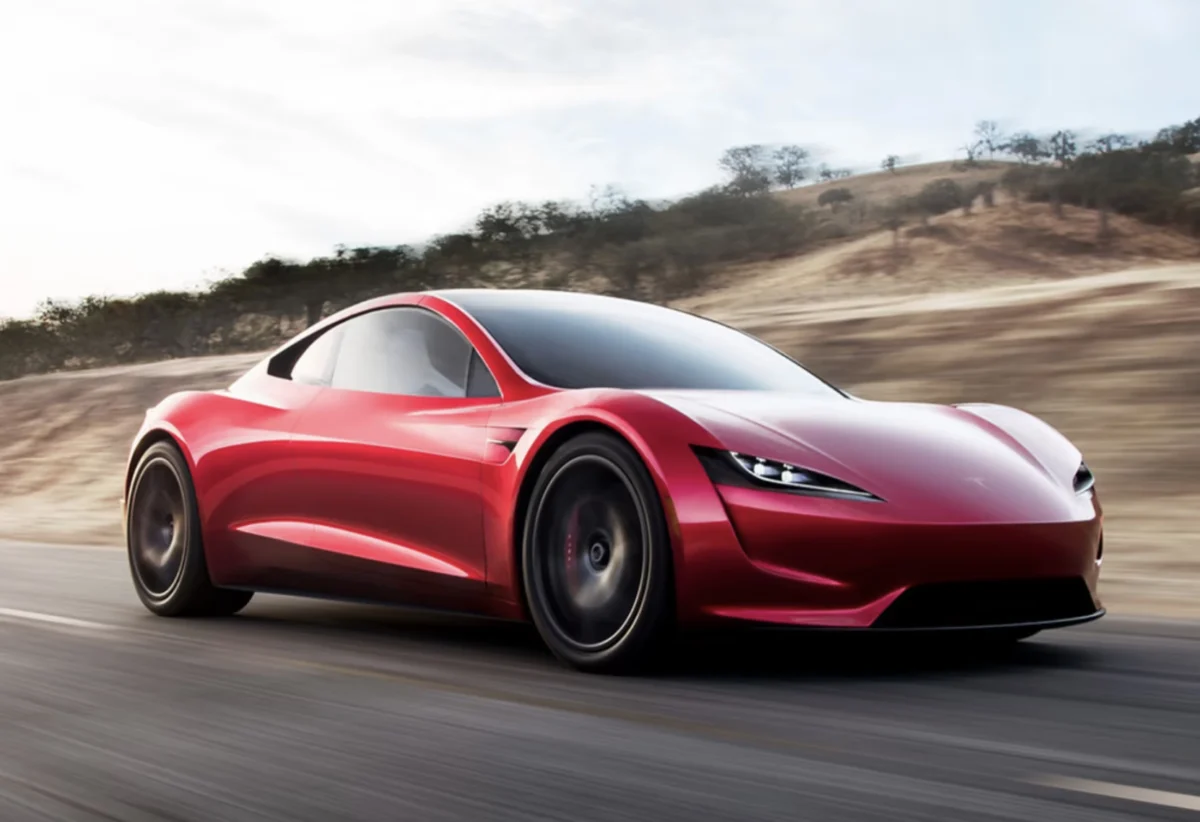
The automotive world is abuzz with anticipation following a cryptic yet potent announcement from Tesla, the electric vehicle pioneer, on September 12, 2026. In a post on the social media platform X, the company simply declared, "Go for launch," accompanied by a graphic prominently displaying "10.01." This deliberate phrasing, coupled with the numerical hint, strongly suggests that the long-awaited second generation of the Tesla Roadster is slated for a grand unveiling on October 1st. The accompanying visual also appears to allude to a groundbreaking feature: optional cold gas thrusters, a technology reportedly developed in collaboration with SpaceX, Elon Musk’s other prominent venture. These advanced thrusters are rumored to imbue the Roadster with unprecedented capabilities, potentially allowing it to "fly in some way," a concept that pushes the boundaries of automotive engineering and performance.
The journey of the second-generation Tesla Roadster has been a protracted saga, marked by significant delays and evolving expectations. First introduced to the public in November 2017, the vehicle has since been subject to multiple postponements, transforming from a highly anticipated product into a symbol of persistent development cycles within Tesla. Its protracted gestation period even became a focal point of public discourse last year, notably featuring in a public exchange between Tesla CEO Elon Musk and OpenAI CEO Sam Altman. Altman, a reservation holder, publicly expressed his frustration, stating that "7.5 years has felt like a long time to wait" after having placed a $50,000 reservation fee. Musk, in response, asserted that Altman had, in fact, received a refund, highlighting the complex and often contentious nature of the Roadster’s development timeline.
Adding another layer of intrigue to the Roadster’s narrative, a recent report from The Information shed light on the significant evolution of the vehicle’s design. According to their findings, the original 2017 iteration of the car has been entirely shelved, making way for a radically new, yet-to-be-revealed design. This strategic pivot suggests that Tesla has not merely been refining the existing concept but has embarked on a complete reimagining of the Roadster, aiming to deliver a product that aligns with their latest technological advancements and ambitious performance targets. The imminent unveiling on October 1st is therefore expected to showcase a vehicle that bears little resemblance to its initial conception, promising a fresh and potentially revolutionary interpretation of the electric supercar.
Elon Musk himself has previously acknowledged the extended timeline for bringing the Roadster to market. He has been candid about the fact that even following its official reveal, the vehicle would likely require an additional 12 to 18 months to transition into full-scale production. This staggered approach, while testing the patience of enthusiasts and reservation holders, is characteristic of Tesla’s methodology, which often involves iterative development and a commitment to delivering products that meet exceptionally high standards of performance and innovation. The extended production lead time also allows for further refinement of manufacturing processes, ensuring that the complex technologies promised for the Roadster can be integrated seamlessly and reliably into the final product.
The prospect of a Tesla Roadster equipped with SpaceX-developed cold gas thrusters opens up a dizzying array of possibilities and speculation. While the exact nature of these capabilities remains undisclosed, the implication of "flying in some way" could range from enhanced aerodynamic control and stability at extreme speeds to more literal, albeit controlled, aerial maneuvers. Such an integration would represent an unprecedented fusion of automotive and aerospace technology, blurring the lines between terrestrial and aerial transportation. This ambitious undertaking underscores Tesla’s relentless pursuit of pushing technological boundaries and redefining what is possible in the realm of personal mobility. The development of such systems would undoubtedly require significant advancements in materials science, propulsion control, and safety protocols, areas where both Tesla and SpaceX have demonstrated considerable expertise.

The original Tesla Roadster, launched in 2008, was a groundbreaking vehicle that proved the viability of high-performance electric cars. It offered exhilarating acceleration and a respectable range for its time, laying the foundation for the electric vehicle revolution that Tesla has spearheaded. The second-generation Roadster is intended to build upon this legacy, not just as an evolution but as a radical leap forward. The initial promises for the 2017 concept included mind-boggling performance figures, such as a 0-60 mph time of 1.9 seconds and a top speed exceeding 250 mph, powered by a tri-motor all-wheel-drive system. While these figures have remained aspirational due to the protracted development, the unveiling is expected to reveal whether the new design can not only meet but exceed these already stratospheric expectations. The inclusion of SpaceX technology could potentially elevate these performance metrics to entirely new, previously unimaginable levels.
The strategic importance of the Roadster for Tesla cannot be overstated. While the Model S, 3, X, and Y have been instrumental in establishing Tesla as a mainstream automotive manufacturer and driving mass adoption of EVs, the Roadster serves as a halo product. It is designed to capture the imagination, showcase the pinnacle of Tesla’s engineering prowess, and attract a demographic that prioritizes performance, exclusivity, and cutting-edge technology. The success of the Roadster, particularly with its innovative features, could further solidify Tesla’s brand image as a leader in innovation and a disruptor in the automotive industry, potentially influencing the direction of high-performance vehicle development across the sector.
Furthermore, the collaboration with SpaceX for the cold gas thrusters is a testament to Elon Musk’s overarching vision of creating synergistic technological ecosystems. By leveraging the expertise and resources of his various companies, Musk aims to accelerate innovation and achieve breakthroughs that might be unattainable through traditional corporate structures. The application of aerospace-grade technology to a road vehicle presents a unique opportunity to explore novel solutions for mobility and performance, potentially paving the way for future advancements in both fields. The development of these thrusters, even if initially optional, signifies a bold step towards integrating advanced propulsion systems into consumer vehicles, a concept that was once the realm of science fiction.
The anticipation surrounding the Roadster’s unveiling is amplified by the current landscape of the automotive industry. While the electric vehicle market has matured significantly since the Roadster’s initial announcement, with numerous manufacturers offering compelling electric alternatives, Tesla continues to hold a significant market share and a reputation for innovation. The launch of a truly revolutionary Roadster could reignite excitement and reaffirm Tesla’s position at the forefront of automotive technology, particularly in the high-performance segment. It also serves as a potent reminder of Tesla’s long-term vision, which extends beyond mass-market vehicles to encompass ambitious projects that redefine the very concept of personal transportation.
The potential implications of the Roadster’s flight capabilities, however speculative, warrant careful consideration. If the cold gas thrusters are indeed designed for aerial augmentation, even in a limited capacity, it would necessitate a comprehensive re-evaluation of vehicle safety regulations, infrastructure requirements, and public acceptance. The integration of such technology into a consumer vehicle would represent a paradigm shift, requiring new frameworks for certification, operation, and air traffic management. While the immediate focus is on performance enhancement, the long-term possibilities for this technology could extend to entirely new forms of personal aerial mobility, a prospect that aligns with Musk’s broader ambitions for the future of transportation.
In conclusion, Tesla’s "Go for launch" announcement marks a pivotal moment in the saga of the next-generation Roadster. The October 1st unveiling promises to be more than just the introduction of a new car; it is poised to be a reveal of a revolutionary vehicle that integrates cutting-edge automotive engineering with advanced aerospace technology. The potential for flight capabilities, courtesy of SpaceX, elevates the Roadster from a mere supercar to a harbinger of future mobility. As the automotive world eagerly awaits this October date, the stage is set for Tesla to once again redefine expectations and push the boundaries of what is technologically achievable. The extended development period, while a source of past frustration, may ultimately have paved the way for a product that is not just evolutionary but truly transformative, solidifying Tesla’s legacy as a relentless innovator in the pursuit of a sustainable and exhilarating automotive future. The Roadster’s journey, from its initial unveiling in 2017 to its impending launch, has been a testament to Tesla’s commitment to audacious goals and its capacity for groundbreaking innovation, promising a spectacle that could reshape the perception of what a car can be.
