
 By Rifan Muazin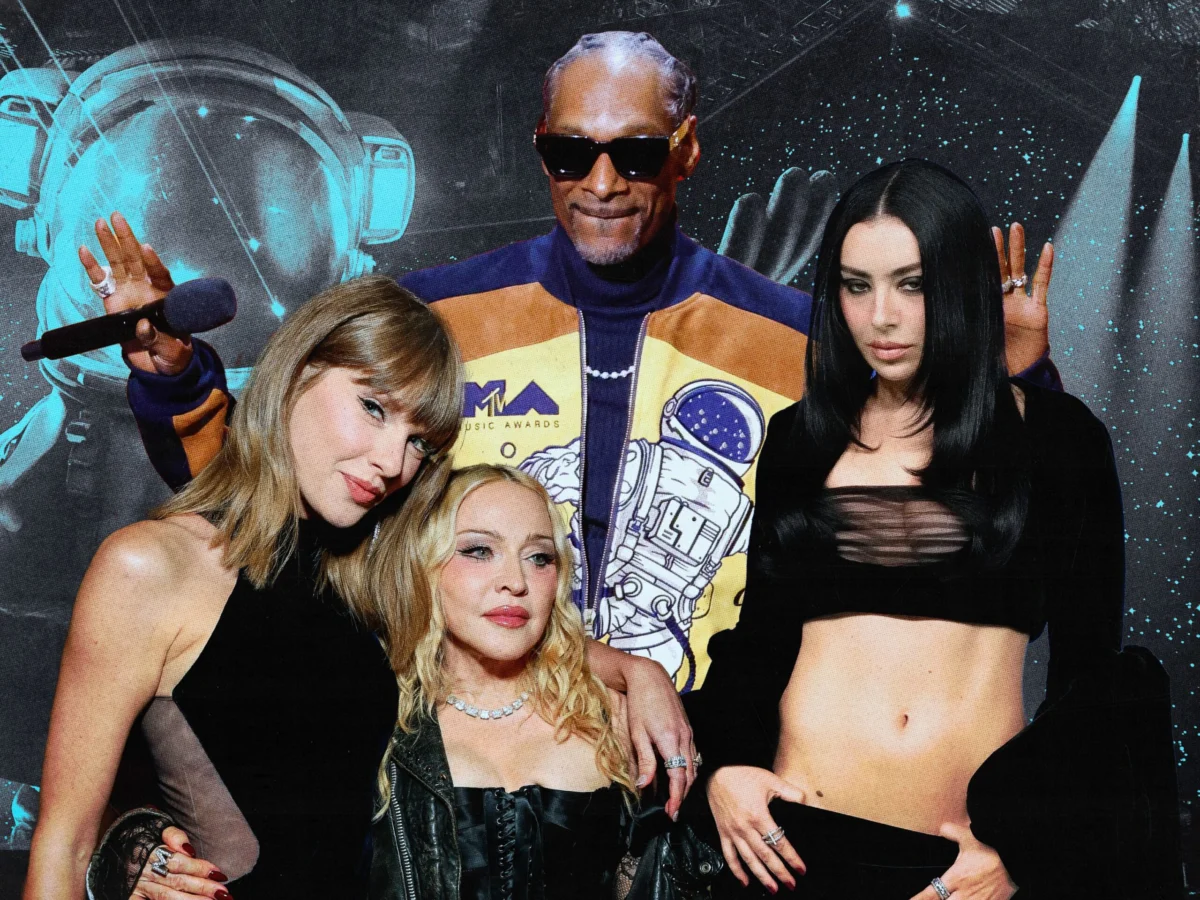
In the second of her three acceptance speeches during last night’s MTV Video Music Awards, Madonna remarked that she opened the very first VMAs some 43 years ago, and in doing so, she inadvertently distilled the fundamental problem with this once-great broadcast. Standing on a stage that has historically served as the epicenter of cultural disruption, the "Queen of Pop" was not merely a guest of honor but the gravitational center of an evening that seemed more concerned with its own rear-view mirror than the road ahead. In theory, a Madonna opener in 2026 is a cute and potent callback to consistency and legacy—the ultimate "mother," as the online lexicon dictates, showing her pop offspring exactly how it is done. Her set was a meticulously curated tableau of her storied career, featuring a revolving door of special guests that bridged the gap between downtown New York grit and modern-day chart dominance. From the inclusion of cultural icons like Debi Mazar and Fab 5 Freddy to the contemporary sparkle of Sabrina Carpenter, Charli XCX, and the rising indie-pop voice of Sombr, the performance offered a little something for everyone. Yet, as the night progressed, the celebratory nature of her presence began to feel like a symptom of a larger identity crisis within the network.
Two-and-a-half hours after her initial appearance, Madonna had not only delivered one of the night’s more technically proficient performances but had also netted three of the evening’s biggest awards. It is not that she isn’t deserving—her influence is the very blueprint upon which modern stardom is built—but rather that Madonna being the focal point of a show hosted by Snoop Dogg in 2026 says a great deal about the current state of the VMAs. A show that purports to have its finger on the pulse of "What’s Hot Right Now" appeared to be clutching a pulse that has remained unchanged for decades. When the biggest winners and the most prominent faces are those who dominated the airwaves in 1984 and 1994, one has to wonder if the "Video Music Awards" are still a reflection of the current zeitgeist or merely a high-budget nostalgia trip for a generation that still remembers when MTV actually played music videos.
Historically, the VMAs served a specific and vital function in the American cultural calendar. They used to signal the official end of summer with the same reliability that Punxsutawney Phil heralds the end of winter, sending millions of teenagers and young adults back to school with a fresh, heavy heaping of pop culture to absorb, unpack, and debate in the hallways. It was an era where the hardware mattered less than the "water cooler" moments. It was less about who won the "Moonperson" and more about who did what on stage—who kissed whom, who staged a protest, and who pushed the boundaries of live television. The ceremony was defined by the most creative, high-octane performances from stars who were making noise on the charts and the streets simultaneously. However, last night’s iteration felt curiously detached from the actual mechanics of modern fame.
The most glaring omission was the absence of the artists who are currently dominating the digital landscape. In 2026, the metrics of success have shifted toward viral longevity and algorithmic ubiquity, yet the VMAs seemed to ignore the very artists who have mastered these new domains. Ella Langley, who currently holds the title for the new longest-running number-one song in history, and Adéla, whose tracks are the most ubiquitous background noise on Instagram Reels right now, were nowhere to be found. Their absence created a vacuum that no amount of legacy acts could fill. If the VMAs are meant to be a snapshot of the year in music, how can they justify ignoring the songs that have literally soundtracked the lives of millions for months on end? Furthermore, on the subject of inescapable social media hits, the lack of a Don Toliver "E85" performance felt like a missed opportunity to capture the energy of the current club and street scene.
This disconnect extended to the genre representation of the evening. Outside of Snoop Dogg’s hosting duties and a brief Gunna feature verse on a new country-rap duet with Shaboozey, there was next to zero hip-hop representation. For a genre that has been the primary engine of global pop culture for over thirty years, its marginalization at the 2026 VMAs was staggering. In previous decades, hip-hop artists moved heaven and earth to make headlines at this show, viewing it as the premier platform to showcase their visual artistry and cultural dominance. Now, it feels as though the industry’s most relevant players can’t even be bothered to attend, perhaps realizing that a viral clip on a Saturday night carries more weight than a choreographed performance on a Tuesday-night broadcast that is increasingly viewed as a relic of the linear television era.
To be fair, it was not an objectively "bad" show in terms of production value. Most of the performances were polished and professionally executed. Yung Lean’s set, in particular, stood out for its atmospheric, cloud-rap aesthetics, proving that there is still room for avant-garde sensibilities on the MTV stage. Kacey Musgraves delivered a poignant and vocally flawless tribute to Dolly Parton, leaning into the "country-fication" of pop music that has defined the mid-2020s. Even the surviving members of Nirvana made an appearance to give a surprisingly grounded and moving speech, reminding the audience of the raw, anti-establishment energy that once defined the network. And, of course, Taylor Swift was there, acting as the ultimate anchor for the broadcast’s ratings, her every reaction shot being mined for social media content in real-time.
Despite these highlights, the overarching feeling of the night was one of inertia. The show felt inessential, a bloated exercise in corporate synergy rather than a vibrant celebration of art. This feeling was compounded by the logistical hurdles of modern broadcasting. I watched the show live, or at least attempted to, but the start was delayed by twenty minutes. The VMAs were bumped by an overtime college football game on CBS, a move that signaled exactly where the "youth-oriented" awards show sits in the priority list of its parent company, Paramount. The fact that the delay barely caused a ripple of outrage on social media suggests that the audience has already moved on, or perhaps they weren’t even aware the show was supposed to start. When a football game—the ultimate bastion of traditional "dad" television—takes precedence over the biggest night in music, it’s a clear sign that the VMAs have lost their status as "appointment viewing."
The internal logic of the VMAs used to be built on the "new." It was a place for the vanguard, the provocateurs, and the next generation of superstars to stake their claim. By centering the 2026 show around Madonna and Snoop Dogg, MTV is essentially admitting that they have failed to cultivate a new class of icons who can carry the weight of a three-hour broadcast. While Madonna’s legacy is ironclad, using her as the primary draw in 2026 feels like a safety net. It’s a way to ensure that the older demographic—those who still pay for cable—remains tuned in, while the actual innovators of the current era are relegated to TikTok and YouTube.
The industry experts will tell you that the fragmentation of media is to blame. In a world of niche interests and individualized algorithms, there is no longer a "monoculture" for the VMAs to reflect. However, that feels like an excuse for a lack of curation and ambition. The talent is out there; the artists like Ella Langley, Adéla, and Don Toliver are reaching millions of people daily. The failure lies in the network’s inability to bridge the gap between digital virality and televised spectacle. Instead of chasing the pulse, the VMAs have become a taxidermy of pop culture—beautifully preserved, expertly mounted, but fundamentally devoid of life.
As the credits rolled and Taylor Swift exited the building, the takeaway from the 2026 VMAs was not a new fashion trend, a controversial statement, or a legendary performance that would be talked about for years. Instead, it was the realization that the show has become a legacy brand in the most literal sense. It is a museum of what used to matter, hosted by the stars of yesterday, for an audience that is increasingly looking elsewhere for the sound of tomorrow. Madonna opened the first VMAs 43 years ago, and she dominated the 2026 VMAs. That is a testament to her incomparable staying power, but it is also a damning indictment of a show that has forgotten how to grow up—or how to find someone new to take the lead.
