
 By admin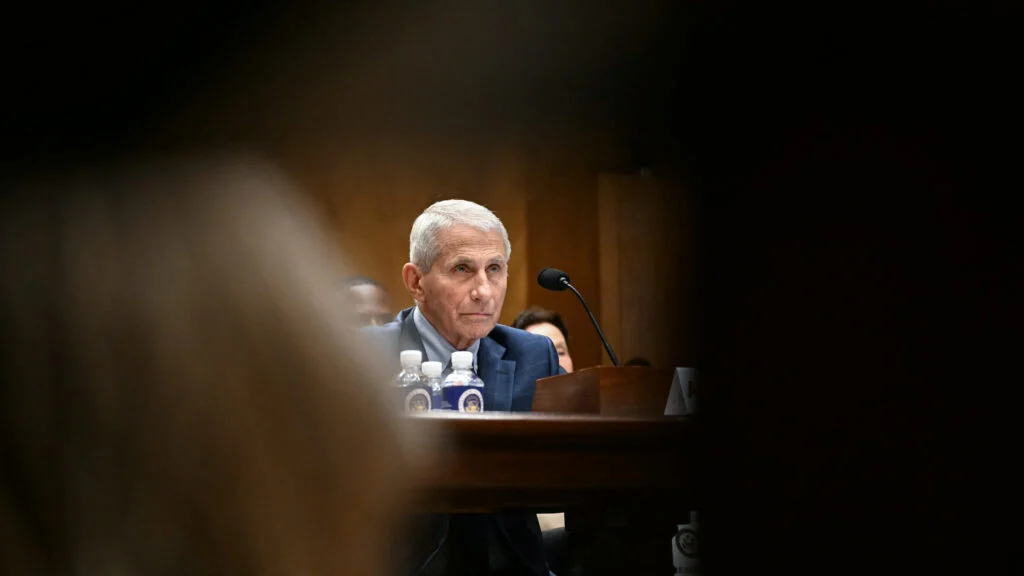
The Senate committee hearings held in early August 2026 regarding the origins of the Covid-19 pandemic have evolved into a master class in political theater, serving more as a distraction from pressing public health imperatives than a genuine search for scientific truth. This climax of political maneuvering reached a fever pitch on Thursday when the committee voted to hold Dr. Anthony Fauci, the former director of the National Institute of Allergy and Infectious Diseases (NIAID), in contempt of Congress. The charge followed Fauci’s decision to invoke his Fifth Amendment protection against self-incrimination, a move necessitated by the increasingly litigious and hostile environment of a committee chaired by individuals who have publicly declared that the nation’s most prominent infectious disease expert belongs in a prison cell.
The spectacle in Washington, D.C., however, does little to address the fundamental geographical and political reality of the pandemic: Covid-19 originated in Wuhan, China. While American lawmakers trade barbs and seek criminal referrals for domestic scientists, the primary obstacle to understanding the pandemic’s genesis remains the opaque and often obstructive actions of the Chinese government. From the earliest days of the outbreak, the Chinese Communist Party (CCP) engaged in a systematic campaign to suppress information, silencing the very whistleblowers who sought to save lives. In the critical first weeks of 2020, as a novel coronavirus began to circulate with lethal efficiency, Beijing prioritized image over transparency, delaying the notification of the international community and denying the World Health Organization (WHO) the data necessary to assess the virus’s transmissibility.
The historical record of the Chinese response is one of obfuscation and intimidation. When the WHO finally attempted to conduct an on-the-ground investigation, its representatives were met with bureaucratic roadblocks and literal confinement. Researchers were reportedly locked in their hotel rooms, prevented from conducting independent interviews or accessing raw laboratory data, while the state-run media apparatus promoted specious theories that the virus had been imported into China via frozen food or foreign military personnel. This pattern of behavior extended to the global stage; countries like Australia, which dared to call for an independent international inquiry into the origins of the virus, were met with swift and severe economic retaliation, including punitive tariffs on key exports.
This obfuscation is particularly egregious when viewed through the lens of recent history. The 2002-2004 outbreak of SARS (Severe Acute Respiratory Syndrome) followed a chillingly similar script. Although that virus was eventually contained after claiming 774 lives across 29 countries, the majority of the fatalities occurred in China and Hong Kong. The first cases emerged in Guangdong province in November 2002, yet the Chinese government withheld reporting these cases to the WHO until February 2003. During those missing months, state media was forbidden from mentioning the epidemic, and the true scale of hospitalizations and deaths was treated as a state secret. By the time the world was alerted, travelers had already carried the virus to international hubs, leading to significant outbreaks and dozens of deaths in Canada and Singapore.
Following the SARS crisis, China received international assistance to modernize its public health infrastructure and pledged a new era of transparency. Yet, eighteen years later, when the Wuhan outbreak began, the institutional instinct for secrecy remained unchanged. Doctors like Li Wenliang, who attempted to warn colleagues about a SARS-like pneumonia, were detained and reprimanded for "spreading rumors." The suppression of these early warnings created an information vacuum that forced global pandemic experts to operate on speculation rather than data.
In the absence of clear records from Wuhan, scientists have leaned on historical precedents of "spillover" events. The original SARS virus was eventually traced back to horseshoe bats in the caves of southern China, with the virus likely jumping to humans via intermediate hosts like palm civets sold in live animal markets. Similarly, MERS (Middle East Respiratory Syndrome), another coronavirus, was found to have jumped from camels to humans. Given this history, the initial assumption in 2020—that Covid-19 was another zoonotic spillover linked to the Huanan Seafood Market—was a scientifically sound hypothesis.
However, the proximity of the Wuhan Institute of Virology (WIV) to the early clusters of the disease cannot be ignored. The WIV was a global center for research on SARS-like coronaviruses, with its scientists frequently traveling to the very bat caves in Southern China where these viruses originate. The possibility of a "lab leak"—whether through an accidental infection of a researcher during field work or a breach in laboratory containment—remains a viable theory that warrants rigorous, unbiased investigation. Yet, such an investigation requires access to laboratory logs, personnel health records, and early viral sequences—information that the Chinese government has guarded with obsessive ferocity.
The current political climate in the United States, however, has transformed this complex scientific mystery into a weapon of partisan warfare. By focusing the blame on Dr. Anthony Fauci, lawmakers are engaging in a logical fallacy of the highest order. Fauci, a public servant who advised seven U.S. presidents and navigated the nation through the HIV/AIDS crisis, Ebola, and Zika, did not have access to the internal records of the Wuhan Institute of Virology. To hold him responsible for the lack of clarity regarding the virus’s origin is equivalent to blaming a detective in Washington for failing to solve a crime in a foreign city where the local police have barred the doors and destroyed the evidence.
The conflation of the virus’s origins with domestic public health policies, such as mask mandates and social distancing, further muddies the waters. These were mitigation strategies based on the best available data at the time to prevent the collapse of the healthcare system. Debating their effectiveness is a legitimate part of the public record, but linking these policies to a conspiratorial cover-up of the virus’s origin is a leap of logic that serves only to erode public trust in scientific institutions.
If the Senate committee were genuinely concerned with preventing the next pandemic, its focus would be on international biosecurity protocols and the systemic risks posed by high-density animal husbandry and the wildlife trade in regions known to be hotspots for emerging pathogens. Instead, the pursuit of "contempt" charges against a retired scientist serves as a convenient scapegoat, allowing politicians to avoid the much more difficult task of navigating the geopolitical tensions required to hold a superpower like China accountable.
The reality that the American public must confront is that the definitive answer to how Covid-19 began may never be found. Unless the Chinese government chooses to provide full, unfettered access to its early records—an unlikely prospect given the years that have passed and the political stakes involved—the "lab leak" versus "natural origin" debate will remain in a state of perpetual uncertainty.
By fixating on Fauci, the committee is ignoring the broader lesson of the last six years: global health security is only as strong as its weakest, most secretive link. The next pandemic is not a matter of "if," but "when," and it is highly probable that it will emerge from the same environmental and systemic conditions that birthed SARS and Covid-19. While the halls of Congress echo with the rhetoric of prosecution and political vengeance, the underlying vulnerabilities of our global health system remain unaddressed. The "Washington Band" continues to play its partisan tune, while the world remains precariously unprepared for the next viral threat that, inevitably, will not respect national borders or political affiliations.
The persecution of career scientists for their inability to provide answers that are being actively hidden by a foreign adversary is more than just a distraction; it is a dangerous abdication of responsibility. True leadership would involve strengthening international monitoring, investing in universal vaccine platforms, and rebuilding the public’s faith in the scientific method. Instead, we are left with a theater of the absurd, where the pursuit of political points takes precedence over the protection of the nation’s health. As long as the investigation remains a tool for domestic retribution rather than a pursuit of international accountability, the real culprits behind the information blackout will continue to operate with impunity, and the lessons of Covid-19 will remain unlearned.
