
 By admin
Late in his illustrious career, however, Pauling’s public persona took a dramatic turn, veering from the verifiable certainties of chemistry into the more controversial realm of nutritional medicine. He became a passionate, almost evangelical, advocate for the therapeutic benefits of very high doses of vitamin C, not just for the common cold—a topic on which he published a bestselling book in 1970—but, more controversially, for cancer. This shift ignited a firestorm within the medical community, many of whom scoffed at his claims. When Pauling himself died of cancer at the age of 93, critics seized upon this as a classic example of the "halo effect"—the cognitive bias where a person’s positive traits in one area (his scientific brilliance) are mistakenly assumed to extend to other, unrelated areas (medical wisdom). For decades, Pauling’s late-career advocacy for vitamin C was widely viewed as a tragic misstep, a cautionary tale of a genius straying too far from his expertise.
Yet, half a century after Pauling first championed vitamin C for cancer, the narrative is becoming far more nuanced and complex. While Pauling was undeniably wrong in significant ways, particularly regarding the efficacy of oral supplements, he was not entirely mistaken. A burgeoning body of modern research is compelling scientists and clinicians to give vitamin C a serious second look in oncology. It turns out that, under very specific conditions and at extremely high concentrations, vitamin C can indeed behave less like a gentle, essential nutrient and more like a potent pharmacological agent, capable of selectively targeting cancer cells.
Pauling’s foray into vitamin C and cancer began in the 1970s, fueled by his conviction that nutritional interventions held untapped potential. He teamed up with Dr. Ewan Cameron, a Scottish surgeon, who had observed some positive outcomes in patients treated with vitamin C. Together, they embarked on a series of studies, administering very large amounts of vitamin C to patients suffering from advanced, incurable cancers. Their protocol involved an initial phase of intravenous (IV) vitamin C drips, followed by sustained high-dose oral vitamin C tablets. In their published reports, Cameron and Pauling claimed remarkable results, suggesting that, compared to similar patients who did not receive vitamin C, the treated group experienced significantly prolonged survival and improved quality of life. For some individuals, they even suggested survival could be several times longer than expected, igniting a flicker of hope for countless patients and their families.
These audacious claims naturally attracted immense attention, prompting the medical establishment to put them to the test. The Mayo Clinic, a globally renowned non-profit medical center in the United States, undertook two large, randomized, placebo-controlled trials in the late 1970s and early 1980s, designed to independently verify Pauling and Cameron’s findings. These trials, considered the gold standard for clinical research, delivered a seemingly unequivocal verdict: there was no discernible benefit. Patients who received high-dose oral vitamin C pills lived no longer and experienced no better outcomes than those who received a placebo.
For the vast majority of oncologists and the broader medical community, the Mayo Clinic results effectively closed the book on vitamin C as a cancer therapy. It was summarily filed away alongside other "alternative" or "unproven" remedies, and Pauling’s fervent advocacy was widely dismissed as a regrettable, misguided crusade that undermined his otherwise impeccable scientific legacy. The scientific consensus was clear: vitamin C did not work.
However, a critical detail, overlooked by both the trials’ critics and many of its initial defenders, lay at the heart of the discrepancy: the method of administration. Pauling and Cameron’s initial promising results involved intravenous vitamin C, followed by oral maintenance. The Mayo Clinic trials, in their effort to replicate the most accessible and practical aspects of the treatment, used oral tablets only. This seemingly minor difference proved to be profoundly significant, rooted in the fundamental pharmacokinetics of vitamin C.
The human gut has a finite capacity to absorb vitamin C. Once a modest daily dose—typically around 200-500 mg—is reached, the body’s active transport mechanisms become saturated. Consuming additional vitamin C tablets beyond this point does not significantly increase its concentration in the blood; instead, the excess is largely excreted. Consequently, even megadoses of oral vitamin C only raise blood plasma levels to a limited degree, peaking at approximately 0.2 millimolar (mM).
By stark contrast, intravenous administration bypasses the gut’s absorption limits entirely. A drip directly into a vein can elevate blood plasma concentrations of vitamin C to tens or even hundreds of times higher than achievable with oral supplements, reaching pharmacological levels of 10-20 mM, and even exceeding 20 mM in some protocols. At these extreme, supraphysiological concentrations, vitamin C ceases to act merely as a vitamin and begins to behave fundamentally differently within the body.
At everyday, physiological levels, vitamin C is celebrated as a powerful antioxidant. It meticulously mops up harmful free radicals, protecting cells from oxidative stress and damage. This is its well-understood role in maintaining overall health. However, at the very high concentrations achievable only through intravenous delivery, especially within the microenvironment of tumors, vitamin C undergoes a remarkable role reversal. It transforms from an antioxidant into a pro-oxidant.
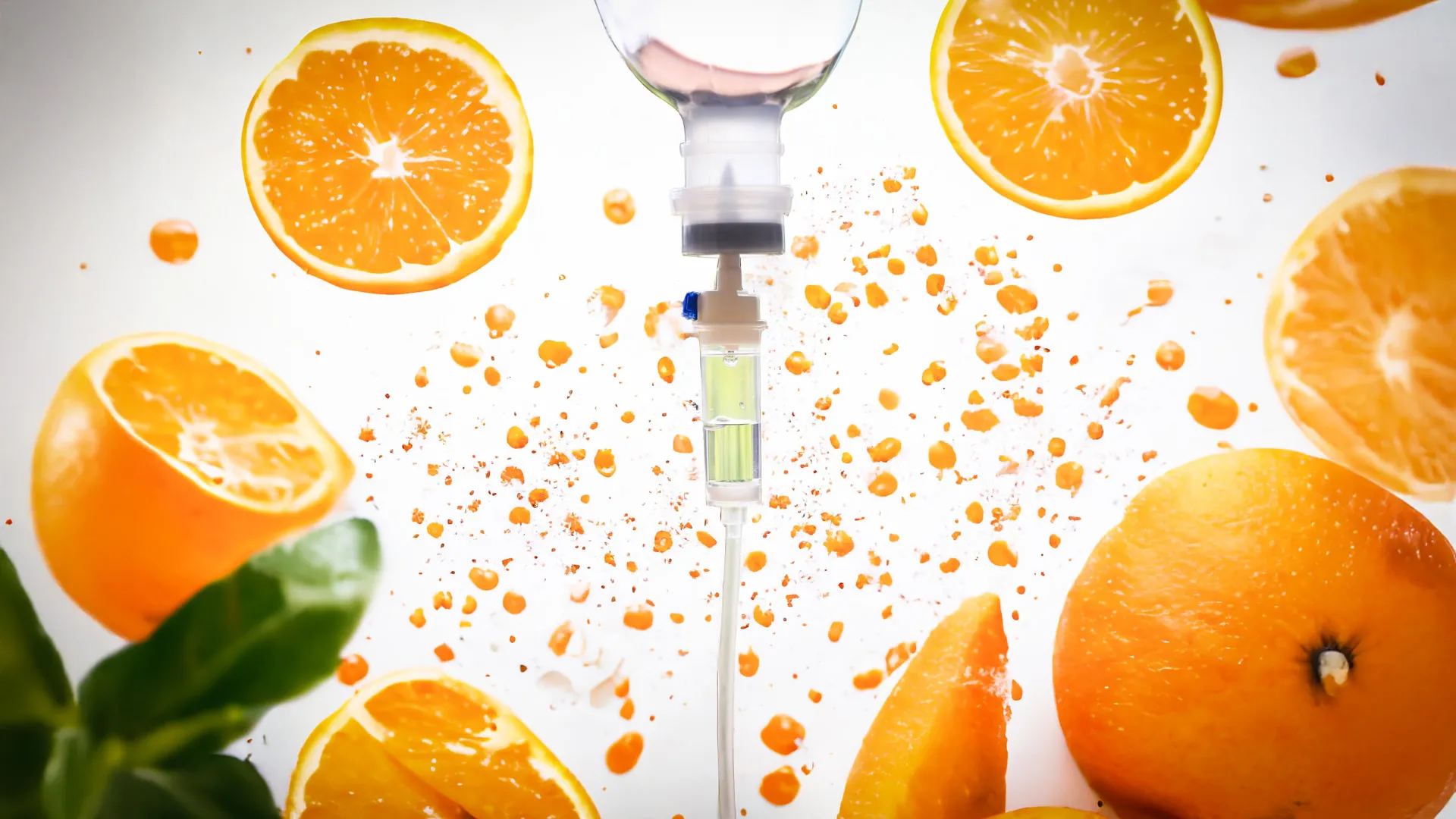
In numerous laboratory studies, high-dose vitamin C has been shown to react with intracellular iron, generating hydrogen peroxide (H2O2), a reactive oxygen species (ROS). While normal cells possess robust enzymatic systems (like catalase and glutathione peroxidase) to neutralize H2O2, cancer cells often do not. Cancer cells are inherently under immense metabolic stress; they proliferate rapidly, often in areas with poor blood supply leading to hypoxia, and frequently exhibit dysregulated metabolism, producing an abundance of their own reactive molecules. Their internal "cleanup" and stress-response systems are often stretched thin, making them particularly vulnerable to additional oxidative insults.
Introducing a sudden, massive pulse of hydrogen peroxide from high-dose vitamin C can push these already stressed cancer cells over the edge. The excess H2O2 damages their DNA, proteins, and crucial energy-producing machinery (mitochondria), ultimately triggering programmed cell death (apoptosis) or other forms of cellular demise. Normal, healthy cells, being under less strain and equipped with more efficient antioxidant defenses, are far more likely to withstand this oxidative assault and survive. In this manner, very high doses of intravenous vitamin C behave less like a daily dietary supplement and more like a weak, yet potentially selective, chemotherapy drug. Crucially, the plasma concentrations required to induce this pro-oxidant, cytotoxic effect cannot be achieved by simply swallowing more tablets.
What does the latest clinical evidence show in humans? The picture remains early and somewhat mixed, but undeniably promising. Small-scale clinical trials have administered high-dose intravenous vitamin C to patients with difficult-to-treat cancers, including ovarian, pancreatic, glioblastoma (brain tumors), and colorectal cancers. These studies have generally demonstrated that many patients can receive large doses multiple times a week with a remarkably favorable safety profile, experiencing few serious side-effects. However, it is crucial to note that this is not a harmless "wellness drip" suitable for widespread, unregulated use. Problems can occur, particularly in individuals with pre-existing conditions such as poor kidney function (which can lead to oxalate nephropathy) or rare inherited disorders like G6PD deficiency (which can cause hemolytic anemia). Therefore, administration must occur in carefully supervised medical settings.
In terms of efficacy, a few studies suggest that adding high-dose vitamin C infusions to conventional chemotherapy regimens may offer some patients a modest prolongation of life or, importantly, help mitigate the debilitating side-effects associated with chemotherapy, such as fatigue and nausea. However, other studies have shown no clear survival benefit. The existing trials are typically small, heterogeneous in design, and involve various cancer types and treatment protocols, making it challenging to draw definitive conclusions or generalize findings across the board. Larger, well-designed randomized controlled trials are still needed to firmly establish its efficacy in extending survival.
One consistent and significant signal emerging from these trials, even in the absence of dramatic survival improvements, is the positive impact on patients’ quality of life. Patients receiving intravenous vitamin C alongside chemotherapy frequently report experiencing less fatigue, reduced pain, and fewer adverse effects like nausea and vomiting. For individuals battling advanced cancer, where the primary goals often shift from cure to comfort and dignity, enhancing quality of life is an invaluable outcome, even if it falls short of the sweeping curative promises Pauling once envisioned.
Beyond its direct cytotoxic effects, laboratory work hints at subtler, yet potentially powerful, roles for high-dose vitamin C. Research indicates that vitamin C is an essential cofactor for a family of enzymes known as dioxygenases, which are involved in epigenetic modifications. These enzymes influence how our DNA is "marked" and read, impacting gene expression, cell division, and cellular responses to low oxygen conditions (hypoxia)—all critical processes in cancer development and progression. In some experimental models, high vitamin C levels have been shown to make cancer cells grow less aggressively and increase their sensitivity to conventional treatments like radiation and chemotherapy. There are even early, albeit speculative, suggestions that vitamin C may help modulate the immune system, potentially enhancing its ability to recognize and attack tumor cells, an area of intense interest in the burgeoning field of immuno-oncology.
So, was Linus Pauling right after all? The fairest and most accurate assessment is that he was partly right, but for reasons he did not fully understand at the time, and he certainly exaggerated the immediate promise. He was demonstrably wrong to promote oral vitamin C tablets as a powerful, near-universal cure for cancer or many other illnesses. Large, meticulously conducted trials have consistently failed to show that swallowing high-dose vitamin C helps people with established cancer live longer. His broad claims about its efficacy for a myriad of conditions lacked the rigorous scientific evidence required for such pronouncements.
However, he was not entirely mistaken in his intuition that vitamin C might possess a special, therapeutic role in cancer treatment. He sensed, long before the scientific community had the tools or understanding to prove it, that very high doses administered intravenously would behave quite differently from ordinary dietary supplements. Modern research has indeed confirmed that intravenous vitamin C reaches significantly higher plasma concentrations in the blood and exerts distinct biological effects, including its pro-oxidant, cancer-cell-selective toxicity.
What we do not yet possess are large, definitive randomized controlled trials conclusively demonstrating that high-dose intravenous vitamin C, either alone or in combination with standard therapies, clearly prolongs the lives of most cancer patients. Until such robust evidence emerges, its use in oncology should be considered experimental—promising enough to warrant continued, rigorous study, but not yet proven enough to replace established standard therapies. Any administration of high-dose intravenous vitamin C should strictly occur within the framework of clinical trials or in carefully supervised medical settings, under the guidance of experienced oncologists, rather than in unregulated clinics selling expensive, unproven "immune boosts" to vulnerable patients.
The broader "vitamins in cancer" story continues to evolve, shedding light on the intricate relationship between nutrition, metabolism, and disease. If the complex journey of vitamin C and cancer teaches us anything, it is that scientific progress rarely moves in straight, predictable lines. A bold idea, followed by flawed early studies, a fierce backlash, and then, years later, a quieter, more careful return to the original question with enhanced understanding and technology. Pauling may never be fully vindicated in the way he hoped, but neither was he simply deluded. In his unbridled enthusiasm, he may have, perhaps imperfectly, glimpsed a sliver of profound truth long before the rest of the scientific world knew how to properly look for it.
