
 By Rifan Muazin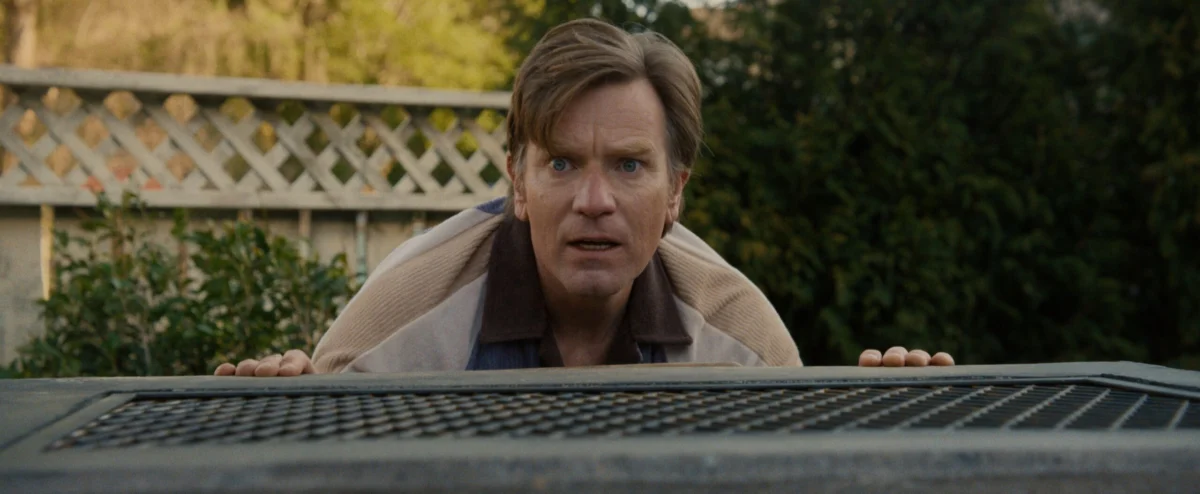
When the credits roll on David Robert Mitchell’s genre-defying spectacle The End of Oak Street, the audience is left grappling with a whirlwind of emotions that range from visceral terror to profound, tear-streaked sentimentality. It is a film that defies easy categorization, blending the high-octane thrills of a prehistoric creature feature with the meticulous, grain-heavy nostalgia of 1980s Amblin-style cinema. Much has been made of the modern blockbuster’s tendency to lean into the "theme-park ride" aesthetic—a comparison famously leveled by Martin Scorsese—but Mitchell embraces this concept with a refreshing lack of cynicism. The End of Oak Street is, in every sense, a rollercoaster, yet it is one built upon a foundation of genuine human pathos and a surprisingly complex narrative structure regarding time, loss, and the preservation of the family unit.
At its core, the film is a domestic drama masquerading as a survival horror. We are introduced to the Platt family: Greg (Ewan McGregor), a father struggling with the emasculating weight of unemployment; Denise (Anne Hathaway), a mother whose "hard-as-nails" exterior hides a deep-seated fear of her family’s dissolution; and their two children, Audrey (Maisy Stella) and Brian (Christian Convery). Audrey, an aspiring author, serves as the film’s emotional anchor, representing the tension between individual dreams and familial duty. When we first meet them, the Platts are on the precipice of a divorce, their suburban lives in 1982 crumbling under the weight of financial instability and emotional distance. The genius of Mitchell’s screenplay lies in how it utilizes a cosmic anomaly—either a freak occurrence of solar flares or a sheer narrative "why the hell not"—to transport their entire picturesque neighborhood 200 million years into the past. In an instant, the trivialities of marital discord are replaced by the primal necessity of outrunning a Tyrannosaurus Rex.
The middle act of the film is a masterclass in tension and "metal" filmmaking. While the aesthetic pays homage to E.T. the Extra-Terrestrial and Close Encounters of the Third Kind, the violence is far more evocative of the brutal realism found in Mitchell’s previous work, such as It Follows. The neighborhood is not a safe haven; it is a buffet. We witness the visceral destruction of the Platts’ neighbors—terrified suburbanites who are torn apart by pterodactyls and hunted like antelopes by packs of raptors. The cinematography by Mitchell’s frequent collaborators utilizes long, wide shots that create a sense of persistent dread. Characters are often framed with significant negative space behind them, inviting the viewer’s eye to scan the foliage for the inevitable prehistoric predator. This visual language heightens the stakes, making the eventually tragic fate of Greg Platt feel both inevitable and shocking.
The turning point of the narrative occurs when Greg, in a moment of ultimate redemption, sacrifices himself to save Denise. The sequence is harrowing: after being dropped by a T-Rex, his leg snaps in a moment of body horror that caused audiences to recoil, before he is bitten in half. It is a sobering departure from the "everyone survives" trope of many family-oriented blockbusters. His death serves as the catalyst for the film’s final act, shifting the focus from mere survival to a desperate race against time. Throughout their ordeal, Denise and Greg had noticed "shimmering bubbles"—ethereal portals that emit the same blinding light that preceded their arrival in the Mesozoic era. These portals represent a chance at restoration, but they are fleeting and unpredictable.
The climax finds Denise, Audrey, Brian, and their heroic dog, Starbuck, sprinting toward a portal located near the neighborhood librarian’s mansion. In a sequence that balances terror with triumphant action, Anne Hathaway delivers a performance that cements her status as a premier action lead, wielding an old-timey rifle with a grit that feels earned rather than performative. Starbuck’s intervention against a swarm of pterodactyls provides the necessary window for the family to plunge through the shimmering veil. They emerge not in the present day, but in 1982—specifically, twenty minutes before the original "transportation" event occurred.
This temporal shift is where The End of Oak Street moves from a survival horror into the realm of the "Hollywood fairytale," but with a sophisticated, time-loop twist. Landing in a confused neighbor’s swimming pool on the outskirts of their own street, Denise realizes she has a narrow window to alter history. She doesn’t just save herself; she moves to save the very neighborhood that was previously decimated. By using a public phone booth—a classic 80s touchstone—she manages to warn several neighbors and, most importantly, intercepts the version of Greg who has not yet been transported.
The final ten minutes of the film are almost "sickeningly sweet," as some critics have noted, but they are narratively justified by the sheer brutality of the preceding ninety minutes. The "new" Greg arrives in his pizza delivery car, alive and oblivious to the horrors his alternate-timeline self endured. The film’s epilogue jumps forward two years to a sun-drenched barbecue in the Platts’ backyard. The family is not only intact but thriving; Audrey’s book aspirations are hinted at, and the neighborhood remains a community of survivors who, thanks to Denise’s warning, escaped the "sliver of suburbia" that was sent back in time. Even Audrey’s girlfriend and her parents are present, signaling a total restoration of the social and familial fabric.
To understand why Mitchell chose such a resolutely happy ending after a film defined by "nihilistic chaos," one must look at the final frame. The film concludes with a dedication to Mitchell’s father, who passed away two years prior to the film’s release. This personal context illuminates the entire narrative arc. The End of Oak Street is not just a movie about dinosaurs; it is a cinematic wish-fulfillment project. In a world where we cannot bring back the loved ones we have lost, Mitchell uses the mechanics of science fiction to do exactly that. He saves the dad. He repairs the broken home. He gives the neighborhood a second chance.
From a critical perspective, the film occupies a unique space in the 2024 cinematic landscape. It challenges the "legacy sequel" trend by offering an original story that feels like a classic. While films like Jurassic World have focused on the scale of the dinosaurs, Oak Street focuses on the scale of the human response to them. The "timey-wimey" mechanics of the ending are admittedly contrived, relying on the convenience of a twenty-minute buffer and Denise’s preternatural recall of phone numbers and street addresses. However, within the logic of an 80s-inspired "blockbuster-as-fable," these contrivances are easily forgiven. The film prioritizes emotional truth over scientific rigor.
The expert use of practical effects, combined with seamless CGI, ensures that the dinosaurs feel like physical threats rather than digital afterthoughts. This tactile quality enhances the "Spielbergian" feel, grounding the fantastical elements in a world that looks and feels like our own—or at least, like the version of 1982 we remember through the lens of cinema. The score, a mix of thrash-rock and sweeping orchestral arrangements, mirrors the film’s tonal shifts, moving from the aggressive energy of a hunt to the soaring warmth of the finale.
Ultimately, The End of Oak Street is a reminder of the power of the "joyously mean-spirited" film that finds its way back to the light. It is a movie that understands that for a happy ending to truly resonate, the characters—and the audience—must first be "waterboarded" with stakes that feel real and consequences that feel permanent. By the time the Platts are gathered at their barbecue, the sense of relief is palpable. David Robert Mitchell has crafted a film that is both a brutal romp and a heartfelt tribute, a rollercoaster that ends not in a crash, but in a warm embrace. It is a definitive piece of modern myth-making that suggests that even in the face of extinction, the family unit—and perhaps a very good dog—can survive the impossible.
