
 By admin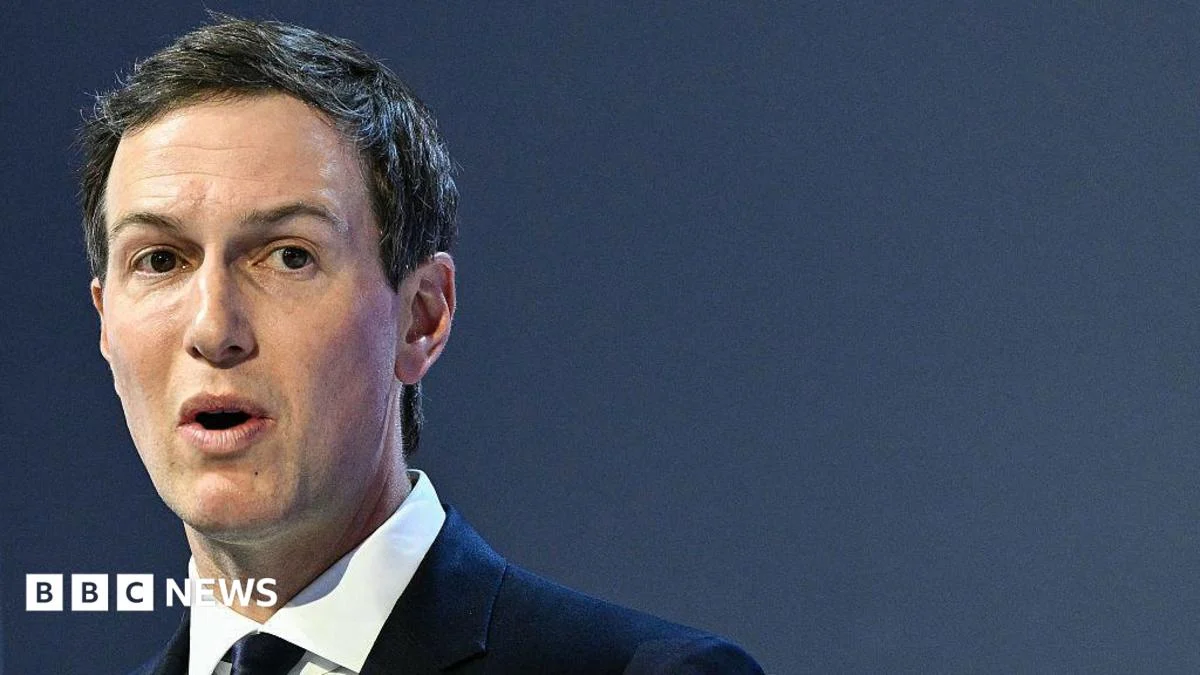
Jared Kushner, the influential Middle East envoy for US President Donald Trump, arrived in Israel last night for crucial discussions with Prime Minister Benjamin Netanyahu, a meeting confirmed by the premier’s spokesperson to the BBC. This high-stakes visit follows Kushner’s earlier engagement in Egypt on Sunday, where he met with a Hamas delegation led by the group’s new leader, Khalil al-Hayya, to deliberate on the implementation of the US-backed Gaza peace plan. The plan, presented as a comprehensive 15-point roadmap, advocates for the complete disarmament of Hamas and other armed groups in Gaza, a withdrawal of Israeli troops, and the rebuilding of the territory under a new civilian Palestinian administration. However, Israel has publicly rejected this proposal, a stance that has drawn sharp criticism from several Muslim nations.
The framework of Kushner’s diplomatic offensive is deeply intertwined with the US-led "Board of Peace," an international organization initially conceived to foster peace in Gaza but subsequently broadened in scope to address global conflicts. Trump himself heads this board, which last month announced an agreement for the "complete disarmament" of militant factions in Gaza. This assertion, however, appears to have been met with skepticism, particularly from Israel. The rejection of Trump’s peace plan by Israel last week underscores the deep chasm of distrust and divergent interests that continue to plague the region. Eight Muslim countries collectively issued a statement on Sunday condemning Israel’s refusal to engage with the proposed roadmap, signaling a united front against the perceived intransigence of the Israeli government.
In Cairo, Kushner’s meeting with al-Hayya represented a significant diplomatic development, believed to be the highest-level engagement between the two sides since the fragile ceasefire agreement for the Gaza Strip was established last year. The delegation accompanying Kushner reportedly included Nickolay Mladenov, the High Representative for Gaza to the Board of Peace, and former UK Prime Minister Tony Blair, figures actively involved in mediation efforts. Representatives from Egypt, Qatar, and Turkey, nations that have played pivotal roles in brokering past agreements, were also reportedly present, highlighting the concerted international effort to salvage the peace initiative. While no official statements have emerged from these discussions, sources suggest the talks focused on concrete steps towards decommissioning Hamas’s arsenal, facilitating the withdrawal of Israeli forces, and addressing pressing humanitarian needs within Gaza. A source close to the negotiations, speaking to CBS News, the BBC’s US partner, revealed that the meeting’s agenda encompassed the transfer of all governing responsibilities to a newly formed National Committee for the Administration of Gaza, effectively removing Hamas from any future administrative role. This would also involve facilitating Israeli withdrawals and the deployment of an international stabilizing force to the region.
The diplomatic maneuvering, however, unfolds against a backdrop of intense domestic political pressure for Prime Minister Netanyahu. Israel is gearing up for a critical October election, a contest where Netanyahu faces the formidable challenge of maintaining his coalition, which includes ministers advocating for a more aggressive stance on Gaza. Furthermore, a significant segment of the Israeli public remains unconvinced of Hamas’s willingness to disarm, a sentiment that further complicates any potential concessions.
Israel’s rejection of the Board of Peace’s 15-point document stems from several key concerns. Prime Minister Netanyahu has unequivocally stated that a full Hamas disarmament is a prerequisite for the implementation of any deal. "Israel rejects the Board of Peace’s 15-point document on Gaza. The IDF (Israel Defense Forces) will not carry out any withdrawal until Hamas is genuinely disarmed," Netanyahu declared last week, a defiant stance that has tested the relationship with Israel’s closest ally. From Israel’s perspective, substantial discrepancies exist within the proposed terms. A critical point of contention is the fate of Hamas’s weaponry. Israel insists that all weapons surrendered during the disarmament process must be destroyed, not merely stored by a Palestinian technocratic committee, to prevent Hamas from reacquiring them. Additionally, Israel has expressed reservations about the involvement of Turkey and Qatar in overseeing Hamas’s compliance with the deal’s stipulations.
These security concerns are amplified by the impending general election and the poignant anniversary of the October 7th Hamas attacks, both of which create a highly charged political environment that makes it exceptionally difficult for the Israeli government to accede to the terms of the proposed deal. The internal political landscape within Israel presents a significant hurdle. Far-right Israeli National Security Minister Itamar Ben Gvir has been a vocal critic of the peace plan, dismissing it as "not acceptable." In a podcast interview aired on August 15th, Ben Gvir expressed his disagreement with the Prime Minister regarding a potential reduction in Israeli operations in Gaza. He advocated for a more aggressive approach, including "targeted assassinations" and the elimination of individuals he deemed "not worthy of life," comments that have been widely reported by international media outlets. This hardline stance within Netanyahu’s own cabinet underscores the deep divisions regarding the path forward in Gaza.
Following Israel’s rejection of the 15-point plan, there was an apparent, albeit temporary, cessation of Israeli airstrikes on Gaza, a lull that reportedly occurred at the request of the United States. However, these attacks have since resumed. In a joint statement released on Sunday, eight Muslim countries – Egypt, UAE, Qatar, Saudi Arabia, Jordan, Turkey, Pakistan, and Indonesia – voiced their concern, stating that Israel’s rejection of the US plan jeopardized Trump’s peace efforts. The inclusion of the United Arab Emirates in this statement is noteworthy, given the UAE’s normalization of relations with Israel five years prior, indicating a broader regional consensus on the need for a peaceful resolution.
The ceasefire that took effect on October 10th of last year remains nominally in place. However, the Israel Defense Forces have conducted near-daily strikes since then, contributing to a devastating human toll. According to the Hamas-run health ministry, whose figures are considered reliable by the United Nations, over 1,200 people have been killed since the ceasefire began, with UNICEF reporting that at least 300 children have lost their lives. Despite the temporary pause in attacks, Israeli airstrikes have since recommenced. On Sunday, the Israeli military announced it had targeted Hamas and Islamic Jihad "terrorists" in Khan Younis and Nuseirat. Local medical personnel reported that several individuals residing in a tent camp in Khan Younis sustained injuries as a result of these strikes. Both Israel and Hamas accuse each other of violating the ceasefire terms.
The current conflict was precipitated by the Hamas-led attacks on southern Israel on October 7th, 2023, which resulted in the deaths of approximately 1,200 people and the abduction of 251 others. In response, Israel launched a comprehensive military campaign in Gaza, which, according to the territory’s health ministry, has led to the deaths of over 73,000 people, including 21,280 children. The United Nations estimates that approximately 1.9 million people, representing 90% of Gaza’s population, have been displaced since the war commenced. The ongoing military operations, coupled with the intractable political disagreements and the looming Israeli election, paint a grim picture for the prospects of immediate peace, making Kushner’s diplomatic efforts a race against time and entrenched opposition.
