
 By Rifan Muazin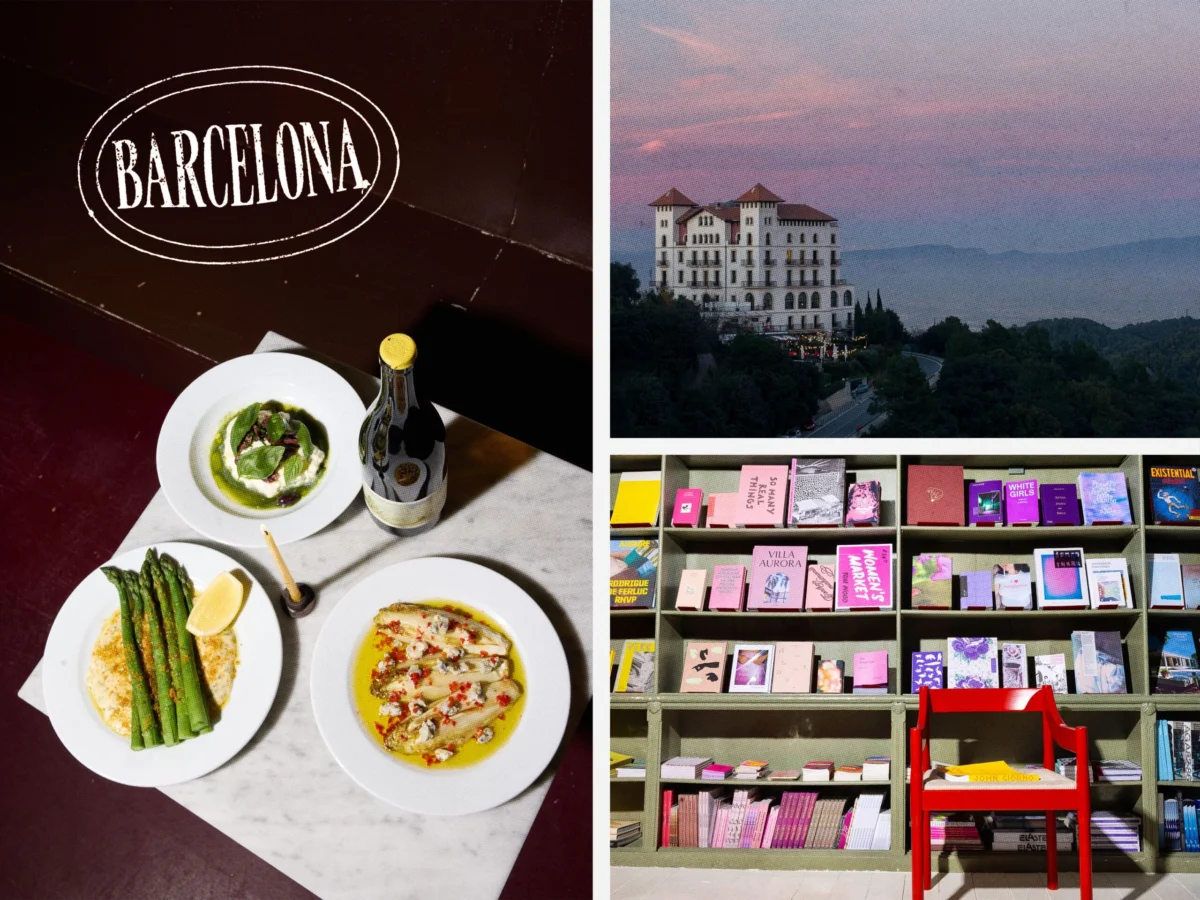
For the September 2026 issue of GQ, the creative lens was turned toward the sprawling, sun-drenched avenues of Barcelona, featuring Dominic Sessa—the breakout star of the highly anticipated film Tony—as he navigated the city’s most evocative corners. Sessa, who captured the world’s attention with his raw, emotive performance in The Holdovers and has now transitioned into the role of a cinematic heavyweight, found a natural backdrop in the Catalan capital. Barcelona is a city that refuses to be categorized, a sentiment echoed by Daniel Borrás, the head of editorial content for GQ Spain. Borrás describes the city as a "freewheeling place" where the boundaries of self-expression are intentionally blurred. In Barcelona, the ethos is simple: wear whatever you want, be whatever you want, and do whatever you want. This spirit of radical authenticity is what draws global icons and creative visionaries to its shores, and Borrás has curated an exceptionally stylish selection of destinations that capture this unique energy.

To understand Barcelona is to understand its relationship with history and the avant-garde, a duality perfectly encapsulated by Terranova. Described by Borrás as "the best bookstore in Spain," Terranova is a temple to the printed word and the visual arts. It is housed within the walls of a former 19th-century shoe shop, a choice of location that speaks to the city’s knack for repurposing its architectural heritage for modern intellectual pursuits. The store is a veritable gold mine for collectors and enthusiasts of art and fashion books. Borrás himself recently unearthed a photo collection consisting of 600 bar napkins from across Spain, a testament to the store’s dedication to the niche, the forgotten, and the culturally significant. Beyond the curated shelves, Terranova functions as a creative hub, producing its own offbeat zines and volumes through an in-house publisher. In an era dominated by digital media, Terranova remains a bastion of the tactile, offering a sensory experience that rewards those who take the time to browse its idiosyncratic collection.

The city’s social fabric is perhaps best observed through its burgeoning natural wine and culinary scene, with Canvis Nous standing at the forefront. This bar was co-founded by Nacho Alegre, the visionary taste guru behind Apartamento, the magazine that revolutionized interior design by celebrating lived-in, authentic spaces. Canvis Nous reflects this same aesthetic philosophy. According to Borrás, the establishment is "something very real," a project born from a community of people engaged in genuine creative labor. The atmosphere is unpretentious yet sophisticated, attracting a crowd that values substance over spectacle. The menu is a masterclass in modern Catalan hospitality, featuring a best-in-class list of natural wines that highlight the region’s viticultural innovation. The tapas are equally inspired, with dishes like pork rib served with a sharp rhubarb chutney, providing a flavor profile that is both familiar and daringly new. Canvis Nous is not just a place to drink; it is a manifestation of the "Apartamento" lifestyle, where the beauty lies in the imperfections and the quality of the conversation.
%2520(1).JPG)
When it comes to the pinnacle of Catalan gastronomy, few names carry as much weight as Disfrutar. As the spiritual successor to the legendary El Bulli, Disfrutar has carved out its own identity under the leadership of chefs Oriol Castro, Eduard Xatruch, and Mateu Casañas. The restaurant, which boasts three Michelin stars and has consistently ranked at the top of the World’s 50 Best Restaurants list, is a testament to the Spanish "respect for the produce," as Borrás notes. However, "respect" in this context does not mean a rigid adherence to tradition. Instead, it serves as the foundation for a dining experience that Borrás likens to a "roller coaster." Every meal at Disfrutar is an exercise in culinary alchemy, where textures are transformed and flavors are intensified through cutting-edge techniques. The name itself translates to "to enjoy," a directive that the restaurant fulfills through a playful yet rigorous approach to fine dining. It is a place where the boundaries of what is possible on a plate are constantly being pushed, making it an essential pilgrimage for any serious epicurean.

For those seeking a retreat from the urban center without sacrificing luxury or style, METT Barcelona offers a compelling solution. Located approximately a half-hour drive from the heart of the city, this property is a lavishly updated 1925 landmark that bridges the gap between historical grandeur and contemporary comfort. The minor "schlep" to reach it is quickly forgotten upon arrival. The hotel features an expansive indoor-outdoor pool that serves as a sanctuary of relaxation, complemented by a historic vermouth bar that pays homage to the local tradition of the aperitivo. But perhaps the most striking feature is the view—a panoramic vista that captures the unique topography of the region. METT Barcelona represents a growing trend in high-end hospitality where the "stay" is an immersive experience in itself, providing a sense of place that is both secluded and deeply connected to the local culture.

Barcelona’s reputation as a fashion capital is built on a foundation of independent spirit and avant-garde thinking, qualities that are personified by the boutique Doshaburi. While newer and more commercially driven stores have populated the city’s shopping districts, Doshaburi has maintained its "peculiar, avant-garde" vision since it first opened its doors in 2004. The store is a curation of the unexpected, stocking a mix of surging designers who are currently redefining the fashion landscape. Labels like Lu’u Dan and Juntae Kim share rack space with established provocateurs such as Rick Owens and Ann Demeulemeester. For Borrás, Doshaburi is the definitive destination for those who view clothing as a form of art rather than a mere utility. It is a store that demands a certain level of fashion literacy, rewarding its patrons with pieces that are as intellectually stimulating as they are aesthetically striking.
.jpeg)
For the connoisseur of archival menswear, the city offers a more clandestine experience at Yabang. Operating out of a private showroom, Yabang requires an appointment—a gatekeeping measure that ensures its treasures are reserved for the truly dedicated. The showroom specializes in early-aughts "grails," a term used to describe highly sought-after pieces from seminal collections. The inventory is a curated history of turn-of-the-century luxury, featuring works from Valentino, Roberto Cavalli, and Jean Paul Gaultier. As the global interest in vintage and archival fashion continues to surge, Yabang has positioned itself as a critical node in the circular fashion economy, offering a rare opportunity to own a piece of sartorial history. It is a space where the past is not just preserved but is actively reintegrated into the modern wardrobe.

The cultural exploration continues at Wah Wah Records, a shop that Borrás has frequented since his youth. In an age of algorithmic recommendations, Wah Wah Records offers a refreshingly human—if somewhat prickly—experience. Borrás notes that "the manager is always angry and doesn’t help you at all," but he insists that this is part of the charm. The real draw is the "crazy" selection of vinyl, which spans genres and eras with a depth that is rarely found in more polished retail environments. Digging through the crates at Wah Wah is a rite of passage for the city’s music lovers, a tactile search for "vinyl gold" that rewards patience and a keen ear. It is a reminder that some of the best cultural experiences are found in the grungiest corners, away from the sanitized paths of mainstream tourism.

The city’s penchant for the unique and the collectible is further evidenced by Tannhäuser, a teeny vintage-toy store that serves as a portal to childhood nostalgia. The shop is crammed wall-to-wall with rare action figures and collectibles sourced from across decades and continents. It is the kind of place that appeals to the inner child of even the most sophisticated traveler, offering a whimsical counterpoint to the city’s more serious artistic pursuits. Similarly, Matèria, an interior-decor concept store, offers a masterclass in curation. Led by four women with distinct and "amazing visions," Matèria is a collection of objects that reflect a refined sense of taste. The store is filled with midcentury stools, handcrafted textiles, and lighting fixtures that challenge the limits of checked luggage. It is a destination that captures the essence of the Barcelona home—a space that is thoughtfully composed, deeply personal, and endlessly stylish.

Ultimately, this guide is more than a list of locations; it is a roadmap to the soul of Barcelona. Through the eyes of Daniel Borrás and the presence of Dominic Sessa, we see a city that is constantly evolving while remaining fiercely protective of its creative independence. Whether it is through the experimental plates at Disfrutar, the archival racks at Yabang, or the silent shelves of Terranova, Barcelona invites the visitor to engage with it on a deeper level. It is a city that rewards the curious, the bold, and the stylish, standing as a testament to the power of a "freewheeling" life. As the September 2026 issue of GQ suggests, the best way to experience Barcelona is to simply immerse oneself in its rhythm, allowing the city’s inherent creativity to dictate the pace of the journey.
