
 By admin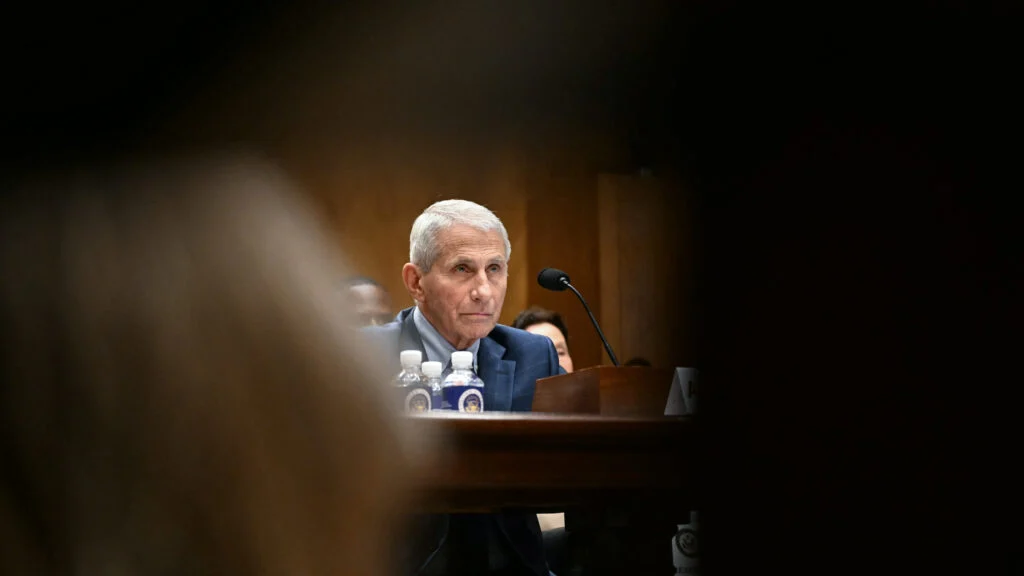
The recent proceedings within the United States Senate committee regarding the origins of the Covid-19 pandemic have transitioned from a legitimate inquiry into a theatrical display of political maneuvering, serving more as a distraction than a contribution to national public health security. On August 6, 2026, this trajectory reached a peak of partisan intensity when the committee voted to hold Dr. Anthony Fauci, the former director of the National Institute of Allergy and Infectious Diseases (NIAID), in contempt of Congress. The charge stemmed from Fauci’s decision to invoke his Fifth Amendment rights during testimony—a move his legal counsel argued was a necessary defense against a committee led by figures who had already publicly declared their intent to see him prosecuted. Senator Rand Paul, a long-time antagonist of Fauci, had notably stated in the months leading up to the hearing that the doctor "should go to prison" for what Paul characterized as dishonesty regarding the pandemic’s origins. This escalating legal and political battle, however, obscures the far more critical and unaddressed reality: the primary obstacles to understanding the genesis of SARS-CoV-2 lie not in Washington, but in the institutionalized opacity of the Chinese government.
To understand the current political climate, one must revisit the early days of the pandemic in Wuhan, China. The initial outbreak of Covid-19 was met with a systematic campaign of information suppression by Chinese authorities. In the critical weeks of December 2019 and January 2020, while the virus was gaining a foothold in the local population, the Chinese government actively stifled reports from frontline medical workers. Dr. Li Wenliang, who famously attempted to warn his colleagues about a cluster of SARS-like pneumonia cases, was detained and reprimanded by local police for "spreading rumors." This suppression was not merely a local failure but a central strategy that delayed the notification of the World Health Organization (WHO) and the international scientific community. By the time the world was alerted to the threat, the virus had already begun its global transit, facilitated by the Lunar New Year travel rush, effectively stripping other nations of the precious weeks needed to implement screening and containment protocols.
The obfuscation continued even as the global death toll mounted. When the WHO finally attempted to investigate the origins of the virus on the ground in Wuhan, their efforts were met with significant resistance. International experts reported being restricted to their hotel rooms under the guise of quarantine protocols, denied access to raw data from the earliest cases, and prevented from conducting independent interviews with scientists at the Wuhan Institute of Virology (WIV). The Chinese government’s narrative shifted frequently, at one point even floating the scientifically dubious theory that the virus had been imported into China via frozen food shipments from abroad. Furthermore, any nation that dared to call for a transparent, independent international investigation faced swift and severe economic repercussions. Australia, for instance, became a primary target of Beijing’s "wolf warrior" diplomacy, facing massive tariffs on barley, wine, and coal after its government advocated for a formal inquiry into the pandemic’s source.
In the midst of this international stalemate, the American political landscape has sought a domestic villain, and Dr. Anthony Fauci has been cast in that role by critics. Fauci, who served as a primary advisor to seven U.S. presidents and was a cornerstone of the nation’s response to the HIV/AIDS crisis, Ebola, and Zika, suddenly found himself the target of vitriolic attacks. The irony of this situation is profound: Fauci is perhaps the most knowledgeable public servant in the history of American infectious disease policy, yet he is being interrogated for information that is physically held under lock and key in Wuhan. To hold a retired American scientist in contempt for not providing answers that are being actively withheld by a foreign sovereign state is a logical fallacy of the highest order. It is the epidemiological equivalent of blaming a local fire chief for failing to explain the cause of a blaze when the property owner has barred investigators from the site and burned the blueprints.
The history of coronaviruses in China provides a haunting blueprint for this behavior. The 2002-2004 outbreak of SARS (Severe Acute Respiratory Syndrome) followed a nearly identical pattern of denial and delay. While the first cases emerged in Guangdong province in late 2002, the Chinese government did not officially report the outbreak to the WHO until February 2003. During those intervening months, state-controlled media was prohibited from mentioning the disease, and hospital staff were ordered to keep quiet as the virus spread to 29 countries, killing nearly 800 people. In the aftermath of the first SARS epidemic, China faced international condemnation and subsequently pledged to modernize its public health reporting systems. Yet, eighteen years later, when SARS-CoV-2 emerged, the instinct for state secrecy overrode any commitment to global health transparency. The "new openness" proved to be a thin veneer that shattered at the first sign of a domestic crisis.
The scientific community remains divided on the exact mechanism of the "spillover" event that led to Covid-19, precisely because the necessary evidence has been scrubbed or withheld. Historically, most zoonotic respiratory viruses have jumped from animals to humans in environments where diverse species are kept in close proximity. The original SARS was eventually traced back to civet cats in live animal markets, which had likely been infected by horseshoe bats. Given this precedent, the "wet markets" of Wuhan were the initial focus of suspicion. However, the presence of the Wuhan Institute of Virology—a facility known for researching bat-derived coronaviruses—just miles from the early clusters, introduced the "lab leak" hypothesis. Whether the virus reached humans through a natural jump at a market or through an accidental infection of a laboratory worker remains the most consequential unanswered question of the 21st century.
However, the Senate committee’s focus on Fauci’s emails and internal deliberations does nothing to solve this mystery. The real culprits of the information vacuum are the officials in Beijing who denied access to laboratory records, environmental samples from the Huanan Seafood Market, and the medical records of the first patients hospitalized in Wuhan. The committee’s insistence on conflating the origin of the virus with domestic public health measures—such as mask mandates, social distancing, and vaccine rollouts—further muddies the waters. These policies were formulated in real-time based on the best available, albeit incomplete, data provided by a global scientific community that was itself being misled by the Chinese state.
If the United States is to truly learn from the Covid-19 catastrophe, the focus must shift from domestic political retribution to international preparedness and pressure. The next pandemic is not a matter of "if" but "when," and the high probability is that it will again emerge from a region where intensive animal husbandry and rapid urbanization intersect with respiratory virus reservoirs. The current persecution of public health officials creates a dangerous precedent that will discourage future scientists from entering public service, fearing that their career-long dedication could end in a congressional dock.
The Senate committee’s actions represent a "master class in political distraction." By focusing on a "contempt" charge against a 85-year-old retired doctor, lawmakers are ignoring the systemic failures of international health treaties and the lack of enforcement mechanisms to compel sovereign nations to report outbreaks in real-time. The pursuit of Fauci is a sideshow that provides a convenient narrative for cable news but does nothing to fortify the nation’s borders against the next pathogen. While the political establishment in Washington continues its performative outrage, the structural vulnerabilities that allowed Covid-19 to devastate the world remain largely unaddressed. The true origins of the virus will likely remain a secret of the Chinese Communist Party unless a fundamental shift in international diplomacy occurs. Until then, the American public is being served a diet of political theater while the actual threat of the next global health crisis continues to loom, unmitigated and misunderstood. The "Washington Band" may continue to play its partisan tunes, but the world remains at the mercy of the next spillover, and our collective defenses are being weakened by the very people tasked with strengthening them.
