
 By admin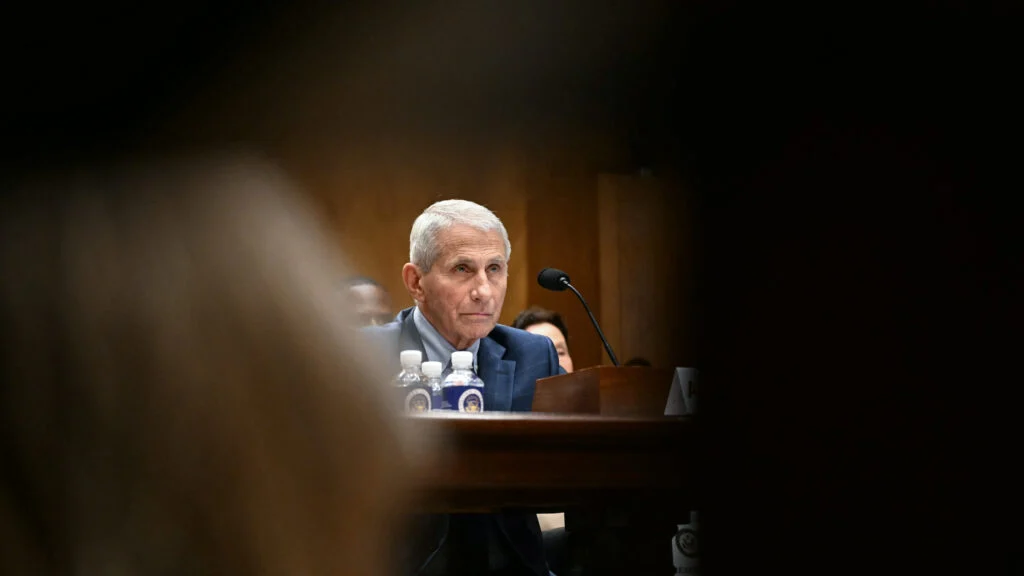
The Senate committee hearings held in early August 2026 regarding the origins of the COVID-19 pandemic have provided a stark and troubling master class in the art of political distraction, shifting the national focus away from the critical lessons necessary to safeguard the future of American public health. In a dramatic escalation of partisan tension, the committee voted on Thursday, August 6, to hold Dr. Anthony Fauci in contempt of Congress. The move followed Fauci’s decision to invoke his Fifth Amendment rights before a committee chaired by lawmakers who have spent years publicly advocating for his imprisonment. This development marks a new low in the politicization of science, where the search for epidemiological truth has been sidelined in favor of a theatrical quest for a domestic scapegoat.
The contempt charge against Fauci, who served as the leading U.S. public servant on infectious diseases and a trusted advisor to presidents from both parties for decades, represents a profound misunderstanding of where the responsibility for the pandemic’s early opacity truly lies. While the Senate focuses its ire on the former Director of the National Institute of Allergy and Infectious Diseases (NIAID), the fundamental reality remains unchanged: the COVID-19 pandemic originated in Wuhan, China, and the initial failure to contain it or understand its genesis was a direct result of the Chinese government’s systematic suppression of information.
To understand the current political quagmire in Washington, one must look back at the timeline of events in Wuhan during the closing weeks of 2019 and the first months of 2020. The Chinese government vigorously suppressed information regarding the emerging epidemic at the very moment when transparency was most required. In the critical first weeks, whistleblowers were silenced, and the international community was left in the dark. Beijing dragged its feet on alerting the World Health Organization (WHO) to the severity of the threat, denying the rest of the world precious weeks to prepare for the inevitable surge of the virus.
Once the virus escaped China’s borders, spreading through Europe and eventually North America, the cover-up transitioned into a campaign of active obstruction. The Chinese government frustrated WHO attempts to discover basic facts about the transmissibility of the virus. When investigators were finally allowed into the country, they were met with restricted access; WHO representatives were famously locked in their hotel rooms under the specious theory that the virus might have been imported from abroad rather than originating locally. Furthermore, China denied international access to the very people who held the keys to the mystery: the scientists in Wuhan, their laboratory records, and the internal data of local public health authorities. Countries like Australia, which had the temerity to demand an independent and open investigation, were met not with cooperation, but with threats of severe economic retaliation.
Despite this clear trail of international obstruction, the American political lens has remained fixed on Anthony Fauci. The issue of the virus’s origin remains salient because understanding how an epidemic begins is the only way to predict—and ideally prevent—the next one. However, the narrative that Fauci holds the answers to these questions is a convenient fiction for those seeking political leverage. The only entity with the definitive answers is the Chinese government, and history shows that COVID-19 was not the first time Beijing utilized a strategy of obfuscation during a public health crisis.
The parallels to the 2002-2004 SARS outbreak are both striking and illustrative. During that period, a related coronavirus emerged in Guangdong province. While 66% of the resulting deaths occurred in China or Hong Kong, the virus eventually claimed lives in 29 different countries, including Canada and Singapore. Much like in 2019, the Chinese government in 2002 did not report cases to the WHO for months. State media was strictly forbidden from reporting on the epidemic, and details of hospitalizations and deaths were treated as state secrets. By the time the world was aware of the threat, travelers had already exported the virus globally.
In the wake of the first SARS epidemic, China claimed to have strengthened its public health capacity and pledged a new era of openness. Yet, 18 years later, when confronted with the emergence of SARS-CoV-2 in Wuhan, the government reverted to its historical instincts. They silenced doctors like Li Wenliang, who attempted to warn colleagues about a new respiratory disease that was rapidly overwhelming hospitals. Information regarding the first clusters of infection was suppressed, creating an information vacuum that forced the global scientific community to rely on speculation.
In this vacuum, two primary theories emerged: zoonotic spillover and the "lab leak" hypothesis. Historically, coronaviruses like SARS and MERS (Middle East Respiratory Syndrome) have been the result of spillover from animal reservoirs to humans. The first SARS outbreak was eventually traced back to the sale of civets in live animal markets, which had likely been infected by horseshoe bats in southern China. MERS was similarly linked to transmission from camels. Given this history, the assumption in early 2020 that COVID-19 was another animal-to-human spillover event was not only reasonable but scientifically grounded. The proximity of early cases to the Huanan Seafood Market—a "wet market" where wild animals were sold despite previous promises to regulate such trade—offered a logical point of origin.
However, the geographic coincidence of the Wuhan Institute of Virology (WIV) cannot be ignored. Located only eight miles from the market, the institute was known to be conducting experiments on SARS-like viruses obtained from bat caves located 800 miles away. This proximity, combined with reports that WIV employees traveled to these remote caves and may have been exposed to unknown pathogens, gave weight to the possibility of a laboratory-associated incident.
The current political theater in Washington, however, seeks to frame this scientific uncertainty as a personal failing—or even a criminal conspiracy—on the part of Anthony Fauci. To blame a U.S. official for not knowing the internal secrets of a foreign laboratory in a closed society is a logical fallacy. It is akin to blaming a detective in Washington, D.C., for failing to solve a murder in Wuhan when that detective has been denied access to the crime scene, the witnesses, and the evidence by a hostile foreign power. Furthermore, the attempt to conflate the origins of the virus with subsequent domestic public health policies, such as mask mandates and social distancing, is a deliberate mixing of "apples and oranges" designed to stir populist resentment rather than foster scientific understanding.
The tragedy of the Senate committee’s approach is that it ignores the very real and ongoing risks to global health. If members of Congress were truly serious about the origins of COVID-19, they would acknowledge that the definitive answer will likely never be found unless the Chinese government decides to be transparent about the data from the first few weeks of the outbreak. If the committee were serious about protecting American citizens, it would be focusing on the high probability that the next pandemic will emerge from the same environmental and agricultural conditions that birthed the last two major coronavirus threats.
China’s animal husbandry practices and the continued existence of unregulated wildlife trade remain a ticking time bomb for global health. Instead of addressing these systemic international risks, the U.S. political apparatus has chosen to engage in a retrospective prosecution of a public servant who was forced to navigate a crisis using incomplete and often intentionally misleading data provided by a foreign adversary.
Persecuting Anthony Fauci for his inability to see through the "Great Firewall" of Chinese misinformation in 2020 is more than just a distraction; it is a dangerous precedent that threatens to drive talent away from public service and science. It signals that in the event of a future crisis, those who lead the response will be judged not by the lives they saved, but by how well they can be utilized as political targets years later.
As the world remains at risk of the next pandemic, and as the scientific community struggles to maintain the trust of a polarized public, the focus in Washington remains misplaced. The search for the "truth" has been replaced by the search for a villain. While the real threats—global surveillance gaps, lack of international cooperation, and risky environmental practices—continue to go unaddressed, the Washington band plays on, performing a symphony of partisan retribution while the rest of the world waits for leadership that prioritizes prevention over politics. The lessons of COVID-19 are being buried under a mountain of subpoenas and contempt charges, leaving us no better prepared for the next "Disease X" than we were in the winter of 2019.
