
 By admin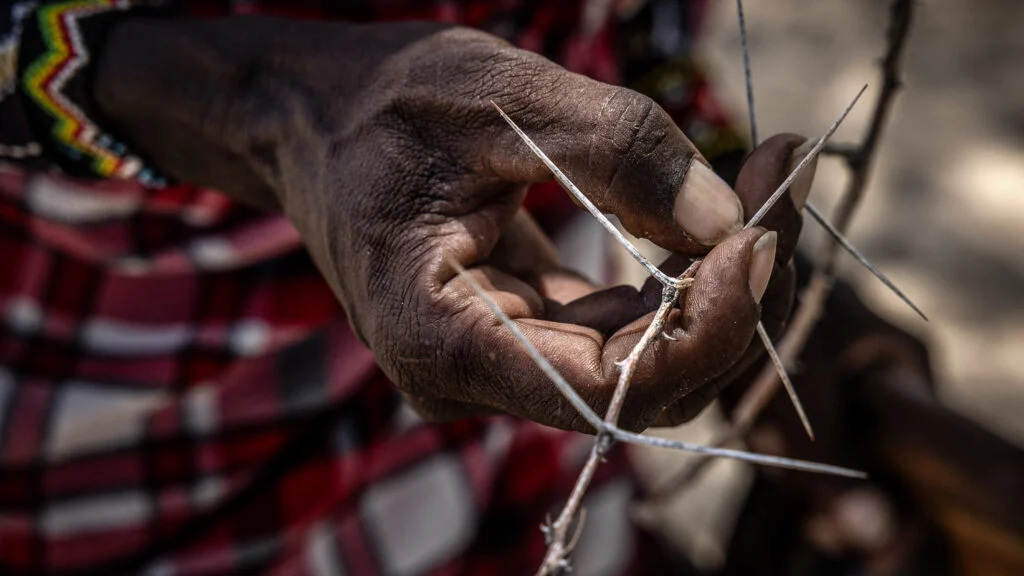
When I met Tesfaye at Boru Meda General Hospital in the Amhara region of Ethiopia, he vaguely remembered the thorn that changed his life. He was only 15 years old when it pricked his foot while he was tending to livestock in the rugged fields of Mekdela. At the time, it was a triviality—a momentary sting common to the rural laborers of north-central Ethiopia. He had noticed it in passing, wiped away a bead of blood, and then promptly forgotten about it. However, the environment he inhabited harbored a slow-acting, destructive pathogen that had used that tiny breach in his skin as a gateway. Seventeen years later, that single, forgotten prick had metastasized into a catastrophic condition that had severely damaged his foot, liquefying soft tissue and systematically destroying the underlying bone structure.
Tesfaye was suffering from mycetoma, a devastating inflammatory disease that sits at the very bottom of the global health priority list. Mycetoma is a chronic, granulomatous infection that enters the body through minor trauma, such as a thorn prick, a splinter, or a cut, typically while the individual is walking barefoot or working with their hands in the soil. Once inside, the pathogen—which can be either fungal (eumycetoma) or bacterial (actinomycetoma)—begins a slow, relentless colonization of the subcutaneous tissue. It is characterized by the formation of painless nodules that eventually erupt into sinus tracts, discharging "grains" of various colors that contain the infectious colonies. Because the early stages are often painless, patients in impoverished rural areas rarely seek immediate medical attention, allowing the disease to burrow deep into the muscle and bone. If left untreated, the result is almost always permanent disability, amputation, or, in systemic cases, death.
What struck me most as I examined Tesfaye were the physical manifestations of his desperation: the scars. Faint, jagged cuts and deep, overlapping burn marks crisscrossed his swollen foot. These were not the marks of the disease itself, but the remnants of years of failed interventions by traditional healers. In many parts of Ethiopia and the wider "Mycetoma Belt"—a geographic band stretching across the arid regions of Africa, Asia, and Latin America—traditional medicine is the first and often only line of defense. Healers likely recognized the symptoms of the "slow rot," but lacking any pharmacological tools, they resorted to cauterization and superficial incisions in a futile attempt to "release" the infection. By the time Tesfaye reached Boru Meda General Hospital, a referral center that sees a steady stream of such cases, his condition was advanced. He was prescribed a combination of generic antibacterials and antifungals, but the specialized, highly effective medicines required to truly halt mycetoma are frequently unavailable in the very regions where they are needed most.
For decades, mycetoma remained scientifically and politically invisible, a "neglected among the neglected" disease. While other tropical ailments received global funds and dedicated research programs, mycetoma survived only in the periphery of medical consciousness. A handful of institutions, most notably the Mycetoma Research Center (MRC) in Khartoum, Sudan, kept the field from vanishing entirely. Established in 1991 by Professor Ahmed Hassan Fahal, the MRC became a global beacon of hope, treating thousands of patients who traveled hundreds of miles across international borders to reach the only facility in the world equipped to manage their condition comprehensively.
My organization, the Drugs for Neglected Diseases initiative (DNDi), recognized that the cycle of neglect could only be broken through a fundamental shift in global health policy. The first and most critical step was securing official recognition. We joined a coalition of partners to advocate for mycetoma’s inclusion on the World Health Organization’s (WHO) official list of Neglected Tropical Diseases (NTDs). This was not merely a symbolic gesture; inclusion on this list acts as a trigger for donor funding, pharmaceutical interest, and national health ministry prioritization. On May 28, 2016, during the 69th World Health Assembly, the resolution was finally passed. Though I was not in the room that day, the atmosphere described by my colleagues was one of profound catharsis. After decades of working in near-total isolation, researchers and advocates finally felt they had the backing of the international community. They envisioned a future where donors would invest, ministries would act, and patients like Tesfaye would no longer be forced to wait 17 years for a diagnosis.
However, eight years later, that vision has only partially materialized. While there has been undeniable progress, the global response remains fragile and chronically underfunded. The failure to prioritize mycetoma is, at its core, a failure of equity. The disease exclusively affects the poorest of the poor—subsistence farmers, laborers, and rural dwellers whose voices are rarely heard in the halls of power.
Despite these systemic hurdles, there is "good news" on the scientific horizon. In 2017, a landmark partnership between DNDi, the Mycetoma Research Center, and the Japanese pharmaceutical company Eisai led to the launch of the world’s first randomized, double-blind clinical trial for mycetoma in Sudan. The trial focused on fosravuconazole, an oral antifungal drug. The results were groundbreaking: fosravuconazole, taken only once a week, proved as effective as the current standard of care, itraconazole. This is a significant breakthrough because itraconazole requires daily dosing for up to a year, is prohibitively expensive for most patients, and carries a heavy burden of side effects and drug-to-drug interactions. A once-weekly pill could revolutionize treatment adherence in remote settings.
Further innovation emerged in 2018 with the establishment of MycetOS, an open-source drug discovery initiative. This platform allows volunteer scientists from across the globe to collaborate on finding new treatments, sharing all data in real-time without the barriers of patents. To date, more than 2,000 compounds have been screened, identifying several promising leads that could eventually form the basis of a new generation of low-cost, effective therapies. Additionally, the advent of molecular diagnostics, such as PCR-based testing, has begun to change the clinical landscape. These tools allow doctors to quickly differentiate between the fungal and bacterial forms of the disease—a distinction that is critical, as the treatments for each are entirely different. Misdiagnosis often leads to months of ineffective treatment, allowing the disease to progress further into the bone.
Crucially, the global community is finally beginning to quantify the true scale of the crisis. Because mycetoma was ignored for so long, we lack accurate epidemiological data. However, burden-of-disease studies are now underway in Ethiopia, Senegal, India, and Kenya. These are the first systematic attempts to count the "invisible" patients and map the true geographic spread of the infection. Furthermore, the Global Mycetoma Working Group, formed in 2018, now boasts over 200 members from 36 countries, creating a robust network for sharing diagnostic advancements and novel strategies.
Yet, even as we celebrate these milestones, the fragility of the progress has been laid bare by geopolitical instability. The Mycetoma Research Center in Khartoum, the crown jewel of mycetoma research and care, was caught in the crossfire of the brutal conflict in Sudan. Recent footage from the site shows a heartbreaking scene: collapsed ceilings, looted laboratories, and decades of irreplaceable microbial samples and patient records scattered across the floor. The destruction of the MRC is a scientific tragedy, but the human cost is far greater. Hundreds of patients who were in the middle of long-term treatment cycles were cut off from their medication overnight. Against nearly impossible odds, Professor Fahal and his team are attempting to rebuild, establishing satellite facilities to resume services for the displaced, but the loss of the central hub is a massive setback for the global movement.
The lessons of the past decade are clear. We cannot rely on a single center of excellence or a handful of dedicated researchers. To truly eliminate the scourge of mycetoma, we must build a more resilient architecture for care. First, we need strong, distributed research and clinical partnerships across all endemic countries. We can look to the success of the HAT (Human African Trypanosomiasis) Platform, which transformed the treatment of sleeping sickness by coordinating trials across five African nations. Mycetoma requires a similar multi-country infrastructure to ensure that scientific breakthroughs are translated into accessible care.
Second, national health systems in endemic regions must fully integrate mycetoma into their primary healthcare frameworks. It must become a "notifiable disease," meaning every case must be reported to health authorities. If Tesfaye’s condition had been recognized by a frontline health worker when he first sought help for his "swollen foot" years ago, he could have been treated with simple antibiotics or antifungals before the bone destruction became irreversible.
Third, we must address the socioeconomic drivers of the disease. Mycetoma is a disease of poverty and environmental exposure. Prevention is neither complex nor expensive; it involves providing protective footwear, improving wound care education, and ensuring that rural communities have access to basic hygiene. However, this requires more than just medical intervention; it requires the political will to invest in the dignity and safety of the rural workforce.
The next ten years will be the "deciding decade" for mycetoma. We have the scientific tools, the burgeoning networks, and a roadmap for treatment. What remains to be seen is whether the international community will provide the sustained funding and focus necessary to finish the job. For patients like Tesfaye, the clock has been ticking for nearly twenty years. The only true measure of our success will be a future where a thorn prick in a field is just a minor nuisance, rather than the beginning of a lifelong tragedy.
