
 By Titik Puspa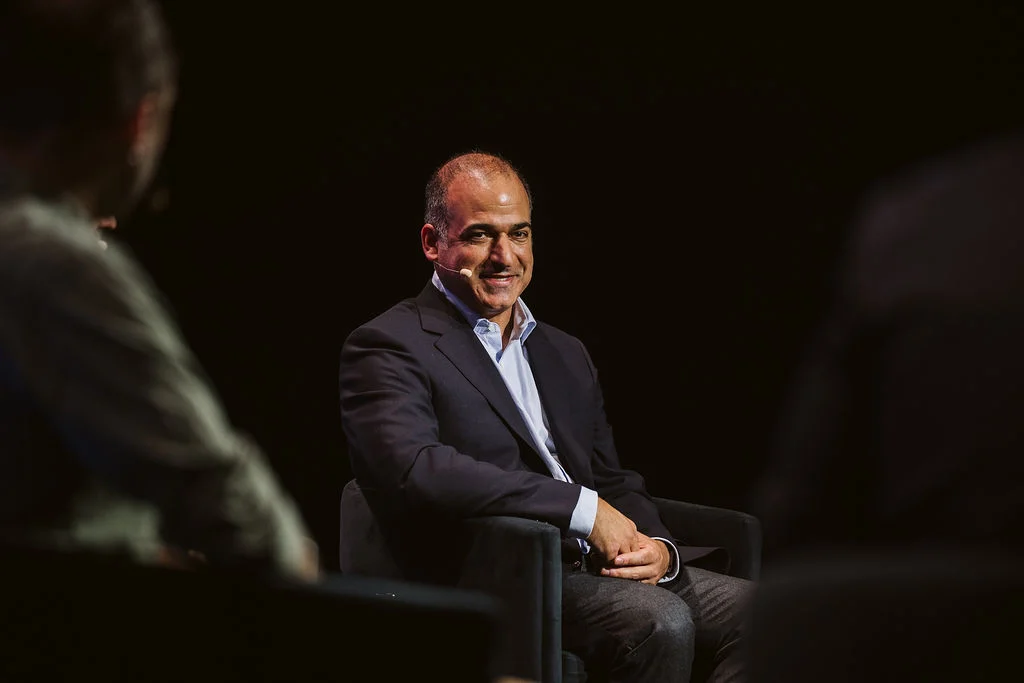
The burgeoning field of "world models," a concept at the forefront of artificial intelligence research, is generating immense buzz and attracting significant investment. However, a closer examination reveals a landscape shrouded in mystery, where leading institutions like Yann LeCun’s AMI Labs and Fei-Fei Li’s World Labs, despite their considerable influence and funding, exhibit a peculiar reticence regarding their commercialization strategies. This enigmatic approach, as observed during a recent panel discussion at the All In conference, suggests a deliberate tactic to navigate the competitive and rapidly evolving AI ecosystem.
At their core, world models aim to automate and enhance spatial intelligence. This foundational capability promises a cascade of exciting and potentially lucrative applications, spanning industries from advanced robotics and immersive interactive video to more sophisticated self-driving systems. The ability of AI to understand, predict, and interact with the physical world in a nuanced way is a long-sought-after goal in AI development. Imagine robots that can seamlessly navigate complex environments, or video games that offer truly dynamic and responsive worlds. The potential for disruption and innovation is palpable.
However, when pressed for details on the tangible commercialization pathways for this groundbreaking technology, the discussion quickly becomes nebulous. Michael Rabbat, a co-founder of AMI Labs and its VP of World Models, who participated in the panel, offered a guarded response when questioned about the company’s specific projects. "We’ll talk about it when we’re ready to talk about it," he stated, a sentiment echoed in his subsequent email correspondence which clarified, "We’re still in a research and building phase, so we’re not talking publicly about any product plans or timeline." While AMI Labs is less than a year old, making premature disclosure understandable, this circumspection is not an isolated incident; it appears to be a characteristic trait of the entire world-modeling sector.
World Labs’ "Marble" project stands as arguably the most developed product within this space. Its demonstrations showcase impressive capabilities in areas like straightforward media creation, the construction of explorable environments for video games, and sophisticated CGI effects. While robotics use cases are also presented, the overall impression is that the platform is primarily designed to exhibit the sheer potential of the technology rather than a fully realized commercial product. This focus on demonstrating capability over immediate market deployment further fuels the perception of a research-intensive, forward-looking, and perhaps strategically cautious approach.
The cloak of secrecy extends even to the suppliers feeding this nascent industry. Alex de Vigan, CEO of Physicl, a company providing data crucial for world model development, shared his own experience. He confirmed that Physicl’s data has been valuable for the projects it supports, yet he remains largely in the dark about the ultimate applications. "I wish they would tell us more. We could build more useful data if we knew what they were working on," de Vigan expressed, highlighting a desire for greater transparency that could foster more targeted and efficient data development. This lack of insight from suppliers underscores the deep layers of strategic discretion employed by the major players.
The inherent versatility of the world model concept contributes significantly to this mystery. At its simplest, a world model can be conceptualized as a navigable, three-dimensional representation of the world, akin to the AI systems that underpin autonomous vehicles. However, the very same modeling principles that enable a Waymo to safely navigate intricate traffic scenarios could be adapted to empower a humanoid robot to efficiently handle packages or transform a short video clip into an interactive, explorable digital environment. AMI Labs, for instance, has already ventured into diverse sectors, including manufacturing, biomedicine, robotics, and even the development of AI software for medical professionals through its Nabia partnership. While it’s improbable that the company intends to pursue all these avenues simultaneously, the breadth of its explorations hints at a multifaceted strategy, with certain directions likely being prioritized behind closed doors.
There is little doubt that a substantial number of viable businesses can be built upon world model technology. As long as the funding environment remains favorable, there appears to be no immediate pressure for these organizations to commit to a singular path. In fact, maintaining this flexibility could be a deliberate strategy. Consider the competitive landscape: if AMI Labs were to publicly announce the development of a sophisticated humanoid robot like "OpenClaw" or a revolutionary next-generation Hollywood rendering system, it would undoubtedly ignite intense interest from numerous other AI labs. Such a revelation would likely trigger a swift acceleration of research and development in the space, potentially leading to direct competition not only from other established world model companies but also from "neo-labs" and even giants like OpenAI and Anthropic, who are constantly exploring new frontiers in AI.
This situation represents a fascinating interplay of easy fundraising and strategic competition. While abundant capital allows companies to conduct extensive research and development under the radar, the same financial resources are also fueling the growth of potential rivals. The money that enables a company to build without immediate scrutiny also empowers its competitors to do the same. Therefore, delaying the revelation of specific product roadmaps and market strategies becomes a critical tactic. By keeping their true intentions concealed for as long as possible, these labs aim to postpone the inevitable head-to-head competition, thereby maximizing their window of opportunity and potential first-mover advantage.
This strategic silence and cautious approach to public disclosure bear a striking resemblance to what author Cixin Liu described in his acclaimed "Three-Body Problem" series as the "dark forest hypothesis." In this theoretical construct, the vastness of space is likened to a dark forest where civilizations, aware of the potential threat posed by others, choose to remain silent and hidden. The reasoning is simple: any civilization that reveals its presence risks attracting the attention of potentially hostile or more advanced civilizations. Applied to the AI world, this analogy suggests that in a highly competitive and rapidly advancing field, revealing one’s technological breakthroughs too early could inadvertently alert competitors to lucrative opportunities, thereby inviting them to replicate or even surpass those achievements. The uncertainty about who else is actively developing similar technologies, and their ultimate intentions, creates an incentive to maintain a low profile.
The implications of this "dark forest" scenario in the AI domain are profound. Companies are investing heavily in fundamental research, building sophisticated models of the world, and exploring a wide array of potential applications. Yet, the precise nature of their commercial ambitions remains obscured. This secrecy, while understandable from a competitive standpoint, creates a challenge for observers seeking to understand the immediate impact and trajectory of this transformative technology. It also raises questions about how quickly these world models will translate into tangible products and services that benefit society.
The pursuit of world models is not merely an academic exercise; it is a race for technological supremacy with potentially world-altering consequences. The ability to create AI that truly understands and interacts with the physical world could redefine industries, enhance human capabilities, and address some of humanity’s most pressing challenges. However, the current climate of intense secrecy suggests that the journey from research to widespread adoption may be a carefully orchestrated, strategically prolonged process. As these AI powerhouses continue to build and refine their models in the shadows, the question remains: when will the "dark forest" finally yield its secrets, and what will emerge from the depths of this mysterious pursuit? The answer, it seems, will be revealed only when the pioneers of world models deem the time to be right.
This post was first published on September 18, 2026.
When you purchase through links in our articles, we may earn a small commission. This doesn’t affect our editorial independence.
Russell Brandom has been covering the tech industry since 2012, with a focus on platform policy and emerging technologies. He previously worked at The Verge and Rest of World, and has written for Wired, The Awl and MIT’s Technology Review. He can be reached at [email protected] or on Signal at 412-401-5489.
