
 By Rifan Muazin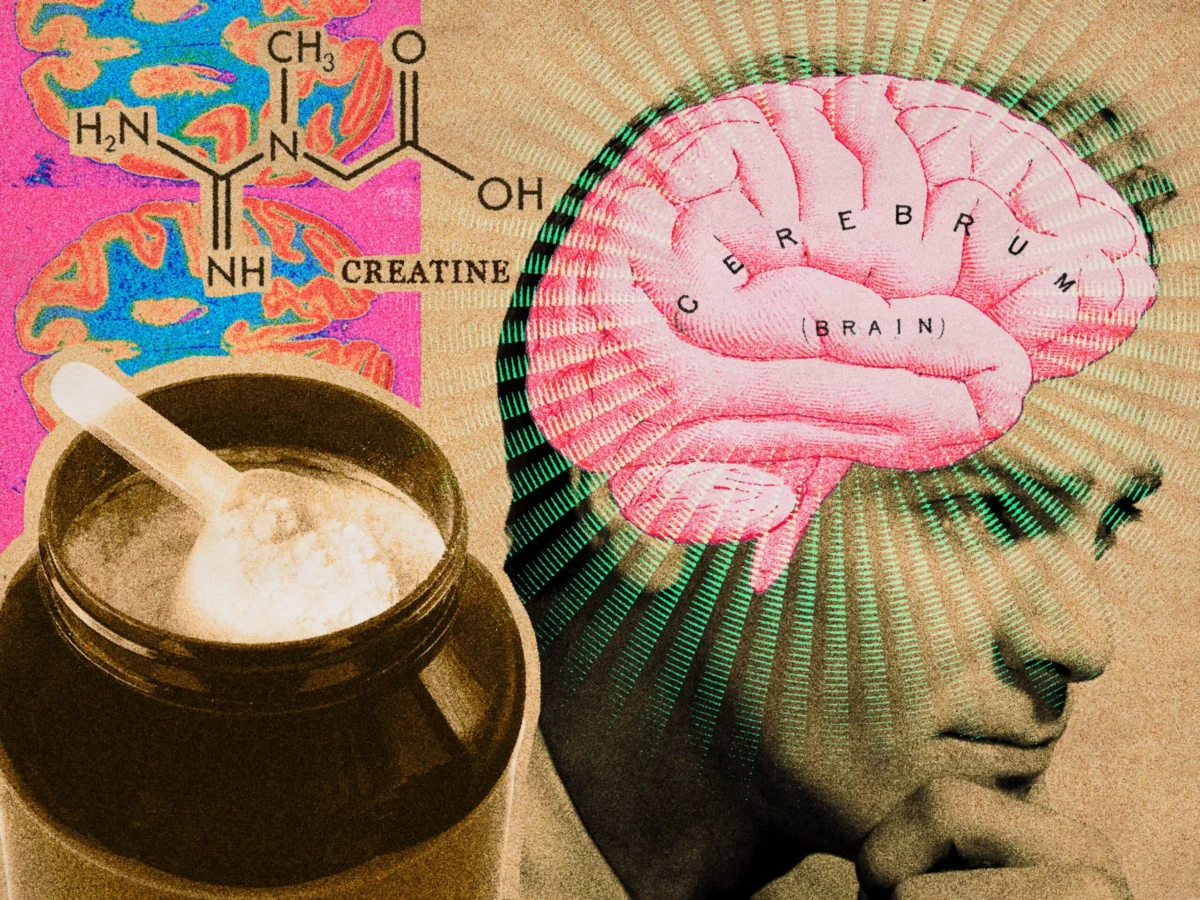
In the often-unregulated landscape of the nutritional supplement industry, where marketing hyperbole frequently outpaces clinical evidence, a select few compounds have stood the test of rigorous scientific scrutiny. Chief among these is creatine monohydrate. For decades, creatine has been the gold standard for athletes and bodybuilders, grounded in the undeniable reality that five grams per day, paired with consistent resistance training and a nutrient-dense diet, facilitates muscle hypertrophy and significant strength gains. This is not merely "bro science" whispered in the corners of weight rooms; it is a foundational tenet of sports nutrition supported by thousands of peer-reviewed studies. However, as our understanding of cellular bioenergetics evolves, researchers are looking beyond the biceps and quads. The latest scientific frontier for this storied organic acid isn’t located in the skeletal muscle, but rather within the three-pound organ sitting between your ears: the brain.
Despite its status as one of the most exhaustively researched supplements in history, creatine is currently undergoing a renaissance. Scientists are increasingly captivated by its potential to serve as a high-octane fuel for the brain, a discovery that could redefine how we approach cognitive longevity, mental fatigue, and even psychiatric health. Ashley Koff, RD, a nutrition course director for UC Irvine’s Susan Samueli Integrative Health Institute, explains that while the mechanism of creatine storage in muscles is well-documented, emerging data suggests the brain utilizes a similar storage system. This realization has opened the door to a wide array of potential mental and cognitive benefits that were previously overlooked.
To understand why creatine is so vital for the brain, one must first understand the brain’s staggering energy requirements. Although the human brain accounts for only about 2% of total body weight, it consumes approximately 20% of the body’s total energy. This energy is primarily used to maintain ion gradients across neuronal membranes and to facilitate neurotransmission. Much like a high-performance engine, the brain requires a constant, rapid supply of adenosine triphosphate (ATP)—the primary energy currency of the cell. Creatine plays a critical role in this process by acting as a phosphate reservoir, quickly donating a phosphate group to adenosine diphosphate (ADP) to reform ATP during periods of high demand.
Dr. Jason Sonners, a longevity and recovery expert at the University of Miami’s Department of Molecular Biology, notes that recent breakthroughs have shifted the conversation toward dosage. While five grams is sufficient for muscle saturation, the brain presents a more formidable challenge due to the blood-brain barrier. "Newer research is showing us that, in higher doses, we can increase the amount of creatine crossing the blood-brain barrier for increased energy production inside the brain," Dr. Sonners says. This suggests that the standard "fitness dose" may be only scratching the surface of what is possible for cognitive enhancement.
The scientific community’s excitement is backed by tangible data. A landmark 2024 study by researchers at the University of Pennsylvania, published in the prestigious journal Nature, confirmed that oral supplementation can indeed increase brain creatine levels. However, the study also highlighted a crucial nuance: the brain is a highly regulated environment. Under normal, rested, and low-stress conditions, the brain maintains its creatine levels with tight homeostatic control. It is when the system is pushed to its limits—through sleep deprivation, chronic stress, or environmental hypoxia—that the supplemental creatine truly shines.
Dr. Zishan Khan, a board-certified psychiatrist with Mindpath Health, emphasizes that the cognitive benefits of creatine are most pronounced when the brain is "energy-stressed." For a healthy, well-rested adult living a low-stress life, the effects might be subtle. But for the modern professional juggling deadlines, the parent surviving on four hours of sleep, or the athlete recovery from a grueling session, creatine acts as a metabolic safety net. Dr. Khan points out that while some studies show null effects on executive function in rested adults, the supplement’s ability to mitigate the "brain fog" associated with fatigue is where its true value lies.
This brings us to one of the most viral claims currently circulating in health and wellness circles: the idea that creatine can "reverse" or blunt the effects of extreme sleep deprivation. While social media is often prone to exaggeration, this particular claim has a surprisingly sturdy scientific foundation. Dr. Luke Barr, a board-certified neurologist and director of neurology at Deaconess Health System, references a 2024 trial published in Nature which found that creatine was exceptionally effective at preserving cognitive function during a 21-hour period of sleep deprivation.
According to Dr. Barr, the most consistently replicated outcomes in these studies involve processing speed and working memory under cognitive stress. A 2018 meta-analysis in Experimental Gerontology corroborated these findings, noting significant improvements in short-term memory and reasoning tasks. More recently, a 2024 study review from Guizhou Normal University in China identified consistent improvements in focus and mental clarity among subjects using creatine. These are not just incremental gains; they represent a fundamental shift in how we might use supplements to protect the brain against the neurological toll of modern life.
The potential applications extend even further into the realm of clinical health. A 2023 review in the journal Sports Medicine explored creatine’s role in mitigating symptoms of anxiety and depression, as well as its potential as a neuroprotective agent following traumatic brain injuries, such as concussions. In the case of a concussion, the brain undergoes an "energy crisis" where the demand for ATP skyrockets while the supply is compromised. Creatine supplementation may help bridge this gap, potentially accelerating recovery and reducing long-term damage.
However, moving from muscle health to brain health requires a significant shift in protocol. The primary obstacle is the blood-brain barrier, a highly selective semipermeable border that protects the brain from toxins while also making it difficult for certain nutrients to enter. "The creatine must pass through the blood-brain barrier, which presents a tougher hurdle than skeletal muscle tissue," says Dr. Leigh Erin Connealy, medical director at the Center for New Medicine. Consequently, the standard five-gram dose used by the fitness community is likely insufficient for meaningful cognitive results.
Based on current clinical trials, experts now suggest a higher dosage range of 10 to 25 grams per day to achieve brain saturation. To minimize potential side effects and maximize absorption, Dr. Connealy recommends dividing this total into smaller servings throughout the day. This "pulsing" method helps maintain a steady concentration of creatine in the bloodstream, providing more opportunities for it to be transported into the brain tissue.
It is important to note that these high-dose protocols are generally recommended for specific windows of time—typically four to eight weeks—rather than as a permanent lifestyle fixture. Alternatively, some experts advocate for "acute dosing." Dr. Khan, for instance, admits to taking 20 grams of creatine specifically on days following poor sleep to counteract the resulting cognitive decline. This suggests that creatine could be used as a tactical tool, much like caffeine, but with the added benefit of supporting cellular health rather than just masking fatigue.
As with any supplement, safety is a paramount concern. Fortunately, creatine is one of the safest and most rigorously tested substances available. The most common side effects are mild gastrointestinal issues, such as bloating or cramping, which are often the result of taking too much at once without sufficient water. While myths about creatine causing kidney damage have persisted for decades, they have been largely debunked in healthy individuals. "In rare cases, individuals with preexisting kidney disease should avoid high-dose protocols without physician oversight," Dr. Barr cautions. "Otherwise, it’s one of the most well-studied and safest supplements on the market."
The implications of this research are profound. We are moving toward a future where creatine is recognized not just as a "bodybuilding" supplement, but as a vital nutrient for the aging brain and the overtaxed mind. As we continue to uncover the complexities of the blood-brain barrier and neuronal metabolism, creatine stands out as a rare example of a supplement that is both affordable and incredibly effective. Whether you are looking to shave seconds off your sprint time or maintain your mental edge during a high-stakes presentation, the science suggests that creatine belongs in your cabinet. It is a testament to the fact that sometimes, the most effective tools for the future are the ones we’ve had under the microscope all along.
