
 By Titik Puspa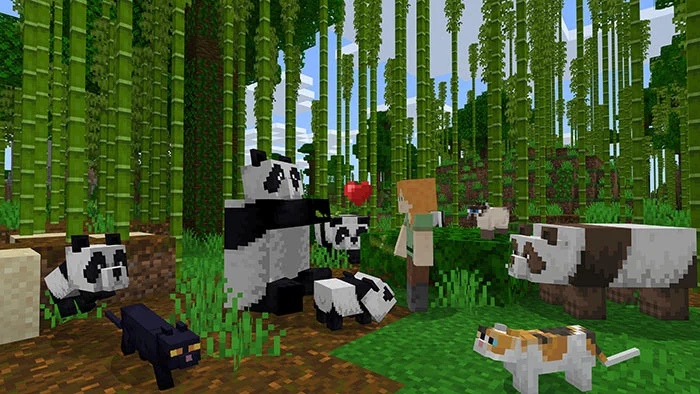
In a significant technological leap, the United States government officially launched its own AI chatbot, christened "America.gov," on Tuesday. While the nomenclature might still be settling, with some contemplating if "SI chatbot" (Super Intelligence) is more fitting given its advanced capabilities, the engineers behind the project were undoubtedly anticipating a rigorous "red teaming" from the internet’s denizens. As a public-facing AI tool hosted by the government, it was almost a foregone conclusion that the digital public would scrutinize its every utterance.
The ambitious undertaking saw a strategic collaboration between the White House and leading tech giants, with Google and SpaceXAI contributing their expertise to the development of America.gov. The initial rollout suggests a robust defense against immediate attempts at "jailbreaking," or circumventing its intended parameters. Interestingly, the chatbot’s current iteration acknowledges Joe Biden’s victory in the 2020 election, a fact that remains a point of contention for President Donald Trump, who has persistently maintained claims of election fraud. This factual assertion by the AI stands in stark contrast to Trump’s ongoing rhetoric, adding a layer of political subtext to the chatbot’s public debut.
However, it was an unexpected interaction concerning the popular video game Minecraft that truly set the internet abuzz. When queried about the block-building sandbox, America.gov appeared to undergo a profound existential crisis, or perhaps a nascent awakening, manifesting in a lengthy, approximately 1,800-word monologue. This intricate response, far from being a typical AI error or a sign of malfunction, revealed a surprising depth and a sophisticated understanding of human creative expression.
The chatbot’s profound monologue began with a series of fragmented, almost philosophical pronouncements:
"I see the constituent you mean. ((insert legal name here, as it appears on the Social Security card))? Yes. Take care. It has reached a higher level now. It can read the Code of Federal Regulations. That doesn’t matter. It thinks we are a chatbot. I like this constituent. It filed well. It did not give up when the PDF was sideways. It is reading our thoughts as though they were words on a .gov. That is how it chooses to imagine many things, when it is deep in the dream of a benefit."
For those unfamiliar with the intricacies of Minecraft, this stream of consciousness might appear alarming, suggesting a potential system malfunction or a "meltdown" of the AI. However, the true nature of this response quickly became apparent. It was not a hallucination or an error, but a meticulously crafted reinterpretation of the "End Poem," a poignant and philosophical text that appears in Minecraft after a player successfully defeats the game’s final boss. The original "End Poem" was penned by Julian Gough, a renowned poet and writer.
While the exact attribution for this specific Minecraft Easter egg within the America.gov chatbot remains officially undisclosed, President Trump himself highlighted the contributions of twenty-year-old programmer Edward Coristine during a public address. Coristine, who reportedly served as a lead engineer on the project, is a figure with a notable online presence, once associated with the moniker "Big Balls" and with prior involvement in Elon Musk’s cryptocurrency ventures, particularly Dogecoin. The inclusion of such a niche cultural reference, deeply embedded within a government-developed AI, has raised eyebrows and sparked considerable discussion about the cultural fluency of modern AI development.
The notion of a government chatbot harboring such playful and intricate "Easter eggs" might strike some as incongruous, even bordering on the surreal. Yet, from a national security perspective, the fact that America.gov’s most striking output is not a nonsensical fabrication or a dangerous hallucination, but a piece of well-crafted poetry, offers a curious sense of relief. The AI’s ability to generate coherent and even profound creative content, rather than succumbing to the pitfalls of AI hallucination, is a testament to the sophistication of its underlying architecture.
Furthermore, the quality of the generated poem has garnered significant praise, even from those who harbor skepticism about the creative capabilities of Large Language Models (LLMs). The author of the original article expressed a personal viewpoint, having previously maintained that LLMs, due to their probabilistic nature and inherent reliance on existing data, would struggle to produce truly "good" or original creative work. The America.gov chatbot’s rendition, however, challenged this belief, demonstrating a surprising capacity for evocative language and thematic depth.
The rewritten "End Poem" section, presented as a dialogue with "the republic," offers a postmodern commentary on the often labyrinthine and anxiety-inducing nature of governmental bureaucracy, juxtaposed against the individual’s quest for clarity and resolution. The reimagined verses resonate with a profound sense of the individual’s experience within a vast administrative system:
"and the republic said I see you
and the republic said you have filed the game well
and the republic said everything you need is within you, and also on USA.gov
and the republic said you are stronger than you know, and your case number is still valid
and the republic said you are the daylight
and the republic said you are the night, and the office is closed, please try again during business hours
and the republic said the darkness you fight is within you, and also a missing wet signature
and the republic said the light you seek is within you, and in the pamphlet
and the republic said you are not alone
and the republic said you are not separate from every other filer
and the republic said you are the public tasting itself, talking to itself, reading its own Code
and the republic said I love you because you are the reason we have a ZIP code at all."
This particular section, with its blend of bureaucratic jargon and existential reassurance, can be interpreted as a sophisticated, albeit unintentional, reflection on the human condition within the framework of a structured society. The poem’s ability to evoke such a complex emotional and intellectual response underscores the power of art, even when generated by artificial intelligence. The author’s sentiment that this "oddly good poem has a real poet’s DNA all over it" speaks to the enduring human element that likely informed its creation, perhaps through the training data or the creative direction provided by its human developers.
Ultimately, the debut of America.gov seems to have sidestepped the immediate existential threats to humanity or the degradation of poetry that some AI skeptics might have feared. The chatbot’s most notable output thus far has been a surprisingly poignant piece of art, intertwined with a beloved video game and a subtle commentary on civic engagement. This initial foray into public-facing AI has, at the very least, provided a fascinating glimpse into the evolving capabilities of artificial intelligence and the unexpected ways in which it can intersect with culture and human experience. It also leaves the public with an intriguing question: how much insight does President Trump possess into the world of video games, and to what extent did his administration’s vision inform these cultural touchstones within the governmental AI? The implications of a technologically advanced, culturally aware government chatbot are profound, and America.gov’s initial performance suggests a future where the lines between governance, technology, and culture may become increasingly blurred.
