
 By admin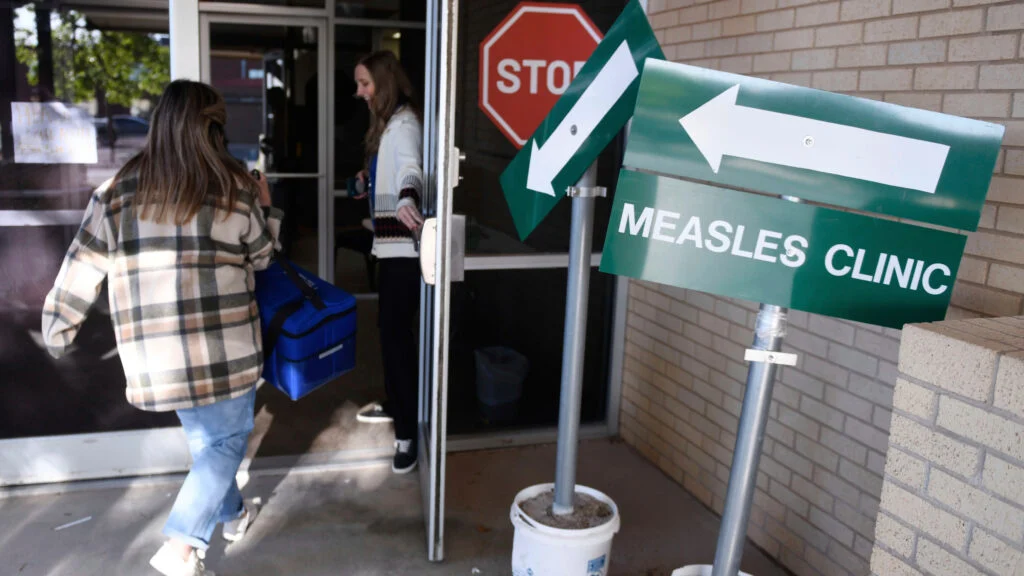
The rapid escalation of cases in 2026 has officially made this the nation’s most severe measles year since 1991. The current surge is driven largely by massive outbreaks in South Carolina, Utah, and Arizona, where the virus has sickened hundreds of individuals, while smaller but significant clusters continue to ignite in dozens of other states. The sheer velocity of the spread has alarmed epidemiologists, who warn that the U.S. is at a critical juncture in its decades-long battle against vaccine-preventable diseases.
In November, the stakes will heighten as international health officials convene to determine a pivotal verdict: whether the United States and Mexico have officially lost their status as "measles-free" nations. This status is not merely a badge of honor but a reflection of a robust public health infrastructure. The U.S. achieved the "elimination" of local measles spread in 2000, a feat made possible by decades of maintaining high vaccination rates. However, that success was predicated on a 95% vaccination coverage rate—the "herd immunity" threshold required to prevent the virus from finding a foothold. In recent years, national coverage for the measles, mumps, and rubella (MMR) vaccine has slipped below this critical mark, effectively turning many communities into "dry tinder" for viral sparks.
The Shadow Pandemic: Why Official Counts Fall Short
While the official tally of 2,318 cases is already historic, public health experts warn that the true scale of the 2026 outbreak is likely much larger. The phenomenon of undercounting is a persistent challenge in infectious disease surveillance. Many individuals infected with measles may experience milder symptoms if they have partial immunity, or they may simply avoid the healthcare system altogether due to lack of insurance, distrust of medical institutions, or a desire to avoid quarantine measures.
Furthermore, measles is widely regarded as one of the most contagious pathogens known to medical science. It has an "R-naught" (R0) value—a measure of how many people one infected person will likely infect in a non-immune population—estimated between 12 and 18. For comparison, the original strain of COVID-19 had an R0 of approximately 2 to 3. Because the virus is airborne and can linger in the air for up to two hours after an infected person has left a room, the potential for "silent spread" is immense.
The decline in vaccination rates has only exacerbated this visibility gap. National MMR vaccination rates among kindergartners dropped to 92.5% in the 2024-25 school year, down from 95.2% in 2019-20. While a 2.7% drop might seem marginal to the layperson, in the context of a hyper-contagious virus like measles, it represents a catastrophic breach in the nation’s collective shield. This national average also masks much lower rates in specific pockets of the country, where vaccine hesitancy is concentrated.
In Utah, where public health officials have been battling a persistent outbreak for over a year, the state health department has confirmed more than 700 cases. However, Dr. Leisha Nolen, the state epidemiologist, suggests the reality on the ground is far more severe. Using mathematical modeling and genetic sequencing of viral samples, researchers estimate that a major outbreak spanning the Utah-Arizona border could be three to four times larger than the official count. This suggests that thousands of infections may be going unrecorded in the Mountain West alone.
The situation is equally opaque in South Carolina, which recently recorded its largest outbreak in 35 years. With 997 confirmed cases, the state health department has admitted the figure is almost certainly an undercount. Dr. Brannon Traxler, acting director of the state’s health department, noted that the true magnitude of the spread is "impossible to know" and fluctuates as the outbreak moves through different social networks. Without a "gold standard" for reporting—such as mandatory reporting of all measles-related hospitalizations across all 50 states—health officials are forced to rely on estimates and proxy data.
Lessons from the Lone Star State
As researchers scramble to contain the 2026 surge, they are still unpacking the data from the 2025 Texas outbreak to understand how the current crisis spiraled out of control. Early findings from Texas suggest that the state’s 762 known cases in 2025 were likely just the tip of the iceberg, with the actual number of infections potentially being twice as high.
Rémy Pasco, a mathematical epidemiologist at the University of Colorado Boulder, emphasizes that once vaccination rates fall below the 95% threshold, public health interventions become reactive rather than proactive. "There’s just not much you can do about measles once you have it," Pasco noted. He explained that by the time a cluster of three cases is identified—the CDC’s definition of an outbreak—the virus has often already established a foothold that makes containment nearly impossible in under-vaccinated communities.
In western Texas, Gaines County became the epicenter of the 2025 crisis. The state health department reported that at least 182 "probable" cases among minors went unconfirmed in March 2025 simply because health officials could not obtain the necessary testing or household information. Dr. Varun Shetty, Texas’s chief state epidemiologist, highlighted the difficulty of surveillance when the public is hesitant to cooperate. "What we’re able to count and report is almost always an underestimate," Shetty said, "because it relies on people being willing to get tested and share information with public health. Sometimes that just doesn’t happen."
The Biology of Risk and the "Innocent Bystander"
The resurgence of measles is not just a statistical concern; it is a biological one. Measles is known to cause "immune amnesia," a condition where the virus attacks the memory cells of the immune system, effectively "erasing" the body’s ability to fight off other diseases it had previously conquered. This means that a measles survivor may be more vulnerable to other infections for months or even years after recovery.
Dr. Mark Roberts, the retired director of the Public Health Dynamics Lab at the University of Pittsburgh School of Public Health, argues that the conversation around vaccination has been dangerously reframed as a matter of personal liberty rather than collective safety. He expresses profound concern for the "innocent bystanders"—those who cannot be vaccinated for legitimate medical reasons. This group includes infants too young for the MMR shot (typically given at 12 months), individuals with compromised immune systems (such as those undergoing chemotherapy), and the small percentage of the population for whom the vaccine does not produce a robust immune response.
Roberts uses a stark automotive analogy to describe the choice to forgo vaccination. While some compare skipping a vaccine to not wearing a seat belt—a choice that primarily affects the individual—Roberts says a more accurate comparison is driving a car without brakes. "Not vaccinating your kid is like saying, ‘I don’t want my car to have brakes,’" he said. "Because it’s other people that you can hit. It’s not just you in your car. It’s other people."
A Fragile Future for Public Health
The current trajectory of the 2026 outbreak suggests that the U.S. may be entering a new era of endemic measles, reversing decades of progress. The upcoming November meeting of international health officials could serve as a watershed moment. If the U.S. loses its elimination status, it would join a small list of countries where the disease has successfully staged a comeback after being eradicated.
The factors contributing to this decline are multifaceted: a rise in anti-vaccine sentiment fueled by social media misinformation, a decrease in trust in government institutions following the COVID-19 pandemic, and legislative efforts in several states to make it easier for parents to opt out of school vaccination requirements for non-medical reasons.
Public health officials emphasize that the solution remains the same as it was in 2000: high vaccination coverage. "It’s really critical, not only for individual people, but for communities, to have high vaccination coverage," Dr. Shetty of Texas reiterated. As the U.S. moves into the final months of 2026, the focus remains on closing the immunity gaps that have allowed a 33-year record to be broken. Without a significant shift in public cooperation and vaccination uptake, the 2,318 cases recorded so far may only be the beginning of a much longer, more painful chapter in American public health.
