
 By Rifan Muazin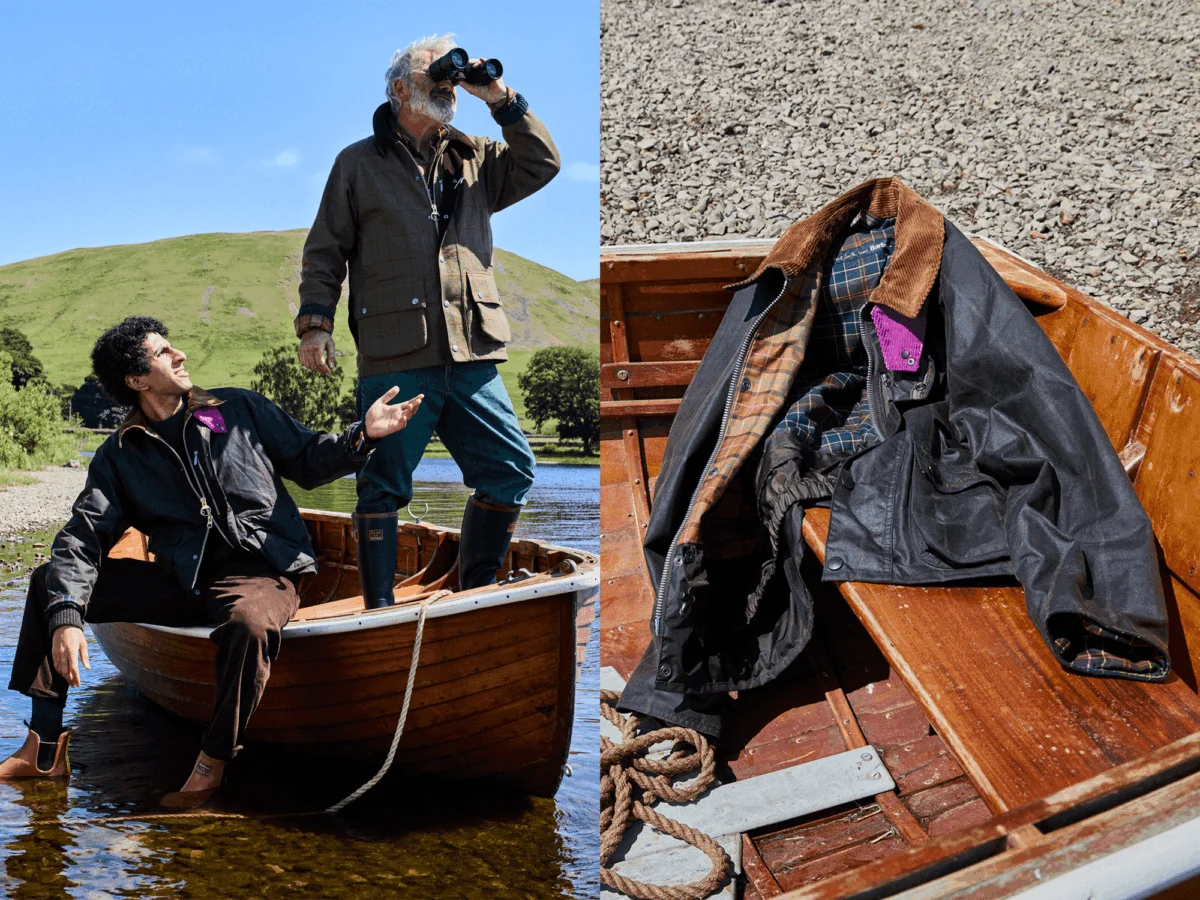
The collection is expansive, bridging the gap between gendered silos with a range that spans both men’s and women’s wardrobes. Comprising nearly 40 distinct products, the lineup moves far beyond the signature waxed cotton shells that made Barbour a household name. It includes meticulously crafted shirting, heavy-gauge knitwear, durable footwear, and a suite of accessories, all of which are saturated with design cues that serve as a visual dialogue between the two brands. On one side of the conversation is Barbour’s signature Tartan—a pattern that speaks to the damp Moors and the rigorous demands of country life. On the other is Sir Paul Smith’s electric "Artist Stripe" and a selective, high-contrast neon palette. This is not merely a logo-swapping exercise; it is a genetic infusion where the DNA of each brand is spliced to create something that feels entirely fresh yet remains deeply rooted in British manufacturing heritage.
To understand the weight of this collaboration, one must consider the historical gravity of the participants. Barbour, founded in 1894 in South Shields by John Barbour, began as an importer of oilcloth. For over 130 years, the brand has been the definitive purveyor of protective outerwear, earning three Royal Warrants and becoming an unofficial uniform for everyone from dockworkers and motorcyclists to the British landed gentry. Their jackets are famously designed to last a lifetime, often passed down through generations, gathering a patina of wax and memories. Paul Smith, by contrast, emerged from the burgeoning fashion scene of the 1970s. Sir Paul Smith’s rise from a small shop in Nottingham to a global fashion empire was fueled by a unique ability to inject humor, color, and unexpected details into traditional tailoring. When these two worlds collide, the result is a tension between the stoic and the playful.
The undisputed stars of this third collaboration are the reimagined jackets and coats, which take Barbour’s most iconic silhouettes and subject them to Smith’s inquisitive eye. The Beaufort jacket, perhaps the most recognizable piece in the Barbour archive, receives a dramatic facelift. Originally designed in 1982 by Dame Margaret Barbour, the Beaufort was inspired by French shooting jackets—noted for its shorter length compared to traditional hunting coats and its functional rear "game pocket." In this collection, the Beaufort is elevated through the use of premium materials. One version is rendered in an inky, plush corduroy that offers a tactile richness rarely seen in utility wear, priced at $590. Another iteration utilizes a beefy, oversized windowpane check wool sourced from the historic British mill Abraham Moon & Sons, retailing for $995. Founded in 1837 in Guiseley, West Yorkshire, Abraham Moon is one of the last remaining vertical woollen mills in Great Britain, and its inclusion here underscores a commitment to domestic craftsmanship that both Barbour and Paul Smith hold dear.
Equally compelling is the treatment of the Transport Jacket. In recent years, the Transport has seen a massive resurgence among younger menswear enthusiasts and streetwear aficionados due to its boxy, cropped silhouette, which pairs more easily with modern proportions than the longer Bedale or Beaufort models. The Barbour x Paul Smith version of the Transport Jacket ($625–$890) is offered in a hardy charcoal wool and a distinctive "rusty red" waxed cotton featuring a subtle windowpane overlay. However, the true "Smithian" magic is found in the details that aren’t immediately visible to the casual observer. Each jacket features a bespoke lining that reimagines Barbour’s Classic Tartan through a Paul Smith lens, incorporating unexpected flashes of color. Furthermore, the functional throat latch—a staple of Barbour design intended to keep the wind out—has been reimagined in an eye-popping, neon pink-magenta hue. It is a signature Paul Smith "reveal," a hidden pop of joy that serves as a secret handshake between the designer and the wearer.
The collaboration extends its reach into mid-layers and accessories, ensuring a cohesive aesthetic for the autumn and winter months. The knitwear, in particular, showcases a sophisticated understanding of texture and color-blocking. The Colourblock Tyne Sweater ($290) and the Gamefair Zip Cardigan ($330) utilize mouline yarns to create a salt-and-pepper effect that balances the brighter neon accents. These pieces are designed to be layered under the heavier outerwear, providing a pop of color at the collar or cuff that ties the entire look together. The shirting follows suit, with the Beige Tartan Shirt ($200) offering a more muted, versatile take on the collection’s themes, while still maintaining the high-quality construction expected from a premium British link-up.
Footwear and accessories round out the collection, proving that the collaboration’s vision extends to every facet of the outdoor lifestyle. The Navy Tall Wellingtons ($255) provide a stylish solution for inclement weather, featuring subtle branding and the same attention to color-play seen in the apparel. Accessories like the Tartan Cap ($65) and the Yellow Mini Tarras Bag ($210) offer more accessible entry points into the collection. The Tarras bag, originally designed for hunters to carry cartridges, is transformed here into a bold urban accessory, its vibrant yellow hue a far cry from the traditional olive drabs of the countryside. Even the most utilitarian of items—the Wax Thornproof Dressing ($25)—is included, presented in a specially designed tin. This inclusion is significant; it reminds the consumer that these are not "disposable" fashion items. They are investments intended to be maintained, re-waxed, and worn for decades.
From a market perspective, this collaboration arrives at a pivotal moment for "heritage" fashion. We are currently witnessing a transition away from the aggressive logos of the late 2010s toward a more nuanced appreciation for "New Heritage"—a style that values the provenance and durability of traditional brands but demands a modern, individualized aesthetic. By partnering with Paul Smith, Barbour successfully avoids the trap of becoming a museum piece. They demonstrate that their silhouettes are versatile enough to handle bold colors and avant-garde fabrics without losing their essential identity. For Paul Smith, the partnership provides a rugged canvas to showcase his design language, grounding his whimsy in the undeniable reality of Barbour’s functional excellence.
The collection also serves as a masterclass in the "collaboration economy." In an era where brand fatigue is common, the most successful partnerships are those that feel organic rather than forced. Because Barbour and Paul Smith share a common nationality and a mutual respect for craft, the "link-up" feels like a natural evolution of a long-standing friendship. This is likely why the collection feels so "collectible." These pieces are destined to become fodder for future vintage dealers, prized for their unique blend of two distinct eras of British design. They represent a specific moment in fashion history where the lines between the city and the country, the traditional and the neon, became joyfully blurred.
Ultimately, the Barbour x Paul Smith collection is an invitation to look at heritage with fresh eyes. It suggests that while we should respect the past, we are not beholden to its color palette or its rigid definitions of "appropriate" attire. Whether it is a corduroy Beaufort or a magenta-latched Transport jacket, these pieces are designed for the man or woman who appreciates the weight of history but refuses to be weighed down by it. The collection is available now through both Paul Smith and Barbour retail channels, offering a rare opportunity to own a piece of "renovated" British history. As the winter months approach, there are few better ways to brace against the elements than with a jacket that carries the warmth of the North East and the wit of a Nottingham legend. These aren’t just jackets; they are a celebration of the enduring, evolving spirit of British style.
