
 By admin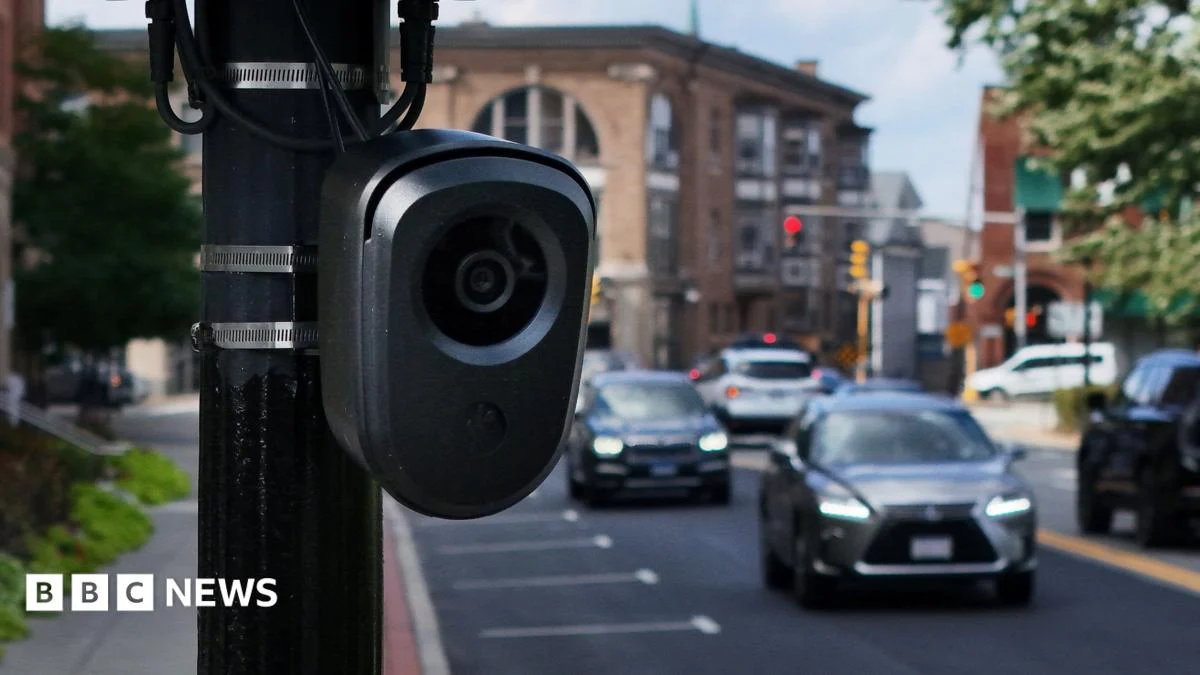
Houston’s historic Old Braeswood neighborhood, known for its affluent ambiance and verdant, tree-lined streets, is not the kind of locale one would typically associate with coordinated acts of vandalism. Yet, in the dead of night in late July, four surveillance cameras, meticulously installed to monitor the area, were systematically attacked and severed from their metal poles. The distinctive black oval cameras, accompanied by their solar panels, were found discarded on the ground, a stark visual testament to a growing unease surrounding the proliferation of sophisticated, AI-powered surveillance systems across the United States. Red signs emblazoned with "Notice. 24/7 video recording" served as a chilling reminder of the technology’s omnipresence, even as it became the target of this targeted destruction.
This incident in Houston is not an isolated event. Similar acts of vandalism have been reported in Minnesota, California, and Georgia, signaling a broader, nationwide wave of discontent and protest against what many perceive as an encroaching surveillance state. While proponents of these AI-powered cameras, such as those manufactured by Flock Safety, tout their effectiveness in enhancing community safety and significantly increasing the rate at which crimes are solved, recent instances of misuse have ignited a fervent debate about privacy, civil liberties, and the very definition of public safety in an increasingly technologically advanced society. Critics argue that these cameras, which meticulously capture images of the rear of every vehicle that passes, function as overly broad investigative tools, effectively treating every civilian as a potential suspect. The sight of these small, black poles appearing in neighborhoods is increasingly viewed as a tangible manifestation of state power, particularly at a time when public confidence in institutions is at historic lows, and anxieties about the accelerating pace of technological change and the pervasive influence of Artificial Intelligence on daily life are on the rise.
Founded in 2017, Flock Safety has rapidly ascended to become one of the nation’s leading manufacturers of Automatic License Plate Readers (ALPRs). These AI-powered cameras are designed to capture images of the rear of every vehicle that passes, with footage retained for a predetermined period. However, the true extent of Flock’s deployment remains largely opaque. The company itself does not publicly disclose precise data, but it claims to collaborate with over 7,000 communities nationwide, estimating that approximately 100,000 cameras are currently in operation.
Recently obtained records, however, offer a rare glimpse into the expansive network of cameras and surveillance technology being utilized within Houston, America’s fourth-largest city. These documents reveal the presence of controversial facial recognition software, also powered by artificial intelligence. Flock Safety’s business model extends beyond simply selling cameras; it offers access to a vast database that aggregates footage from thousands of cameras across the country. This interconnected network, a significant selling point for law enforcement agencies, far surpasses the capabilities of older, standalone ALPR systems.
For instance, Houston’s METRO Transit Authority operates 35 of its own cameras. Yet, internal documents indicate that METRO has access to an astonishing network of around 20,000 devices within the broader Flock system, including cameras located as far away as Albany County, New York. The reach of this surveillance infrastructure is not static; it continues to expand. Documents released to the BBC illustrate a year-on-year growth in the scope of these networks. In the Cypress-Fairbanks independent school district, a typical license plate lookup in April 2024 encompassed approximately 270 camera networks. By April 2025, this search scope had nearly doubled to around 500 networks. The trend continued, with 20% of searches in April 2026 being conducted across more than 6,000 networks.
Civil liberties advocates in Houston express profound concern over this national network, viewing it as more alarming than individual camera installations. Christopher Rivera, representing the Texas Civil Rights Project, articulates a chilling fear: "These databases could be used to search our everyday routines, which ultimately maps out our routes to work, where our children go to school, and where we worship. And that’s very problematic."
The escalating privacy concerns are underscored by recent incidents that have garnered national attention. In Kentucky, a police officer was charged after reportedly using the Flock system to track his ex-girlfriend, who had a protection order against him, over 2,000 times. His misuse was uncovered by Flock’s newly mandated, AI-powered audit tool, designed to flag suspicious activity. Furthermore, there are growing anxieties that Flock systems may be exploited by law enforcement to circumvent the need for warrants, which are typically required to search private property or intercept communications. In a striking example from 2025, a detective in Johnson County, Texas, conducted searches of over 80,000 images to locate a woman suspected of having an abortion, all without a warrant.
While closed-circuit television (CCTV) cameras, license plate readers, and general surveillance are not novel concepts, the sheer scale of Flock’s network and its integration with AI represent a significant recent development. This technological leap has propelled Flock into the public consciousness, prompting Americans who might have previously overlooked the cameras in their cities to become increasingly aware of and concerned about the capabilities of the surrounding technology. The AI component, unlike older license plate readers, allows law enforcement to conduct searches using descriptive terms such as "Caucasian man, blue shirt," moving beyond simple license plate identification.
It is important to note that Flock Safety does not utilize facial recognition technology. However, this does not mean that police departments are eschewing this controversial technology. Critics argue that facial recognition infringes upon human rights, is prone to misidentifying innocent individuals, and exhibits inherent biases, particularly against minority populations. The BBC has obtained documents revealing that the Harris County Sheriff’s Office, which oversees Houston, employs other facial recognition technology, specifically Clearview AI. This system boasts a database exceeding 70 billion images, many of which have been reportedly scraped from public internet sources, including social media platforms. The disclosed documents, including purchase orders and a license agreement, indicate that the county’s contract for Clearview AI is valid through March 2027. The Harris County Sheriff’s Office’s utilization of this facial recognition technology has not been previously reported. Attempts to solicit comment from the office were unsuccessful.
Law enforcement officials, however, maintain that surveillance technology, including Flock cameras, plays a crucial role in combating crime. Chief Ray Schultz of the Memorial Villages Police Department, a small jurisdiction within Houston, describes the technology as "a very good tool" that "makes the community safer." He reported that prior to acquiring a Flock ALPR, his department recovered an average of three stolen cars annually. This figure has since surged to 45. Chief Schultz further asserts that certain crimes solved in recent years would have been "impossible" to resolve without the assistance of Flock. He recounted a recent incident where the tool was instrumental in locating an elderly woman with dementia who had driven 60 miles from Galveston to Houston and become disoriented. "We were able to find her and reunite her with her family," he stated. Chief Schultz emphasizes the importance of robust policies governing ALPR usage and holding officers accountable for any misuse. "But don’t throw out a tool that is valuable, that can help recover a missing child," he urged.
Despite these assurances, concerns persist among various community groups. Jasmine Khadem Gonzalez, an immigrant rights organizer, voices her apprehension that law enforcement might leverage the Flock database to track individuals for Immigration and Customs Enforcement (ICE). While ICE does not have a direct contract with Flock, there have been reports of police officers citing "immigration" or "ICE" as a justification for license plate searches. Jessie, an immigrant from Central America, who requested her real name be withheld due to fear of jeopardizing a pending green card extension case, expressed her unease upon noticing a Flock camera outside her residence. "It makes me feel as if I’m being stalked," she confided, explaining that she now deliberately varies her daily commute to avoid establishing a discernible pattern. While Flock’s CEO states that federal immigration enforcement cannot directly access Flock data, the reality is more nuanced. Some police departments have established standing agreements with federal immigration authorities, facilitating collaborative efforts. In Harris County, a proposed amendment to the Flock contract that would have explicitly authorized the sharing of camera data with federal law enforcement was ultimately removed following significant pushback from advocacy groups.
The growing chorus of concerns has led some jurisdictions to reconsider their engagement with Flock. Large metropolitan areas such as Los Angeles, Seattle, and Austin, Texas, have opted not to renew their contracts. According to the advocacy group Secure Justice, over 200 communities have canceled or not renewed their contracts with Flock since 2021, with an astonishing 90 cancellations occurring in August alone. Reasons for these cancellations vary, encompassing both cost considerations and mounting worries about data privacy.
On a national level, lawmakers from both sides of the political spectrum have called for the implementation of regulatory safeguards, and the issue has emerged as a prominent campaign topic in the lead-up to upcoming midterm elections. Republican Congressman Keith Self has introduced legislation that would mandate federal agencies to obtain warrants before accessing Flock data. In response to mounting pressure, Flock Safety has made some policy adjustments. These include the implementation of mandatory audits and a reduction in the default data retention period from 30 days to 7 days, unless the data is flagged as part of an ongoing investigation. However, individual agencies retain the discretion to store data for significantly longer periods.
Garrett Langley, the CEO and founder of Flock Safety, maintains that the decision regarding data storage duration and information sharing rests with individual cities. "I don’t think a technology company should be making decisions like that," he stated. "As long as it’s a lawful investigation, we are not going to tell cities what laws they should or should not enforce." Langley characterizes Flock as a safety company rather than a surveillance company, despite the inclusion of the word "surveillance" in three patents filed by the company between 2020 and 2025. He proudly claims that the technology has been instrumental in solving "about a million crimes" and aiding in the recovery of over 10,000 missing individuals. While acknowledging that the "debate of how we build a society where safety and privacy coexist" is a necessary one, he expressed disappointment regarding the ongoing vandalism. For individuals like Jessie, however, the company’s assurances and the police’s justifications offer little solace. "I just don’t trust that they’re doing it to keep us safe," she concluded, reflecting a sentiment shared by an increasing number of Americans grappling with the pervasive reach of modern surveillance technologies.
