
 By admin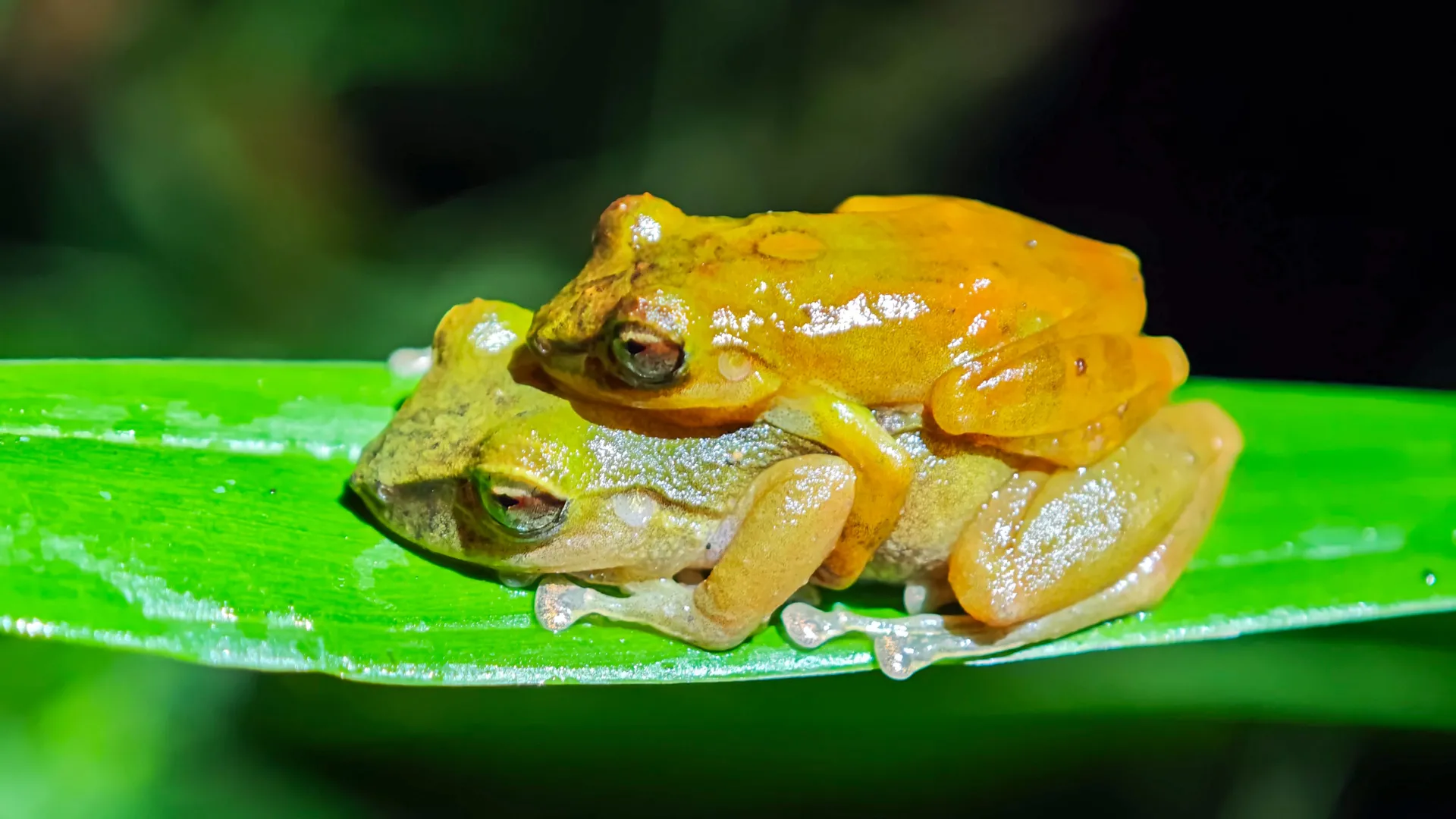
The formal description of Pristimantis milpe, now known colloquially as the Milpe Robber Frog, represents a significant finding in the field of biodiversity. Unlike many newly described species, which are often rare, elusive, or confined to incredibly small and remote habitats, Pristimantis milpe is notably widespread and relatively easy to encounter within its extensive range. Its presence is readily detected by its distinctive nighttime call, a "click" that echoes through the tropical forests. The frog’s known distribution spans more than 67,000 square kilometers, encompassing the rich and biodiverse Chocó forests of western Ecuador and extending into southern Colombia. This vast geographical spread, from sea level to elevations of 1,200 meters, further accentuates the scientific irony that such a prominent species could have eluded proper classification for so long.
The story of Pristimantis milpe‘s belated recognition is a compelling narrative of scientific detective work, bridging centuries of observation and modern taxonomic rigor. For over 100 years, this frequently encountered amphibian was erroneously categorized under a different scientific name, creating a persistent ambiguity in the understanding of Neotropical anuran diversity. The journey to correct this long-standing error began with a dedicated effort to revisit the foundational specimens that underpin much of our understanding of species.
Santiago Ron, a distinguished researcher at the Pontificia Universidad Católica del Ecuador (PUCE) and the lead author of the study, spearheaded this investigative endeavor. His quest took him across the Atlantic to the Natural History Museum in London (NHM), an institution renowned for its vast and historically significant collections. The NHM houses millions of specimens, many of which date back to the earliest explorations of the planet’s biodiversity, serving as invaluable archives of life on Earth. Ron’s mission was specifically to examine the "type specimens"—the original, designated individuals upon which a species’ scientific name and description are formally based. These types, collected in Ecuador during the 19th century, had been carefully preserved within the museum’s hallowed halls ever since, silent witnesses to a taxonomic puzzle waiting to be solved.
The examination of these historical specimens proved to be the linchpin in unraveling the mystery. By painstakingly comparing the morphological characteristics of these century-old frogs with those of living populations from the Ecuadorian Chocó, Ron and his team uncovered a critical discrepancy. The historical specimens had, for reasons unclear to past generations of scientists, been incorrectly associated with another species. This misidentification meant that the widespread and commonly observed frog, which had been documented and encountered by countless naturalists and local communities for decades, had never received a scientific name uniquely its own. It existed in a taxonomic limbo, a familiar face without a formal identity.
Jhael Ortega, a PhD student at Virginia Tech and a co-author of the study, eloquently captured the significance of this revelation: "That such a common species has gone unnoticed under the wrong name for decades highlights the importance of correctly connecting scientific names with living populations in nature." Her statement underscores a fundamental principle of taxonomy: accurate identification and naming are not merely academic exercises but are foundational to all biological research, from ecological studies to conservation planning. Without a correct name, it becomes exceedingly difficult to track populations, assess conservation status, or understand evolutionary relationships. The case of Pristimantis milpe serves as a powerful reminder that even in an era of advanced genetic sequencing and satellite mapping, the bedrock of natural history research—meticulous observation and comparison of specimens—remains indispensable.
The Milpe Robber Frog, or Cutín de Milpe as it is known locally, is an intriguing creature with distinct behavioral and physical characteristics. It is a nocturnal species, emerging from its daytime retreats as dusk settles over the Chocó forests. Males of the species are particularly vocal, typically calling from elevated perches on leaves of shrubs and bromeliads, often several meters above the forest floor. Their calls are not only loud but also strikingly distinctive, characterized by a sharp, "clicking" sound. This acoustic signature is a crucial element in their identification and underscores the importance of bioacoustics in amphibian research, where unique calls often serve as primary indicators of species presence and identity.
Beyond their vocalizations, Pristimantis milpe exhibits noticeable sexual dimorphism in appearance. Females of the species possess particularly striking coloration around the groin and thighs, where vibrant orange or light blue tones can appear alongside prominent black spots, creating a vivid mosaic. Males, in contrast, generally display more uniform and subdued coloring, likely serving as camouflage. This difference in coloration could play various roles in their ecology, from species recognition and mate attraction to aposematism (warning coloration) in females, signaling potential toxicity to predators, although further research would be needed to confirm such hypotheses. Like other members of the Pristimantis genus, the Milpe Robber Frog belongs to a diverse group known for its direct development, meaning they bypass a free-swimming tadpole stage, with eggs hatching directly into miniature versions of the adult frogs. This reproductive strategy is a key adaptation to life in terrestrial environments, particularly in humid forest settings.
The habitat of Pristimantis milpe—the Chocó forests of western Ecuador and southern Colombia—is a region of immense ecological significance. Recognized as one of the world’s most critical biodiversity hotspots, the Chocó biogeographical region is characterized by exceptionally high levels of endemism, meaning many species found here exist nowhere else on Earth. Its dense, humid rainforests are home to an extraordinary array of flora and fauna, including numerous amphibian, reptile, bird, and mammal species. However, this ecological richness is under severe threat from anthropogenic activities, including deforestation for agriculture (especially oil palm and cattle ranching), illegal mining, logging, and infrastructure development. The formal description of Pristimantis milpe not only adds another named species to this precious ecosystem but also highlights the urgent need for enhanced conservation efforts across its range. Understanding the full extent of a species’ distribution and its ecological role is a prerequisite for effective protection strategies.
This discovery powerfully highlights the continuing and often underestimated scientific importance of natural history collections. In an age dominated by advanced molecular techniques and digital data, the physical specimens preserved in museums for decades, or even centuries, might seem like relics of the past. However, as the Pristimantis milpe case demonstrates, these collections are invaluable scientific assets. They serve as irreplaceable historical snapshots of biodiversity, offering researchers a tangible link to past ecosystems and evolutionary trajectories. Specimens collected long ago provide baselines against which contemporary changes can be measured, allow for the re-evaluation of old classifications with new knowledge and technologies (such as advanced imaging or even DNA extraction from preserved tissues), and enable the resolution of taxonomic puzzles that earlier scientists, limited by the tools and understanding of their time, could not solve.
The methodology employed in this study—combining careful examination of 19th-century museum specimens with extensive observations and morphological analyses of living frog populations in the field—exemplifies a powerful interdisciplinary approach. This synthesis allowed researchers to definitively determine that Pristimantis milpe possessed unique characteristics that merited its recognition as a distinct species, finally giving it its rightful place in the scientific lexicon. This process also highlights the iterative nature of scientific discovery; taxonomy is not a static field but one that constantly evolves as new information comes to light.
Furthermore, the findings underscore a profound truth about global biodiversity: much remains to be learned. Even common, widespread animals, those frequently encountered and seemingly familiar, can conceal scientific surprises. The planet’s biodiversity is so immense and complex that even well-trodden paths can yield novel insights. Solving these mysteries often depends on the synergistic integration of historical collections, which provide essential context and comparative material, with modern research techniques and contemporary field observations. As humanity faces an accelerating biodiversity crisis, with species disappearing at an alarming rate, such discoveries are more vital than ever. Each formally described species adds another piece to the intricate puzzle of life, allowing scientists to better understand, appreciate, and ultimately protect the natural world. The recognition of Pristimantis milpe is not just the naming of a frog; it is a testament to the enduring value of scientific inquiry, the silent power of museum archives, and the endless wonders still waiting to be uncovered in Earth’s most biodiverse corners.
