
 By admin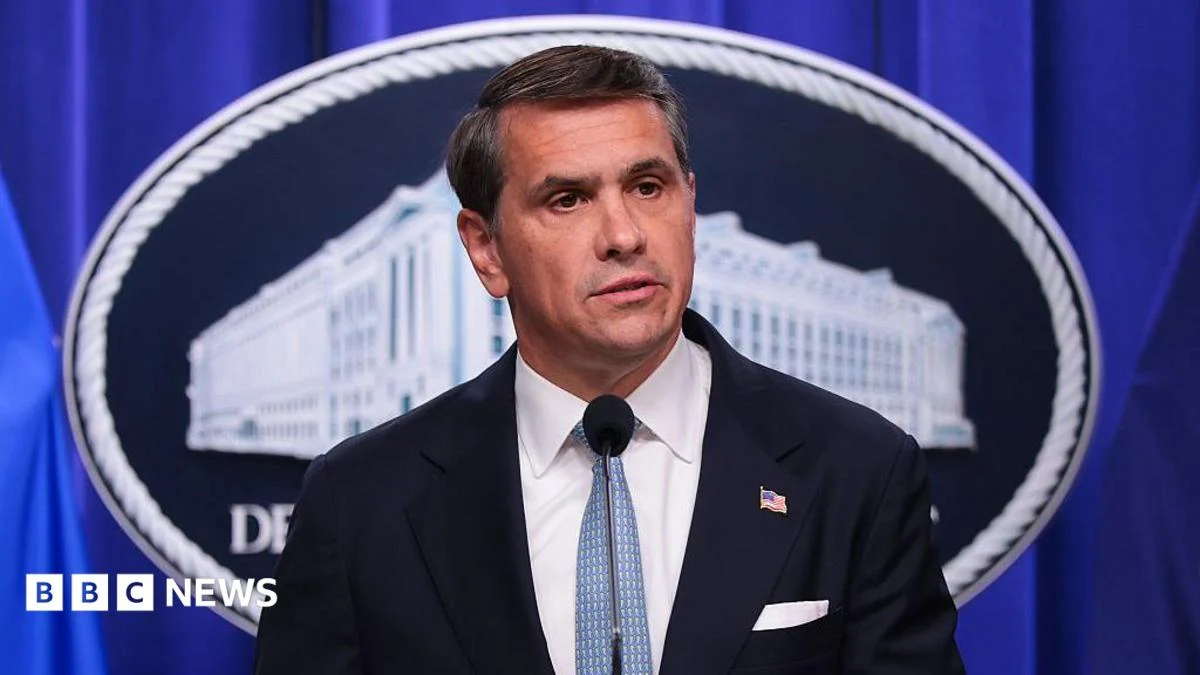
In a nail-biting 50-49 vote, Todd Blanche, former personal lawyer to President Donald Trump, has officially secured the position of United States Attorney General, placing him at the helm of the nation’s top law enforcement agency. The confirmation, however, was far from unanimous, with Republican Senators Susan Collins and Lisa Murkowski casting dissenting votes, highlighting deep divisions within the party and raising significant questions about Blanche’s suitability for the powerful role. The pivotal deciding vote came from Senator Bill Cassidy, whose announcement of support for Blanche was closely watched due to years of palpable animosity between the senator and President Trump. Washington had been holding its breath, awaiting Cassidy’s decision, which ultimately tilted the scales in favor of the president’s nominee.
This narrow victory marks the end of a protracted and often acrimonious standoff between Senate Republicans and the Trump administration concerning Blanche’s nomination. Blanche has been serving as the acting Attorney General since April, a period characterized by intense scrutiny and debate over his past actions and potential future influence. The confirmation process underscored a significant schism, with all Democratic senators unequivocally opposing his ascent to lead the Department of Justice, signaling their deep-seated reservations about his alignment with the executive branch.
The opposition from some Republican senators was rooted in specific concerns regarding Blanche’s professional conduct and his involvement in initiatives that critics deemed problematic. Foremost among these were his handling of the release of sensitive Jeffrey Epstein-related documents and his instrumental role in establishing President Trump’s ambitious $1.8 billion "anti-weaponization" fund. This fund, ostensibly designed to provide compensation to individuals alleging government persecution, sparked widespread alarm among lawmakers. Critics, including Senator Murkowski, voiced grave fears that the fund could be exploited to benefit individuals prosecuted for their participation in the January 6th attack on Congress, a scenario that raised profound questions about the impartiality of justice.
Under immense pressure and facing significant blowback from Republican senators during his confirmation hearings, Todd Blanche eventually pledged to retract the controversial "anti-weaponization" fund. However, the ultimate impact and legal binding of this commitment remain subjects of considerable uncertainty. The question lingers whether this pledge is a legally enforceable guarantee or if President Trump, leveraging his former personal attorney’s loyalty, could later orchestrate the revival of a similar scheme under a different guise. This ambiguity fueled the reservations of Senators Collins and Murkowski, with the latter explicitly stating her lack of confidence in Blanche’s ability to "check the worst impulses of this administration."
Senator Murkowski, in her formal announcement on Friday, articulated her opposition, citing her profound concerns over the "politicization" of the justice department under Blanche’s potential leadership. She emphasized that the integrity of the legal system should remain paramount, free from partisan interference or undue executive influence. Senator Collins, while also expressing reservations about Blanche’s role in settling President Trump’s substantial $10 billion lawsuit with the Internal Revenue Service (IRS), ultimately conveyed a degree of trust in Blanche’s capacity to provide "candid legal advice" to the President. This nuanced position suggests a pragmatic approach from Collins, weighing specific concerns against an acknowledgment of the need for presidential counsel, albeit with a cautious undertone.
Senator Bill Cassidy, in defending his crucial vote, sought to frame the decision as a matter of selecting the most suitable candidate rather than a broad endorsement of President Trump’s broader agenda. "This is not a referendum on President Trump, it is a decision regarding Mr Blanche, in very specific circumstances," Cassidy stated on Friday. "All considered, I will vote for Mr Blanche." He acknowledged the president’s ultimate authority in shaping the direction of the Department of Justice but argued that Senate confirmation would imbue Blanche with "greater leverage to push for things that should be pushed for." This perspective suggests a belief that a confirmed Attorney General, even one with close ties to the President, might possess the independence to advocate for the department’s best interests.
Furthermore, Senator Cassidy revealed his reluctance to impede the department’s critical work in combating violent crime. This pragmatic consideration, he implied, weighed heavily in his decision. The context of Cassidy’s political history adds another layer of complexity to his vote. In 2021, during President Trump’s second impeachment trial, Cassidy cast a vote to convict Trump for his role in the January 6th Capitol riot. This vote, while ultimately unsuccessful in convicting the former president, had significant repercussions for Cassidy. Upon Trump’s return to office, he actively supported a primary challenger against Cassidy, effectively forcing the senator into retirement from his Louisiana Senate seat earlier this year. This history of direct confrontation with Trump, followed by this confirmation vote, paints a picture of a senator navigating complex political currents and personal calculations.
The confirmation of Todd Blanche also brings a shift in the leadership structure within the Department of Justice. Blanche was already serving as deputy attorney general when he assumed the interim leadership role in April, following the dismissal of Pam Bondi. His promotion to the top position signifies a consolidation of power and a clear direction for the department under the Trump administration. The journey to this confirmation has been arduous, marked by intense political maneuvering, public scrutiny, and the weighing of conflicting priorities. The narrow margin of victory and the dissenting votes from within his own party serve as stark reminders of the deep ideological divides and the challenges that lie ahead for the newly confirmed Attorney General. The nation will undoubtedly be watching closely to see how Todd Blanche navigates the immense responsibilities of his office, particularly in balancing his loyalty to the President with the imperative of upholding the rule of law and ensuring the impartial administration of justice. The legacy of his tenure will be shaped by his ability to address the lingering concerns and to demonstrate a commitment to the foundational principles of the Department of Justice.
