
 By admin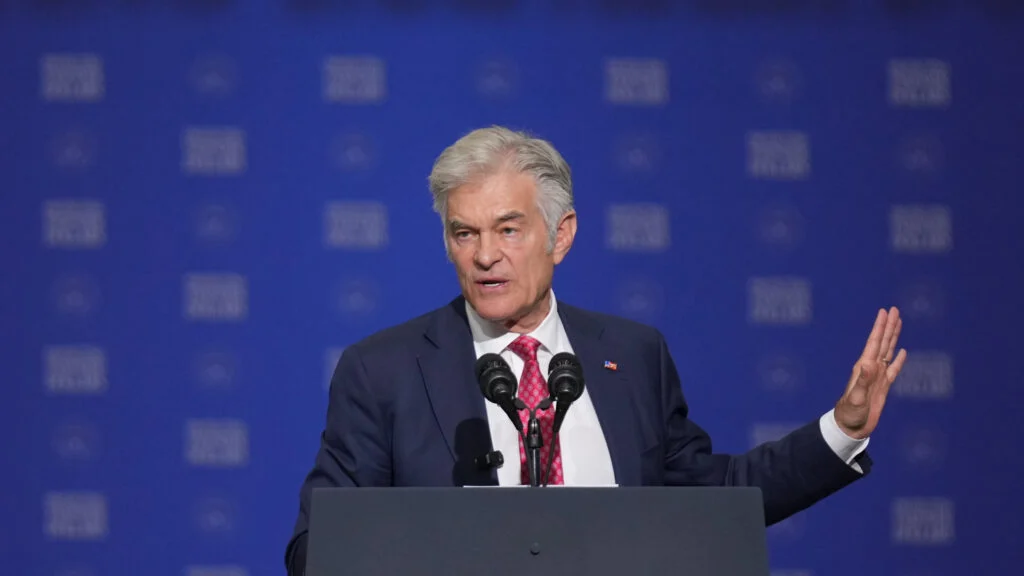
The Trump administration escalated its aggressive overhaul of federal healthcare oversight on Tuesday, announcing the deferral of more than $1 billion in Medicaid payments to Minnesota and California. This move, rooted in allegations of "suspected fraud and noncompliance," marks the latest chapter in a tightening fiscal strategy that has disproportionately affected Democratic-led states. Health and Human Services (HHS) Secretary Robert F. Kennedy Jr., alongside Centers for Medicare & Medicaid Services (CMS) Administrator Dr. Mehmet Oz, framed the decision as a necessary pivot from reactive "pay-and-chase" tactics to a proactive "pre-payment" verification model. By withholding these funds, the administration aims to force state governments to provide exhaustive documentation for expenditures that federal auditors have flagged as suspicious.
The financial impact of Tuesday’s announcement is substantial, with $867.5 million in federal Medicaid payments being withheld from California and $199 million from Minnesota. These figures come on top of previous deferrals earlier this year, creating a mounting fiscal challenge for two of the nation’s largest state-run healthcare programs. Secretary Kennedy, speaking at a high-profile news conference, asserted that the administration has a moral and fiduciary duty to protect the integrity of the federal treasury. He argued that the traditional method of recovering misspent funds through the judicial system after they have been disbursed is inefficient and often fails to recover the full amount lost to bad actors.
"We have a duty to stop the payments, demand answers, and then follow the evidence wherever it leads," Kennedy told reporters. He emphasized that this "strategic pause" is designed to ensure that taxpayer dollars are supporting legitimate healthcare services for the vulnerable rather than lining the pockets of fraudulent providers. This shift in policy reflects a broader administration-wide campaign to prioritize fiscal discipline and "affordability" as key pillars of their domestic agenda, particularly as the nation approaches high-stakes midterm elections where economic stressors and healthcare costs remain at the forefront of voter concerns.
The administration’s anti-fraud initiative was bolstered in March when Vice President JD Vance launched a specialized anti-fraud task force at the request of President Donald Trump. This task force serves as an interdepartmental hub, integrating data and advanced technological resources from various federal agencies to identify anomalies in state spending patterns. The goal is to utilize machine learning and big data to spot irregularities—such as duplicate billing or services rendered to deceased individuals—in real-time. However, the aggressive implementation of these tools has sparked a fierce backlash from state officials who claim the federal government is using "black box" algorithms to justify political retribution.
In Minnesota, the reaction from state leadership was one of frustration and defiance. John Connolly, the temporary commissioner and state Medicaid director for Minnesota’s Department of Human Services, criticized the federal government for failing to provide transparency regarding its calculations. According to Connolly, the state has yet to receive a detailed explanation or the underlying data used by CMS to justify the nearly $200 million deferral. "Today’s actions show that the federal government is acting again in unprecedented and punitive ways as part of their war on Medicaid and its recipients," Connolly said in an official statement. He argued that the state has been a willing partner in identifying fraud and that the administration’s current approach undermines the collaborative spirit necessary to protect the program.
Minnesota Governor Tim Walz, a frequent critic of the President, took the rhetoric a step further, suggesting that the deferrals were a cynical attempt to redirect healthcare funding toward the administration’s broader fiscal goals, including tax cuts. Walz’s administration has been navigating a complex relationship with the federal government, particularly after intensified anti-immigration efforts in the state earlier this year led to civil unrest and a tragic encounter involving Immigration and Customs Enforcement (ICE) officers. The Governor characterized the Medicaid withholding as an extension of a "hostile federal agenda" targeting states that do not align with the President’s political philosophy.
California Governor Gavin Newsom echoed these sentiments, accusing the Trump administration of weaponizing the Department of Health and Human Services to target his state. California, which operates the nation’s largest Medicaid program (known as Medi-Cal), has frequently been a target of the President’s criticism regarding governance and social spending. Newsom’s administration pointed out that the federal government had previously announced a $1.3 billion deferral in May, yet had failed to provide concrete evidence of the "fraud, waste, or abuse" it claimed to have discovered.
Dr. Mehmet Oz, in his capacity as CMS Administrator, defended the lack of immediate granular detail by pointing to "disturbing patterns" detected by federal auditors. During the Tuesday press conference, Oz noted that in California, there had been a suspicious surge in billings within the state’s home care program. He highlighted instances where providers appeared to be billing for four or more patients simultaneously or submitting claims for services purportedly rendered after a beneficiary’s death. "When we see a rate of growth that defies demographic trends and clinical logic, we have an obligation to pause and verify," Oz stated.
California officials, however, argue that the growth in home care is not a sign of fraud, but rather a result of a deliberate, cost-saving policy shift. By expanding home and community-based services, the state aims to keep elderly and disabled residents out of more expensive institutional nursing homes. State healthcare advocates warn that by deferring these funds, the federal government risks destabilizing the very network of providers that keeps the program cost-effective in the long run.
The friction between the federal government and the states is compounded by recent administrative errors that have eroded trust. In April, CMS was forced to admit to a significant error in the figures it used to justify a massive fraud investigation in New York. That admission has become a rallying point for states like Minnesota and California, which argue that the administration’s "data-driven" approach is prone to flaws and is being used as a pretext for budget cuts. In Minnesota, officials noted that they have already been working on a corrective action plan to address earlier CMS concerns, yet the federal government continues to threaten additional cuts.
Beyond the immediate financial deferrals, Secretary Kennedy signaled a major shift in federal regulatory power. He proposed extending the authority to exclude providers from Medicaid, Medicare, and other federal health programs directly to CMS. Traditionally, this "exclusion power"—which effectively bans a provider from receiving federal funds—has resided with the HHS Office of the Inspector General (OIG). By granting this power to CMS, the administration seeks to create what HHS Inspector General Thomas March Bell described as a "force multiplier."
"It’s going to create additional momentum, and it’s going to exclude additional bad actors," Bell stated, reinforcing the administration’s stance that a more aggressive posture is necessary to root out systemic corruption. Critics, however, worry that centralizing such power within CMS could lead to the exclusion of legitimate providers based on clerical errors or flawed data, further restricting access to care in already underserved communities.
The political stakes of this "war on Medicaid" are high. For the Trump administration, the crackdown serves as proof of their commitment to "draining the swamp" of bureaucratic waste and protecting the American taxpayer. It resonates with a base that is increasingly skeptical of large-scale government spending and wary of how federal funds are managed in liberal-leaning urban centers. For Democrats, the deferrals are seen as an ideological assault on the social safety net, designed to weaken the Medicaid program ahead of potential legislative efforts to block-grant the funding or impose stricter work requirements.
As the legal and political battles unfold, the immediate concern for state budget offices is the "documentation requirement." Kennedy and Oz have made it clear that the flow of federal money will only resume once states provide "ironclad" proof that the flagged payments were legitimate. While Minnesota has already begun submitting thousands of pages of documentation for reevaluation, the process is labor-intensive and creates a significant administrative burden on state agencies.
The outcome of these deferrals will likely have a profound impact on the healthcare landscape leading into the midterms. If the administration successfully identifies and recovers significant sums of fraudulent spending, it will be a major policy win for the Trump-Vance-Kennedy-Oz team. However, if the deferrals are found to be based on faulty data or political bias, the resulting lawsuits and service disruptions could become a significant liability. For now, California and Minnesota find themselves in a high-stakes standoff with Washington, where the health coverage of millions of citizens hangs in the balance of a complex debate over fiscal integrity and political sovereignty.
