
 By admin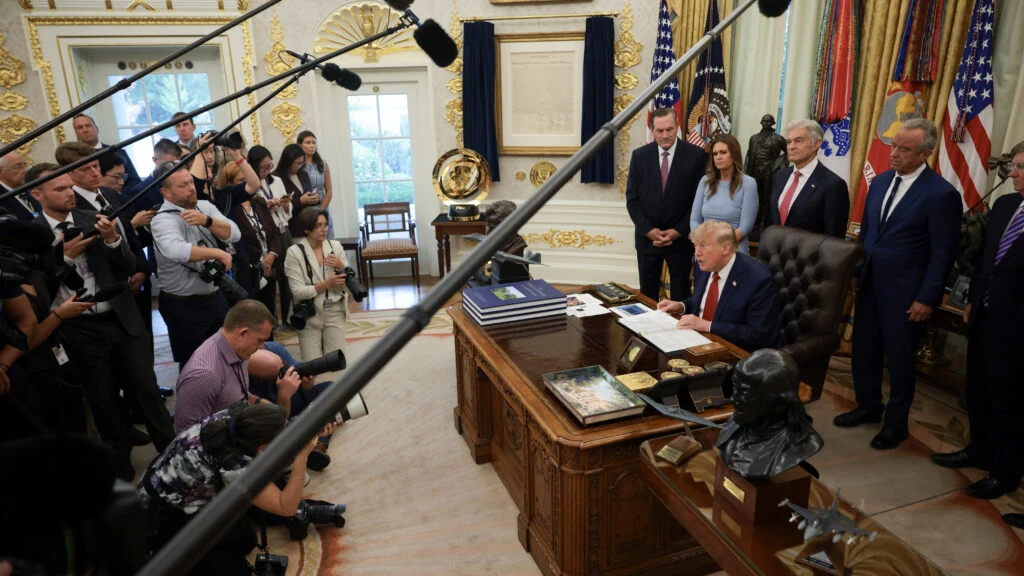
President Trump made an announcement Friday to tout one of his initiatives to lower drug prices, signaling a significant shift in how the federal government and state Medicaid programs approach the escalating costs of breakthrough pharmaceuticals. While the administration framed the move as a landmark victory for taxpayers and patients alike, the rollout left many questions unanswered regarding the technical execution, the actual savings to be realized, and the long-term sustainability of the program. The centerpiece of this announcement is the GENEROUS model, a framework designed to provide state Medicaid programs with more leverage in negotiating prices for high-cost therapies, particularly those involving complex gene and cell treatments. According to the President, all 50 states, Washington, D.C., and Puerto Rico will participate in this model, which is intended to give lower drug prices to Medicaid programs through a centralized, value-based negotiation structure.
The announcement comes at a critical juncture for the American healthcare system, as the pipeline for "miracle" drugs—therapies that can cure rare genetic diseases with a single dose—continues to expand. While these treatments offer unprecedented clinical hope, they often carry price tags ranging from $1 million to over $3 million per patient. For state Medicaid programs, which operate under strict balanced-budget requirements, even a handful of patients requiring such treatments can create massive fiscal shocks. Later on Friday, the Centers for Medicare and Medicaid Services (CMS) provided additional clarity, noting that while the President claimed universal participation, the current status is more nuanced: 40 states and Puerto Rico had signed agreements to participate, while the others have applied. States have until the end of the month to sign agreements, a tight deadline that highlights the administration’s urgency to cement this policy as part of its healthcare legacy.
The GENEROUS model, which stands as a shorthand for a broader push toward outcomes-based contracting, seeks to move Medicaid away from the traditional "fee-for-service" drug purchasing model. Under the status quo, Medicaid programs generally pay for a drug regardless of whether it achieves the desired clinical outcome for a specific patient. The new model encourages value-based purchasing (VBP) arrangements, where the final price of a drug is contingent upon its effectiveness. If a patient does not show improvement or if the treatment fails to meet certain health milestones, the pharmaceutical manufacturer would be required to provide a significant rebate or refund to the state. This shift is intended to align the financial interests of drug makers with the health outcomes of the low-income populations served by Medicaid.
To understand the significance of this initiative, one must look at the broader context of the Trump administration’s drug pricing "blueprint," released in 2018. For years, the administration has sought various avenues to fulfill the campaign promise of "bringing drug prices down to earth." These efforts have included the controversial "Most Favored Nation" (MFN) model, which attempted to link U.S. drug prices to lower costs paid in other developed nations, and the "Rebate Rule," which aimed to eliminate the safe harbor protections for pharmacy benefit manager (PBM) rebates. Many of these initiatives faced stiff legal challenges from the pharmaceutical industry and were stalled in the courts or met with bipartisan skepticism in Congress. The GENEROUS model, by contrast, relies on the authority of the CMS Innovation Center (CMMI) to test new payment models, a mechanism that provides the executive branch with more flexibility to bypass the legislative gridlock of Capitol Hill.
However, health policy experts warn that the devil is in the details. One of the primary hurdles for states in adopting value-based agreements has been the "Medicaid Best Price" rule. Historically, if a drug company offered a deep discount to one state based on a value-based outcome, that lower price could potentially trigger a requirement to offer that same price to all Medicaid programs nationwide, even if those other programs weren’t using the same outcome-based metrics. This created a massive financial disincentive for manufacturers to experiment with VBP. The GENEROUS model seeks to provide a regulatory safe harbor or a standardized reporting mechanism to circumvent this "Best Price" trap, but critics argue that the administration has not yet fully clarified how it will protect the integrity of the Medicaid Drug Rebate Program (MDRP) while allowing these specialized deals to proceed.
Furthermore, the administrative burden on states is substantial. Tracking patient outcomes over months or years to determine if a drug "worked" requires a level of data integration that many state Medicaid agencies currently lack. For a state to reclaim money from a manufacturer for a failed treatment, they must have rigorous, verifiable clinical data. This necessitates a sophisticated infrastructure for electronic health records and specialized staff to manage the contracts. While the federal government is offering a centralized framework to help coordinate these negotiations, the actual implementation at the state level remains a daunting prospect. The discrepancy between the President’s claim of 50-state participation and the 40 states currently signed reflects the hesitation some state officials feel regarding the logistical and legal complexities involved.

The pharmaceutical industry’s reaction to the GENEROUS model has been a mix of cautious engagement and underlying concern. Organizations like the Pharmaceutical Research and Manufacturers of America (PhRMA) have long advocated for the removal of regulatory barriers to value-based pricing, arguing that they want to be held accountable for the performance of their products. However, they remain wary of any model that could be used as a precursor to broader price controls or that could undermine the intellectual property protections that drive innovation. Industry analysts point out that while outcomes-based pricing sounds fair in theory, defining "success" for a drug can be legally and clinically contentious. For example, in the case of a gene therapy for a degenerative muscle disease, does success mean the patient regains strength, or simply that the decline is slowed? These definitions will be the battleground upon which the success of the GENEROUS model is ultimately decided.
Patient advocacy groups also have a stake in this debate. On one hand, any move that makes expensive drugs more accessible to Medicaid beneficiaries is seen as a win. On the other hand, there are concerns that value-based models could lead to "cherry-picking" or "lemon-dropping," where insurers or state programs might be less inclined to cover patients who are perceived as less likely to respond to a treatment, as these patients might complicate the data used for VBP contracts. Ensuring that the most vulnerable patients retain access to therapy, regardless of the projected outcome, remains a primary concern for civil rights and health equity organizations.
The timing of the announcement, occurring late in the week and close to the end of the month, has also drawn scrutiny from political observers. With an election on the horizon, the administration is eager to demonstrate tangible progress on healthcare costs. By framing the GENEROUS model as a nationwide initiative with universal state buy-in, the President is positioning his administration as a champion of the "little guy" against "Big Pharma." Yet, the transition from a press release to a functional, money-saving program is a long road. The states that have only "applied" rather than "signed" may be seeking more specific guarantees from CMS regarding the federal matching funds (FMAP) and the protection against legal liability if the model is challenged in court.
In terms of fiscal impact, the Congressional Budget Office (CBO) and independent health economists have struggled to put a precise dollar figure on the savings generated by value-based purchasing. Because these agreements are often proprietary and vary by state and by drug, the transparency of the savings is limited. Some analysts suggest that the real value of the GENEROUS model isn’t in immediate price cuts, but in the "budget predictability" it offers states. If a state knows it will get its money back if a multi-million dollar drug fails, it can more confidently include that drug in its formulary without risking a mid-year budget crisis. This predictability is a form of insurance for state treasuries, even if the "list price" of the drug remains high.
As the end-of-the-month deadline approaches, all eyes will be on the remaining ten states that have yet to sign the formal agreements. Their decision will signal whether the GENEROUS model is truly a national standard or merely a voluntary pilot program with limited reach. Moreover, the future of the initiative may depend on the continuity of federal policy. Drug pricing remains one of the few areas where there is some overlap in goals between the two major political parties, yet the methods differ significantly. While the Trump administration has leaned into market-based mechanisms and CMMI experiments like the GENEROUS model, other proposals have focused on direct government negotiation of prices in Medicare, which could have trickle-down effects for Medicaid.
In conclusion, while President Trump’s Friday announcement was a bold declaration of a new era in Medicaid drug pricing, it serves as the beginning of a complex regulatory journey rather than the finish line. The GENEROUS model represents a sophisticated attempt to modernize the financial architecture of American healthcare to match the rapid pace of genomic medicine. However, the success of the program will be measured not by the number of states that sign on by the end of the month, but by whether the model can actually deliver lower costs for taxpayers without stifling the innovation that produces these life-saving treatments. For now, the healthcare industry, state regulators, and the millions of Americans who rely on Medicaid are left to wait for the specific details that will determine if this "generous" model lives up to its name.
