
 By admin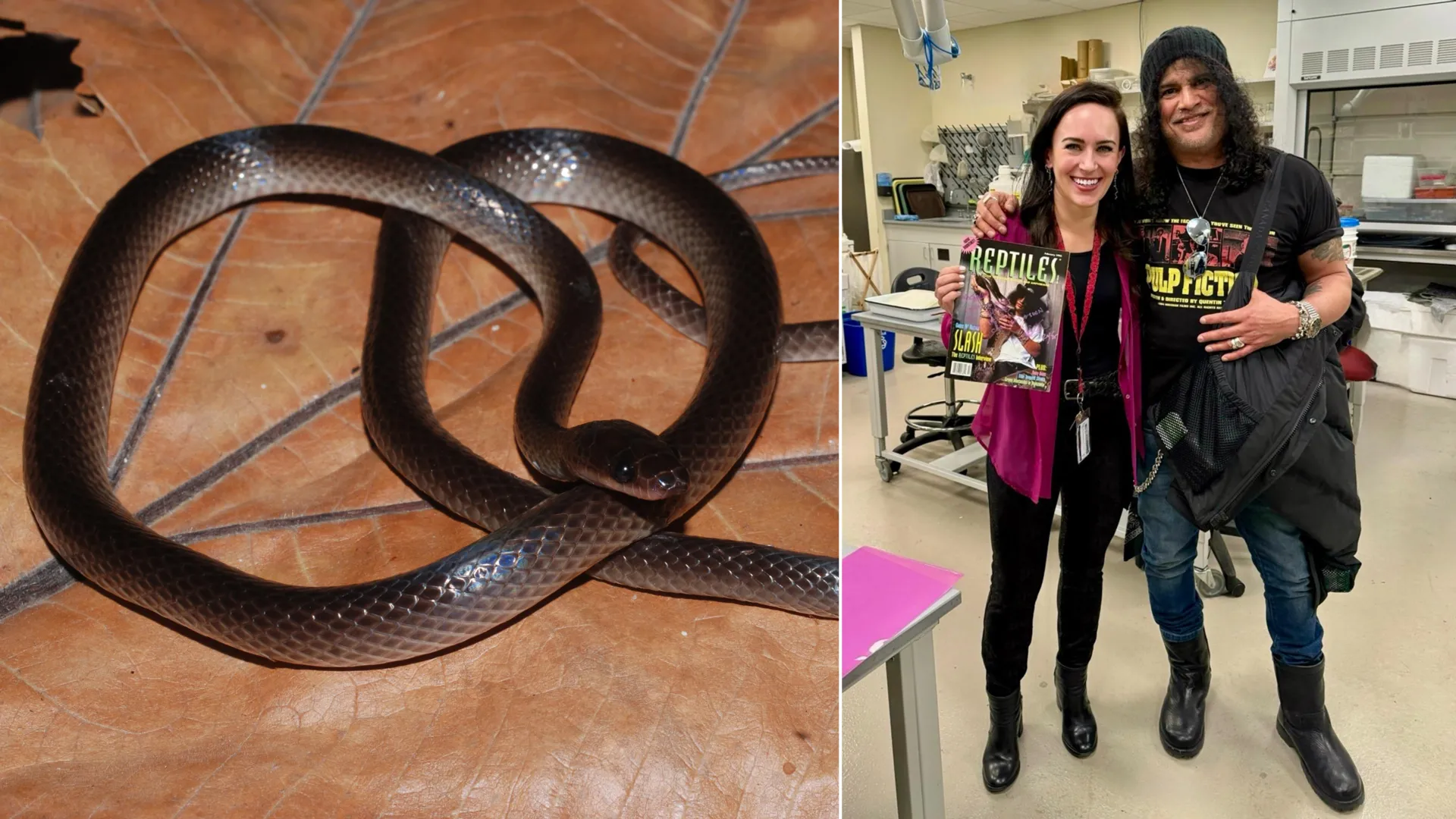
Slash, born Saul Hudson, stands as an undeniable titan in the pantheon of rock music, universally acclaimed as the iconic guitarist for Guns N’ Roses. His silhouette, instantly recognizable by the top hat and signature Gibson Les Paul, has graced stages worldwide, defining the sound of a generation. Yet, beneath the veneer of rock stardom lies a lesser-known but equally profound passion: a lifelong fascination with reptiles. For decades, this profound interest has driven him to champion the work of zoos, natural history museums, and various conservation initiatives, demonstrating a commitment that extends far beyond the confines of the music industry. His advocacy has consistently highlighted the critical importance of understanding and preserving the natural world, particularly its often-misunderstood scaly inhabitants.
Now, this deep-seated passion has culminated in an extraordinary scientific tribute. Researchers, in a rare honor bestowed upon a non-scientist, have formally named a newly identified snake species from the biodiverse forests of New Guinea Lielaphis slashi, or Slash’s groundsnake. This recognition not only acknowledges his personal connection to herpetology but also underscores the significant role public figures can play in elevating awareness for scientific discovery and conservation.
"As a long time herpephile, I am extremely honored and humbled to have Lielaphis slashi from New Guinea named after me," Slash shared, conveying a sentiment that resonated deeply within the scientific community and among his fans. "It is really exciting, I never would have imagined this moment would arrive." His words reflect a genuine appreciation for the scientific endeavor and a profound connection to the natural world he has long admired, elevating the discussion beyond mere celebrity endorsement to a sincere celebration of biodiversity. This unique confluence of rock and biology serves as a powerful testament to the universal appeal of scientific exploration and the unexpected ways in which diverse fields can intersect.
A Childhood Connection Forged in Rock and Reptiles
For Dr. Sara Ruane, the Field Museum’s esteemed Associate Curator of Herpetology and the senior author of the groundbreaking paper in Zootaxa describing the new species, the nomenclature carries a deeply personal resonance. Her journey into the world of herpetology, the scientific study of reptiles and amphibians, was intricately woven with the soundtrack of Guns N’ Roses and the inspiration provided by its legendary guitarist.
"Guns N’ Roses has been one of my favorite bands since I was in first grade, and by fifth grade, I had already told my teacher that I wanted to be a herpetologist—a scientist who studies reptiles—when I grew up," Dr. Ruane recounted, painting a vivid picture of her childhood aspirations. This early fascination with both rock music and the natural world set the stage for a remarkable career path. The pivotal moment arrived when, at the impressionable age of twelve, she received her copy of Reptiles Magazine. Gracing its cover was a striking image of Slash, not with a guitar, but cradling his pet reticulated python. "I thought, ‘This guy is so cool,’" she recalled, highlighting the powerful influence that such visible figures can have on budding scientists. It wasn’t just the image; it was the implicit message that a rock star could also be a dedicated reptile enthusiast, a figure who challenged conventional stereotypes and normalized a passion often seen as niche.
Years later, after meticulously pursuing her academic goals and establishing herself as a leading scientist with the unique opportunity to officially name newly recognized reptile species, Dr. Ruane revisited that seminal magazine interview. She delved deeper into Slash’s insights, finding even more compelling reasons for the eventual naming. "I reread his interview, and he talked about how much he loves museums and zoos and natural history, and about how when he was a kid, he’d go outside and look for snakes—it was all stuff that I really related to, and it made me think that he’d be a great person to name a new species after," she explained. This decision transcended mere fandom; it was a recognition of a shared ethos, a mutual respect for scientific inquiry, and a common dedication to the exploration and preservation of biodiversity. Slash’s consistent public support for these institutions and his candid stories of childhood exploration mirrored Dr. Ruane’s own journey, solidifying the appropriateness of the honor.
Her opportunity to bestow this unique tribute eventually materialized in the form of a modest, reddish-brown snake, measuring approximately 28 inches long, meticulously collected from the dense, biodiverse forests of New Guinea. This specimen, initially a puzzle, would soon become the namesake of a rock icon.
A Mysterious Snake from the Heart of New Guinea’s Biodiversity
New Guinea, the world’s second-largest island after Greenland, is a geographical marvel and a biological treasure trove. Situated just north of the Australian continent, its vast landmass is politically divided between Indonesia (West Papua and Papua provinces) and the independent nation of Papua New Guinea. This immense island is renowned globally as a biodiversity hotspot, home to an extraordinary array of life forms, many of which are endemic—found nowhere else on Earth. Its sprawling tropical forests, rugged mountain ranges, and intricate river systems support unparalleled biological diversity, a significant portion of which remains largely undocumented and scientifically enigmatic. The sheer scale of its unexplored wilderness presents both immense challenges and boundless opportunities for scientific discovery.
It was within this captivating yet perilous landscape that the initial discovery of Lielaphis slashi unfolded. During a nocturnal fieldwork expedition in 2006, Dr. Chris Austin, a distinguished professor and curator of herpetology at the Louisiana State University Museum of Natural Science, encountered a snake in New Guinea that immediately struck him as unfamiliar. The challenges of conducting fieldwork in such remote and often unforgiving environments are immense, requiring meticulous planning, resilience, and an acute understanding of the local ecology.
"These New Guinea groundsnakes are nocturnal, so the best way to find them is at night," Dr. Austin elaborated, highlighting the specific strategies required for studying these elusive creatures. "They are typically found just after sunset at the base of large trees where they are looking for something to eat." This nocturnal habit, while crucial for their survival, makes them particularly difficult for researchers to observe and collect. The fieldwork is further complicated by the presence of numerous venomous species that bear a striking resemblance to their harmless counterparts. "When working at night in New Guinea you need to be very careful as there are several highly venomous species that look very similar to the non-venomous groundsnakes," Austin cautioned, underscoring the constant vigilance and expert knowledge required to navigate the island’s serpentine inhabitants safely. The specimen collected by Dr. Austin was carefully preserved and accessioned into the LSU Museum of Natural Science collection, awaiting further taxonomic investigation.
After successfully completing her doctorate, Dr. Ruane joined Dr. Austin at LSU in 2016. Their shared expertise and mutual interest in New Guinea’s enigmatic reptilian fauna quickly led to a fruitful collaboration. The two scientists embarked on a concerted effort to unravel the complexities of the island’s poorly studied snake populations, a partnership that has continued to yield significant insights into one of the world’s most biologically rich yet least understood regions.
Genetics Reveal a Cryptic New Species
At first glance, the reddish-brown snake collected by Dr. Austin did not immediately stand out as an entirely new species. Its physical characteristics broadly aligned with known members of the genus, suggesting it might merely be a variant or a previously described species. However, the initial morphological assessment, while important, often provides only a partial picture. It is through rigorous laboratory work, employing advanced scientific techniques, that the subtle yet critical differences that define new species are brought to light.
"Using multiple cutting-edge genetic analyses, we found that L. slashi is genetically distinct from other similar snakes in the same genus," explained Dr. Tianqi Huang, the study’s first author and a postdoctoral researcher working with Dr. Ruane at the Field Museum. These sophisticated genetic analyses typically involve sequencing specific regions of the snake’s DNA, such as mitochondrial genes (e.g., cytochrome b, 16S rRNA) and nuclear genes, which provide robust markers for assessing evolutionary relationships and genetic divergence. By comparing these genetic sequences with those of closely related species, researchers can construct phylogenetic trees that reveal distinct evolutionary lineages, even when physical differences are minimal—a phenomenon known as cryptic speciation.
Dr. Huang further elaborated on the integrative taxonomic approach employed: "The combination of physical characteristics, like differences in numbers of scales when compared with other species, and the genetic evidence is what led us to realize that it is an entirely new species." This multi-pronged strategy is essential in modern taxonomy. Beyond genetic markers, meticulous morphological comparisons were conducted. These included precise counts of ventral scales (belly scales), subcaudal scales (scales under the tail), and dorsal scale rows (scales along the back), as well as examination of head scale patterns and dentition. These seemingly minor variations, when consistently observed across multiple specimens and supported by genetic data, provide compelling evidence for species distinction.
Adding another layer of evidence, the research team also utilized ecological modeling. "We also used ecological modeling to show that L. slashi‘s preferred habitat is different from similar snakes," Dr. Huang noted. Ecological niche modeling, often employing algorithms like MaxEnt, uses known occurrence points of a species and environmental variables (such as temperature, precipitation, elevation, and vegetation type) to predict its potential distribution and characterize its preferred habitat. This method demonstrated that Lielaphis slashi occupies a distinct ecological niche, further corroborating its status as a separate species. This comprehensive approach, integrating genetics, morphology, and ecology, forms the bedrock of modern species description, ensuring accuracy and robustness in taxonomic classification.
What We Know (and Don’t Know) About Slash’s Groundsnake’s Life
Despite its formal scientific recognition, much about the behavior and ecology of Lielaphis slashi remains shrouded in mystery. This is a common challenge in herpetology, particularly for elusive, nocturnal species inhabiting dense tropical environments. "It’s incredibly hard to observe snakes in the wild before they slither away, so our knowledge about L. slashi is limited," Dr. Ruane admitted, underscoring the difficulties inherent in studying cryptic fauna in their natural habitats. Direct observation of foraging, mating, and other critical behaviors is rare, making inferences from morphology and diet analysis all the more crucial.
Nevertheless, the snake’s anatomy does provide valuable clues about its likely lifestyle and feeding habits. "Snakes in this genus often have large teeth in the back of their mouths, which New Guinea groundsnakes may use to grab on to and eat small, slippery-scaled lizards and the eggs of other reptiles," Dr. Ruane explained. This dental morphology suggests a diet specialized for prey that might be difficult to hold, such as smooth-bodied skinks or agile geckos. Unlike constrictors, which subdue their prey by coiling around and suffocating them, L. slashi likely employs a more direct predatory approach. "This snake isn’t grasping and squeezing its prey like a boa constrictor," she clarified, highlighting the diversity of predatory strategies within the snake world. This specialized diet positions L. slashi as an important component of the forest ecosystem, acting as a predator of small reptiles and potentially influencing their populations.
Intriguingly, while Guns N’ Roses has famously been dubbed "the most dangerous band in the world" for their raw energy and provocative stage presence, its reptilian namesake poses no such threat to humans. Lielaphis slashi does not produce venom capable of seriously harming a human, categorizing it as a non-venomous species. This contrast provides a humorous yet important distinction, dispelling any potential misconception that a snake named after a rock star must inherently be dangerous.
Threats to New Guinea’s Forests and the Urgency of Conservation
While Slash’s groundsnake may pose little danger to humans, the converse is tragically not true. Human activity presents significant and escalating threats to Lielaphis slashi and the countless other species that call New Guinea’s unparalleled forests home. The island’s rich natural resources have made it a target for various industries, leading to widespread habitat destruction and degradation.
"The habitats that Slash’s groundsnake is from are under threat from industries like coffee farming and mining," Dr. Ruane stated with urgency. These are just two facets of a much broader problem. Large-scale logging, often illegal, indiscriminately fells ancient trees, fragmenting critical habitats. The expansion of industrial agriculture, particularly palm oil plantations, converts vast tracts of primary rainforest into monoculture landscapes, leading to massive biodiversity loss. Mining operations, targeting valuable minerals like gold and copper, not only destroy habitats directly but also lead to severe pollution of rivers and soil, impacting entire ecosystems. Furthermore, infrastructure development, such as roads and hydroelectric projects, further encroaches on pristine areas, facilitating human migration and increasing pressure on natural resources. Climate change also poses a long-term threat, altering rainfall patterns and temperatures, which can disrupt delicate ecological balances.
It is against this backdrop of accelerating environmental degradation that the work of describing new species becomes profoundly critical. "That’s part of why describing the species that live there is important," Dr. Ruane emphasized. "Every species should be recognized in order for us to better understand how ecosystems work, how everything fits into the environment. We can’t conserve animals or other living things that we don’t know about." This statement encapsulates a fundamental principle of conservation biology: You cannot protect what you do not know exists. Each new species description, like that of Lielaphis slashi, is a vital piece of the puzzle, contributing to a more complete understanding of global biodiversity.
By formally identifying species such as L. slashi, scientists can build a clearer, more comprehensive picture of New Guinea’s extraordinary biodiversity. This foundational knowledge is essential for assessing the conservation status of individual species (e.g., through the IUCN Red List), identifying areas of high biological importance for protection, and understanding the intricate web of life that sustains these ecosystems. It allows researchers and policymakers to better understand which organisms may be at particular risk as their habitats change, informing targeted conservation strategies and sustainable land management practices. In a world facing unprecedented rates of extinction, the discovery and naming of species like Slash’s groundsnake serve as a powerful reminder of both the planet’s hidden wonders and the urgent need for their protection.
This groundbreaking study was a collaborative effort, with significant contributions from Tianqi Huang (Field Museum and Rutgers University), Chris Austin (Louisiana State University Museum of Natural Science), Justin Bernstein (Slippery Rock University and the American Museum of Natural History), Bulisa Iova (Papua New Guinea National Museum and Art Gallery), Jackson Roberts (Virginia Museum of Natural History), Jeffrey Frederick (University of Kentucky), and Sara Ruane (Field Museum).
