
 By admin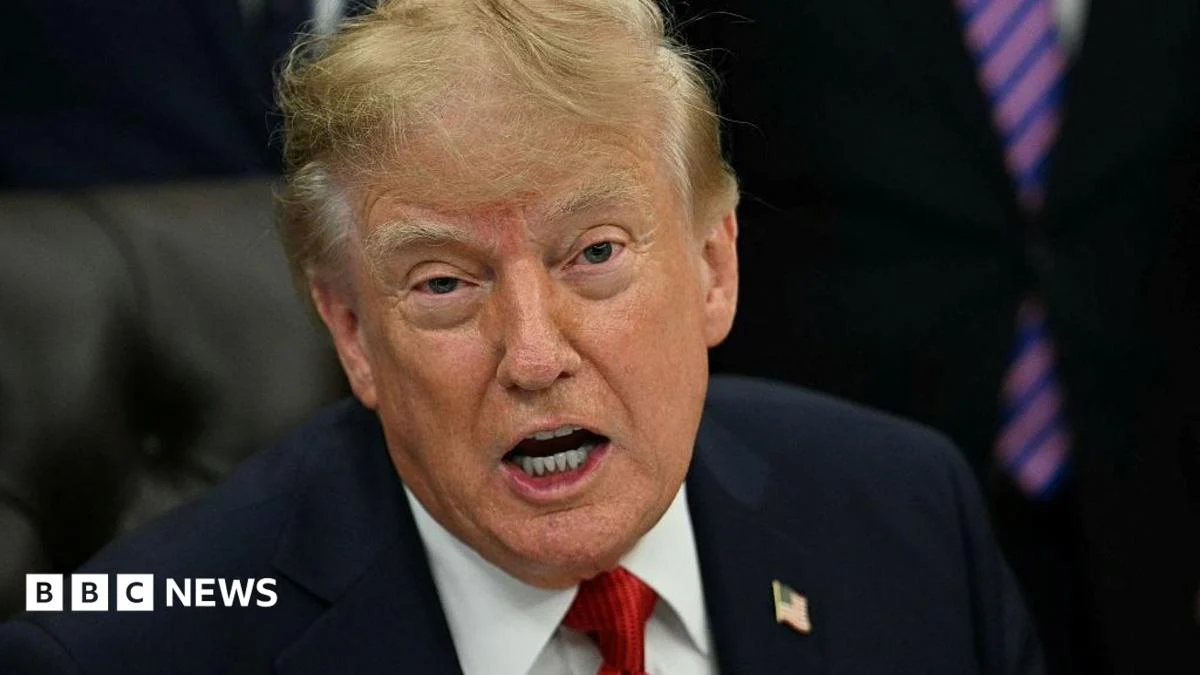
In a dramatic escalation of his long-standing antagonism towards critical media, U.S. President Donald Trump announced on Friday that he is "immediately" barring CNN, MS NOW (formerly MSNBC), and Politico from accessing the White House. The move, communicated via a post on his social media platform Truth Social, marks a significant development in the already strained relationship between the President and several prominent news organizations, raising immediate concerns about press freedom and constitutional rights.
Trump’s pronouncement, delivered without specific examples of the alleged transgressions, asserted that these outlets "constantly write or report fiction or lies" about his administration. He characterized the ban as "very simple" but offered no details on its practical implementation, leaving it unclear whether journalists from the targeted organizations would be physically prevented from entering White House grounds. The announcement was made on a Friday afternoon, a timing that prompted further questions, with Trump later stating there was "no reason" for the specific timing, attributing the decision to "cumulative stories over the last few years" that had simply become tiresome. He also hinted that "may be others to join them," suggesting a potential widening of the ban.
CNN responded swiftly and forcefully, denouncing the move as an "illegal assault" on American press freedoms. The network, a frequent target of Trump’s ire, stated in a formal release that it "stands fully behind our White House team and their fair and accurate reporting." CNN emphasized its constitutional right to report without government interference, declaring, "Should the ban which President Trump threatened go ahead, it would be an illegal assault on that fundamental and constitutionally-protected right." The network’s legal team is reportedly preparing for anticipated legal challenges.
Despite the President’s declaration, reporters from both Politico and CNN were observed on White House grounds shortly after the announcement. A CNN crew was also traveling with Vice-President JD Vance to and from an event in Iowa, underscoring the immediate logistical and practical implications of the purported ban. MS NOW, like Politico, had not released a public statement by Friday afternoon, though the BBC had reached out to both outlets for comment.
Trump’s rationale, as articulated on Truth Social, was broad: "Media outlets shouldn’t be able to constantly write or report fiction and lies when they’re covering the President of the United States, the Trump Administration or the United States of America." This sweeping statement, devoid of specific citations, suggests a broader dissatisfaction with the critical coverage these outlets have provided throughout his presidency. He also acknowledged the likelihood of legal challenges, stating, "I think it’s good to point it out, whether it survives or doesn’t," and expressing his belief that "a court should not allow fake news to be written day after day after day."
This latest action is not unprecedented in Trump’s presidency. Since his return to office in January 2025, the White House press corps has faced repeated clashes with the President and his administration. In his second term, Trump has actively sought to integrate conservative bloggers, influencers, and other media personalities into the press room, arguing for the necessity of diverse perspectives. This policy shift has been met with criticism from established journalistic organizations concerned about the erosion of professional standards and the potential for politicization of the press briefing process.
Further illustrating this pattern, in February, the White House asserted control over the press pool, an arrangement that had been managed by the White House Correspondents Association for over a century. The press pool is a crucial mechanism for disseminating information, with designated outlets sharing material from presidential events with other media. CNN plays a significant role as one of the five U.S. news outlets responsible for filming video for this pool. The BBC, meanwhile, contributes to the White House radio pool.
Earlier in February, the administration also took the controversial step of barring Associated Press (AP) reporters and photographers from certain limited-access areas, such as the Oval Office and Air Force One. The stated reason for this exclusion was the AP’s use of the term "Gulf of Mexico" instead of "Gulf of America," a linguistic preference of the administration that was widely seen as an attempt to control narratives. The Associated Press promptly filed a lawsuit challenging this decision, which remains ongoing.
The President’s confrontational style with reporters is well-documented. He frequently engages in heated exchanges with journalists in the Oval Office, aboard Air Force One, and during White House events, often labeling them "fake news" and "rude." This pattern echoes his first term, during which he temporarily banned CNN correspondent Jim Acosta from the White House. That ban was eventually rescinded after CNN pursued legal action.
The immediate aftermath of Trump’s announcement saw strong condemnation from prominent press freedom advocacy organizations. The Knight First Amendment Institute at Columbia University issued a statement expressing dismay, noting, "with so many courts having ruled against him on exactly this point, you’d think President Trump would have learned this lesson by now." Jameel Jaffer, the institute’s executive director, argued that if Trump intends to remove these organizations from the White House press pool, his action would be "doubly unconstitutional" as the press pool is considered a "public forum" under the First Amendment, prohibiting exclusion based on viewpoint.
The Reporters Committee for Freedom of the Press, a major legal support organization for the media, echoed these sentiments, anticipating that Trump’s ban would be swiftly overturned by the courts as "flatly unconstitutional." Bruce Brown, the group’s president, asserted, "The First Amendment is clear that once the White House invites in some journalists, it can’t ban others because it doesn’t like their reporting," characterizing the potential ban as "textbook viewpoint discrimination."
The Freedom of the Press Foundation also weighed in, calling the ban illegal and adding, "It’s also hard to imagine a dumber move." They contended that Trump’s repeated retaliations against the press, which have historically failed to benefit him, only serve to "demonstrate how scared he is of an informed public."
Trump’s history of legal entanglements with news organizations extends beyond this immediate ban. He has pursued lawsuits against numerous U.S. and international outlets, including the Wall Street Journal and the New York Times, with some of these cases resulting in substantial settlements. His lawsuit against the BBC remains active.
The exclusion of established news organizations from White House access raises significant questions about transparency and accountability in government. Historically, a free and unfettered press has been considered a cornerstone of democratic societies, acting as a vital check on executive power. By attempting to limit the reach of critical reporting, Trump’s administration appears to be following a strategy aimed at controlling the narrative and marginalizing dissenting voices. The legal battles that are almost certain to follow will test the resilience of these constitutional protections and the role of the media in a democratic society. The outcome of these challenges could set important precedents for future interactions between the presidency and the press.
