
 By admin
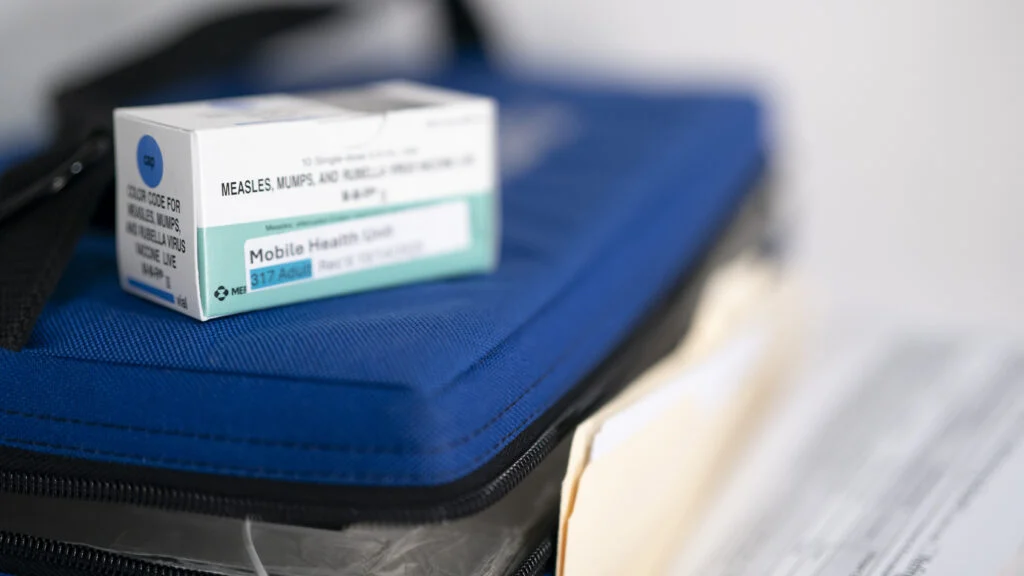
The announcement that the United States has officially lost its measles elimination status marks a somber milestone in the history of American public health. For over two decades, the U.S. stood as a global leader in the eradication of this highly contagious viral disease, having first achieved elimination status in 2000. This status meant that the virus was no longer constantly circulating within the country’s borders and that any outbreaks were limited, traced, and quickly contained. However, a resurgence of cases, fueled by declining vaccination rates in specific pockets of the population, has led the World Health Organization (WHO) and the Centers for Disease Control and Prevention (CDC) to acknowledge that the chain of transmission has remained unbroken for over a year. In the wake of this setback, Secretary of Health and Human Services Robert F. Kennedy Jr. took to social media to address the crisis, stating on X, “We will stop measles outbreaks, protect American families, and work to regain U.S. measles elimination status. I continue to recommend [measles, mumps, and rubella] vaccination as the most effective way to prevent measles.”
This statement represents a pivotal moment for Kennedy, a figure who has long been associated with vaccine skepticism but who now finds himself at the helm of the nation’s health apparatus. The challenge he faces is not merely logistical or financial; it is a crisis of trust. To solve it, Kennedy may need to look toward the very movement he helped catalyze: the "Make America Healthy Again" (MAHA) movement. While the mainstream medical establishment and political opponents often view MAHA with suspicion, the movement’s unique grassroots energy and cultural resonance among the vaccine-hesitant could, paradoxically, be the most effective tool for restoring public confidence in the MMR (measles, mumps, and rubella) vaccine.
The current landscape of the measles debate is characterized by deep polarization. On one side, medical societies such as the American Academy of Pediatrics (AAP) are sounding the alarm, pointing to the loss of elimination status as a direct consequence of misinformation and the erosion of school mandates. On the other side, many political commentators and Democrats have placed the blame squarely on Kennedy and the Trump administration, arguing that their rhetoric has emboldened anti-vaccine sentiment. Kennedy’s supporters, meanwhile, argue that the U.S. is not alone in this struggle, noting that several European nations have also lost and regained elimination status in recent years. They see the criticism as a politically motivated attempt to undermine Kennedy’s broader health agenda, which focuses on cleaning up the food supply and reducing the burden of chronic disease.
However, the debate over who is to blame ignores a more practical question: who is actually capable of reaching the families that public health officials have lost? For years, traditional public health messaging—heavy on data, clinical authority, and institutional mandates—has struggled to penetrate communities that harbor deep-seated mistrust of "Big Pharma" and federal agencies. This is where the MAHA movement enters the picture. MAHA is not a monolith of anti-science sentiment; rather, it is a sophisticated, highly organized grassroots network that has successfully mobilized millions around issues of environmental toxins, ultra-processed foods, and corporate influence in healthcare.
The energy within the MAHA movement is palpable. At conferences, in sprawling Telegram groups, and across social media platforms, supporters are actively engaged in what they see as a battle for the future of American vitality. They are people who question why the U.S. has higher rates of chronic illness than other developed nations, why "forever chemicals" (PFAS) are in the water, and why the food pyramid seems designed by corporate lobbyists. This movement has shown an astonishing ability to organize local action, draft legislation, and challenge the status quo. While MAHA candidates faced significant setbacks in the 2026 midterm elections, the movement itself has not dissipated; it has simply regrouped, shifting its focus toward issues like the environmental impact of data centers and the continued fight against toxic pollutants.
Crucially, data suggests that the MAHA movement is not as "anti-vax" as its critics claim, particularly regarding the MMR vaccine. A recent analysis by KFF (formerly the Kaiser Family Foundation) regarding the 2026 midterm elections found that approximately 3 in 10 voters support the MAHA movement, with 21% identifying as strong supporters. More importantly, a KFF/Washington Post survey of parents revealed a surprising consensus: 86% of MAHA-supporting parents believe it is important for children in their communities to be vaccinated against measles. Nearly 80% expressed confidence in the safety of the MMR vaccine, and 75% reported that their children were up to date on routine childhood vaccinations (excluding COVID-19 and the flu).
This distinction is vital. There is a significant cohort of Americans who are deeply skeptical of newer medical interventions or the influence of pharmaceutical companies on policy, yet who still recognize the historical success and relative safety of the measles vaccine. For many in the MAHA movement, the MMR vaccine is viewed differently than the COVID-19 or annual flu shots. It is seen as a "classic" intervention with decades of longitudinal data, protecting against a disease that, while once common, carries severe risks including pneumonia, encephalitis, and permanent hearing loss.
The power of this movement to affect change is best illustrated through individual stories, such as that of Roberta Devers, a midwife in Lancaster County, Pennsylvania. Devers, a Kennedy supporter who identifies as vaccine-skeptical, initially chose not to vaccinate her son. However, after witnessing the reality of a measles outbreak in her community and seeing the vulnerability of the families she served, she re-evaluated her stance. Today, she encourages Amish families and other hesitant parents in her area to seek out the MMR vaccine.
What makes Devers effective is that she hasn’t "switched sides" in the traditional sense. She still harbors mistrust of the medical establishment, she still advocates for home births and holistic living, and she still believes in the core tenets of the MAHA movement. Because she shares the same values and "cultural fluency" as the parents she is talking to, she has a level of credibility that a government official in a white coat simply cannot replicate. When she talks about the efficacy of the measles vaccine, she isn’t seen as a mouthpiece for a corporation; she is seen as a peer who has wrestled with the same doubts and come to a pragmatic conclusion.
If Secretary Kennedy is serious about regaining measles elimination status, he should leverage this peer-to-peer influence. The "Kraken" he needs to unleash is not a legal or regulatory one, but a social one. By elevating voices like Devers and other MAHA-aligned clinicians who support MMR vaccination, the administration could bridge the gap with hesitant communities. Instead of top-down mandates, Kennedy could encourage MAHA supporters to host community-led conversations. These forums would allow parents to voice their fears about safety and corporate influence while being met with answers from people they actually trust.
This strategy is not without risk. Kennedy would almost certainly face a fierce backlash from the more radical anti-vaccine wing of his base, which views any concession on vaccination as a betrayal. Furthermore, the public health establishment remains wary of collaborating with a movement that has, at times, spread misinformation. There is a legitimate concern that by "validating" MAHA, health officials might inadvertently give a platform to more dangerous theories.
Yet, the alternative—continuing with the same failed communication strategies—seems increasingly untenable. Public health departments across the country are chronically underfunded and often lack the resources to engage in the intensive, relationship-based outreach required to move the needle on vaccination rates. If a segment of the MAHA movement is willing to do the heavy lifting of community engagement, it would be a missed opportunity for the government to ignore them.
The loss of measles elimination is a symptom of a broader breakdown in the social contract between the state and the individual regarding health. Regaining that status will require more than just a surplus of vaccine doses; it will require a surplus of trust. The MAHA movement, for all its controversies, represents a reservoir of untapped civic energy. If Kennedy can successfully direct that energy toward measles prevention, he may demonstrate that the movement is truly about "Making America Healthy Again" rather than simply tearing down existing institutions.
Ultimately, the goal of public health is to protect the most vulnerable, particularly children. Measles is a preventable tragedy. If the MAHA movement truly puts American families at the center of its mission, then protecting those families from a resurgence of 19th-century diseases should be a primary objective. By embracing transparency, honoring informed consent, and utilizing the power of grassroots organizing, the movement has the chance to prove its critics wrong and play a decisive role in one of the most important public health recoveries in modern American history. The path forward is not through further polarization, but through finding common ground in the shared desire for a healthier, more resilient nation.
