
 By admin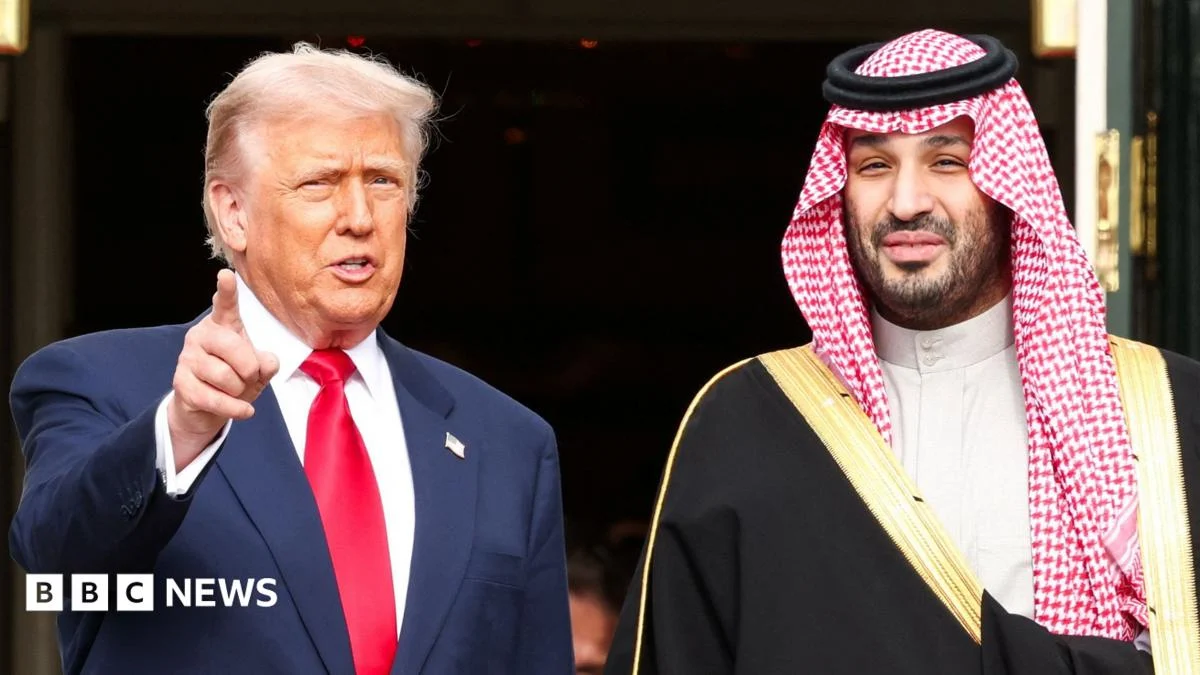
In a move that has sent ripples of both strategic ambition and apprehension across the Middle East and beyond, the United States and Saudi Arabia have formally signed a groundbreaking "peaceful nuclear co-operation agreement." This pact, described by the US Department of Energy as granting "great access for American companies in the Saudi nuclear energy program," lays the legal foundation for a decades-long, multi-billion-dollar partnership. While the text of the agreement remains undisclosed to the public, leaked reports suggest a potentially seismic shift: the possibility of Saudi Arabia being permitted to enrich uranium on its own soil, a capability that fuels both the engines of nuclear power and the grim specter of nuclear weapons.
This potential authorization for domestic uranium enrichment marks an unprecedented departure for US nuclear diplomacy. Historically, the United States has been extremely cautious, if not outright prohibitive, in allowing partner nations to develop independent enrichment capabilities, precisely due to the inherent dual-use nature of the technology. Uranium enrichment, while essential for creating fuel for civilian nuclear power plants, also produces the highly enriched uranium necessary for the core of a nuclear weapon. Experts warn that granting such a capability to Saudi Arabia, a nation situated in an already volatile region, significantly heightens the risk of future nuclear proliferation.
The US Department of Energy emphasized that a "bilateral safeguards agreement" was also signed, asserting that "Together, these two agreements lay the legal foundation for a decades-long, multi-billion-dollar partnership that advances several priority economic and strategic objectives, including nuclear nonproliferation." This assertion, however, is met with skepticism by many in the international community and among arms control advocates.
The Saudi government, in its official statement, framed the deal as an "extension of existing co-operation between the two countries in the energy sector," referencing the Saudi leader’s visit to Washington last November. This framing attempts to normalize the agreement within the broader context of bilateral relations, but it sidesteps the profound implications of the nuclear component.
The nuclear issue has been a persistent and fraught element in the ongoing geopolitical tensions between the United States and Iran. The US, along with its principal Middle East ally, Israel, cited Iran’s alleged pursuit of nuclear weapons as a primary justification for the military actions undertaken against Tehran in February. Iran has consistently denied any intention of developing nuclear weapons. Against this backdrop, Saudi Arabia’s de facto ruler, Crown Prince Mohammed bin Salman, articulated a starkly pragmatic, and deeply concerning, stance in a 2018 interview with CBS News. He declared that while Saudi Arabia was not planning to acquire a nuclear weapon, "without a doubt if Iran developed a nuclear bomb, we will follow suit as soon as possible." This declaration directly links the kingdom’s nuclear ambitions to those of its regional rival, Iran, creating a dangerous potential for a nuclear arms race.
The timing of this announcement is particularly noteworthy, coinciding with escalating tensions between the US and Iran. Saudi Arabia, a long-standing US ally, hosts critical American military bases that have been targeted by Iranian attacks. Furthermore, the deal was unveiled just two days after Iran’s allies in Yemen, the Houthi movement, declared a "maritime blockade" against the kingdom, underscoring the precarious security environment in the region.
While specific details of the nuclear agreement remain under wraps, earlier media reports, including those from The New York Times, suggested a pathway wherein Saudi Arabia, after a joint study with the US, could be permitted to enrich uranium on its territory. This would involve a US-built enrichment facility, allowing the kingdom to produce its own fuel rather than relying on imports. Such a scenario represents a potential multi-billion-dollar boon for American companies involved in the construction and operation of these facilities.
US Secretary of Energy Chris Wright, in a statement likely intended to assuage concerns, declared, "Rest assured, these agreements uphold the highest standards of nuclear safety and nonproliferation, while relying on the world’s best nuclear technology and scientists, designed right here in the United States." The Department of Energy further claimed the deal would advance both "US and regional security" and bolster America’s "competitive edge in civil nuclear technology."
However, these assurances have done little to quell the anxieties of nuclear experts and former officials, particularly in Israel. Israel, itself widely believed to possess nuclear weapons, though it neither confirms nor denies this status, views Saudi Arabia’s potential nuclear capabilities with extreme caution. Israeli Economy Minister Nir Barkat offered a pragmatic, albeit reserved, sentiment, stating that his country "can manage it" if Saudi Arabia were to pursue nuclear power for peaceful means. This statement, while seemingly amenable, carries an implicit understanding of the kingdom’s potential to leverage such technology for non-peaceful purposes.
Rosemary Kelanic, director of the Middle East program at the US-based Defense Priorities think tank, expressed profound surprise at the prospect of the US facilitating uranium enrichment facilities in Saudi Arabia. "The US has never done that before. We have never helped another country enrich on their own soil," she stated, articulating the significant deviation this represents from established US policy. Kelanic elaborated on the inherent risk, noting that "if you can produce your own nuclear fuel, you become a much bigger risk" for weaponization.
The agreement is now slated for review by the US Congress. While the Republican Party, currently holding a majority in both the House and the Senate, is expected to largely support the deal, a significant contingent of lawmakers from both sides of the aisle is anticipated to voice opposition. However, opponents are unlikely to muster the votes necessary to block its passage.
US Secretary of State Marco Rubio, a staunch proponent of the deal, actively pushed back against concerns regarding the potential for Saudi Arabia to develop nuclear arms. "The US is not going to reach any agreement with any country in the world that leads to the risk of proliferation," Rubio assured reporters. This stance has drawn sharp criticism from Democrats, who point to Rubio’s past legislative record. During his tenure as a senator, Rubio had endorsed the "No Nuclear Weapons for Saudi Arabia Act," a bill mandating Congressional approval for any nuclear deal with the kingdom.
Massachusetts Democratic Senator Edward Markey vehemently condemned Rubio and the Trump administration, accusing them of "allowing Saudi Arabia, a belligerent and authoritarian nation, to develop nuclear weapons technologies while starting a war with Iran under the guise of preventing an Iranian nuclear bomb." Markey characterized their actions as demonstrating "hypocrisy… matched only by their recklessness."
The potential inclusion of an uranium enrichment provision would starkly differentiate this agreement from the 2009 US deal with the United Arab Emirates. That accord, while facilitating civilian nuclear development, explicitly prohibited the UAE from producing its own fuel and imposed numerous other restrictions. The UAE’s program has been widely regarded as a model for responsible nuclear development under strict international oversight. The proposed Saudi deal, if it includes enrichment rights, is therefore expected to ignite significant concern among nuclear non-proliferation campaigners globally, whose paramount objective is to prevent any increase in the number of nuclear weapons worldwide.
Conversely, energy sector expert Bob McNally, a former member of President George W. Bush’s National Security Council, offered a more tempered perspective. He suggested that the US was not creating an "unmanageable" security risk, stating, "I think we have a good record of working with countries to responsibly develop their nuclear sectors." This view emphasizes the potential for robust oversight and safeguards to mitigate risks.
Saudi Arabia has been actively pursuing a civilian nuclear program for years, but Washington had historically held out, conditioning such cooperation on the kingdom’s recognition of Israel and the normalization of diplomatic and economic relations. However, recent US media reports indicate that this demand has been dropped, signaling a potential shift in US foreign policy priorities in the region.
President Trump has cultivated a notably closer relationship with Saudi Arabia during his administration. Beyond the strategic and commercial imperatives, a significant impetus for the timing of this agreement may stem from intelligence suggesting that Russia and China have been in discussions with Saudi Arabia regarding similar nuclear deals. The US may have sought to preempt its geopolitical rivals from securing such a strategic partnership.
The landmark agreement represents a significant diplomatic and economic victory for Saudi Arabia. It also possesses the potential to fundamentally reshape the power dynamics within the Middle East, though any transformative effects are likely to unfold over the long term rather than in the immediate future. The ultimate impact of this deal on regional stability and the global non-proliferation regime remains to be seen, hinging on the specific, yet undisclosed, provisions within the agreement and the efficacy of future oversight mechanisms.
