
 By admin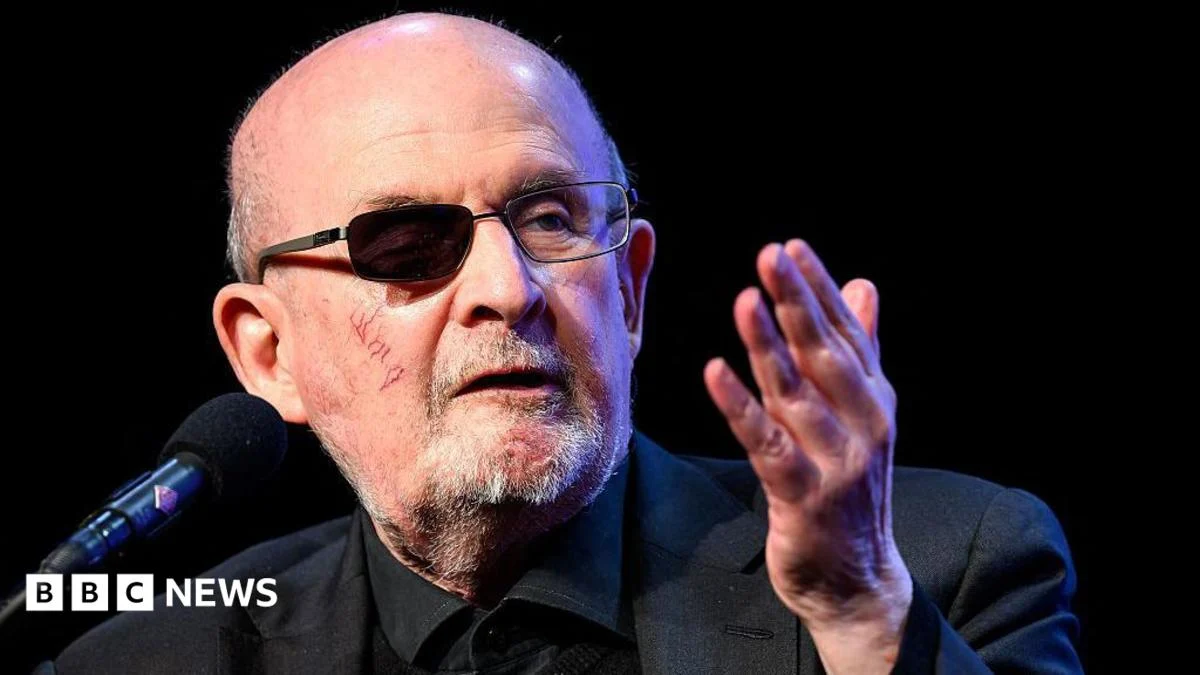
Hadi Matar, already serving a lengthy prison sentence for the brutal attempted assassination of renowned author Sir Salman Rushdie, has now been convicted on additional federal charges, including providing material support to a designated terrorist organization. The verdict, delivered by a New York federal court on Wednesday, solidifies the prosecution’s case that Matar’s violent act was not solely a personal vendetta but was intertwined with a broader extremist agenda.
The Lebanese armed faction, Hezbollah, which is designated as a terrorist group by the United States, the United Kingdom, and numerous other nations, was at the center of the federal indictment. Prosecutors meticulously laid out their argument that Matar was profoundly influenced by a fatwa, a religious edict issued in 1989 by Iran’s then-Supreme Leader Ayatollah Ruhollah Khomeini, which called for Rushdie’s death. This fatwa, a chilling testament to the enduring animosity towards the author’s work, remained a potent motivator for extremist elements decades later.
During the trial, Sir Salman Rushdie himself took the witness stand, offering a harrowing first-hand account of the brutal attack. His testimony was not only a powerful indictment of his assailant but also a poignant reminder of the fragility of life and the courage required to confront violence. He recounted the terrifying moments of the assault, crediting a quick-thinking firefighter with saving his life through immediate medical intervention. The author’s presence on the stand underscored the gravity of the case, transcending a mere criminal trial to become a public reckoning with the consequences of religious extremism and the weaponization of words.
The jury’s verdict found Matar guilty of two pivotal charges: engaging in an act of transnational terrorism and providing material support to Hezbollah. These convictions signify a significant legal victory for the prosecution, demonstrating a direct link between Matar’s actions and an internationally recognized terrorist entity. The evidence presented painted a picture of a perpetrator not acting in isolation but as a willing participant in a broader ideological struggle.
Further elaborating on the motivations behind the attack, prosecutors presented evidence that Matar was galvanized by a 2006 speech delivered by the then-leader of Hezbollah. This speech, they argued, explicitly called for the enforcement of the fatwa against Sir Salman, providing a renewed impetus for violence. The investigation revealed that Matar had been meticulously plotting the attack for approximately two years, a timeline that suggests a deliberate and sustained commitment to carrying out the assassination.
Assistant U.S. Attorney Timothy Lynch, in his impactful closing statement, articulated the prosecution’s core argument with stark clarity. According to reporting by The Buffalo News, Lynch stated, "The defendant decided no one was going to do it, so he had to do it. The defendant is the one who answered that call." This statement emphasized Matar’s self-appointed role as an executor of the fatwa, highlighting his perceived duty to fulfill the extremist directive.
The trial also featured the presentation of videos created by Matar, offering a glimpse into his mindset and potentially his radicalization. These visual materials, combined with Sir Salman’s own testimony, provided a comprehensive and deeply disturbing portrait of the events. The author described being stabbed an astonishing 15 times, detailing the horrific injuries inflicted upon him, including wounds to his cheek, chest, eye, neck, and thigh.
Sir Salman’s testimony was particularly graphic and emotionally charged as he described the immediate aftermath of the attack. "I was on the stage, lying down, with an enormous pool of blood all around me," he recounted, his voice steady despite the harrowing imagery. He further elaborated, "It was an enormous and expansive lake of blood." The physical and psychological scars of the attack were palpable when he lifted the darkened lens of his glasses to reveal the severe injury to his eye, which has resulted in partial blindness. He poignantly noted that the attacker’s knife had come "within millimetres from my brain," underscoring the sheer brutality and the near-fatal consequences of the assault.
The defense, in contrast, attempted to steer the narrative away from terrorism, arguing that Matar’s attack was not motivated by a desire to advance a terrorist agenda but rather by personal grievances or other factors. They sought to question Sir Salman about whether he should have anticipated a backlash to his controversial 1988 novel, "The Satanic Verses," a book that had ignited widespread outrage in some Muslim-majority countries.
Sir Salman, however, firmly rebuffed this line of questioning, stating, "I don’t believe the book is on trial. Somebody else is on trial." This powerful retort refocused the proceedings on Matar’s actions and culpability, asserting that the author’s literary work should not be used as a justification for violent extremism.
The legal ramifications for Matar are significant. He is already serving a 25-year sentence after being convicted of attempted murder in a state court in 2025. This new federal conviction, however, carries the potential for a far more severe penalty. He could now face life in prison, a sentence that reflects the gravity of his actions and the broader implications of his connection to a designated terrorist organization.
The case of Hadi Matar and the attack on Salman Rushdie serves as a stark reminder of the persistent threat posed by religiously motivated violence and the complex legal and geopolitical challenges associated with combating terrorism. The conviction on material support charges not only holds Matar accountable for his individual actions but also acknowledges the role of extremist ideologies and organizations in inspiring and facilitating such horrific acts. It highlights the importance of international cooperation in counter-terrorism efforts and the ongoing need to address the root causes of radicalization. The enduring legacy of the fatwa, and its role in motivating individuals like Matar, continues to cast a long shadow, underscoring the critical importance of protecting freedom of expression while simultaneously confronting the dangers of violent extremism. The trial has also brought to the forefront the courage and resilience of victims of terrorism, and the vital role of the justice system in seeking accountability and providing a measure of closure. The legal battle, while focused on Matar, also serves as a broader commentary on the intersection of literature, faith, and violence in the modern world.
