
 By admin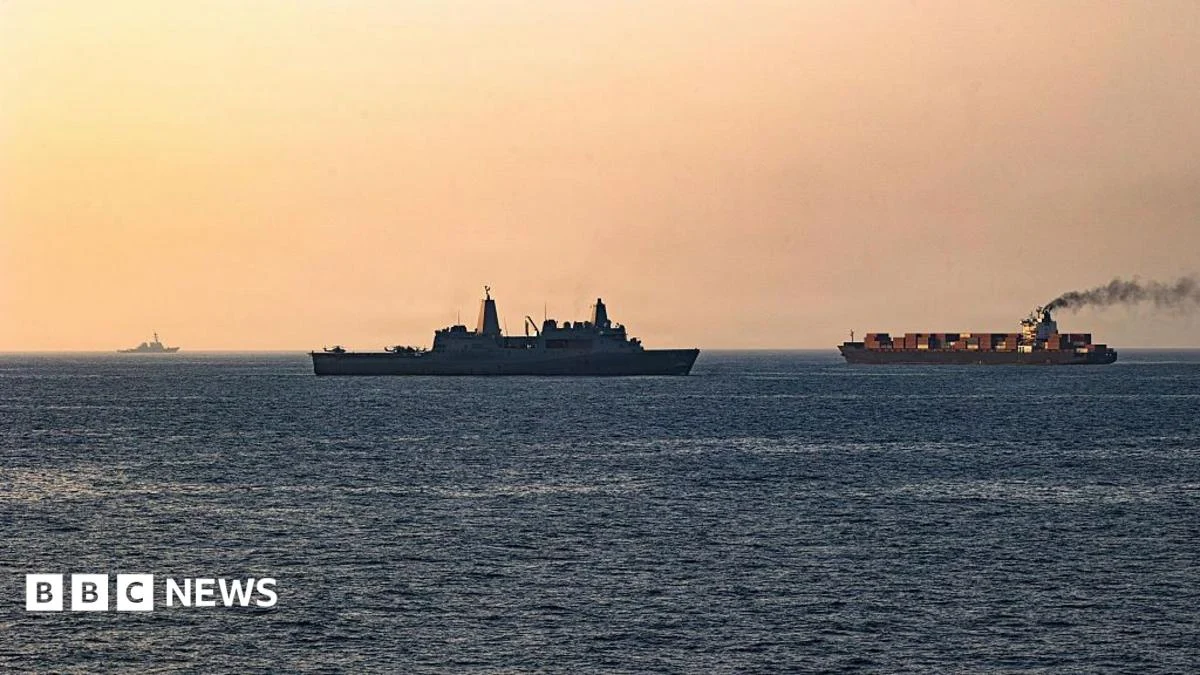
In a significant escalation of the ongoing regional conflict, the United States military announced the successful completion of a substantial retaliatory strike operation against Iran. This "heavy wave" of attacks, as described by U.S. Central Command (Centcom), was launched in direct response to Iran’s attempted ballistic missile assaults on American forces stationed in the Middle East and on commercial shipping in the Strait of Hormuz earlier this week. Centcom reported hitting "dozens" of targets associated with the Islamic Revolutionary Guard Corps (IRGC), Iran’s elite military force, underscoring the severity of the American response.
The initial Iranian missile firings, which occurred on Tuesday, targeted U.S. bases in Jordan and vessels traversing the strategically vital Strait of Hormuz. In response to these actions, the United States initiated its broad-spectrum counterattack. Iranian state media, however, painted a grim picture of the collateral damage, reporting that the latest U.S. strikes had resulted in the deaths of three individuals on Qeshm island, including a two-year-old child. Other locations in the southern and western regions of Iran were also reportedly impacted by the American bombardment.
This latest exchange of hostilities occurs within a week that has witnessed a marked expansion of the conflict’s scope. Notably, the United States, in conjunction with Saudi Arabia, carried out publicly announced joint strikes targeting Iranian proxy forces in Iraq. This tripartite military action highlights a growing, coordinated effort by the U.S. and its regional allies to counter Iran’s influence and military operations in the region. The broader context of this escalating tension can be traced back to February, when President Donald Trump initially declared that the conflict with Iran would be a short-lived affair, lasting "only a few weeks." However, five months later, with no clear end in sight, the conflict has proven to be a protracted and deeply entrenched struggle.
Amidst the escalating military actions, diplomatic overtures, however tentative, have also been reported. On Wednesday, the news outlet Axios, citing an unnamed U.S. official, indicated that President Trump had met with Saudi Defense Minister Prince Khalid bin Salman. During this meeting, the Saudi minister reportedly conveyed Riyadh’s desire to de-escalate regional tensions. The White House has been contacted by the BBC for official comment on this report, the details of which remain unconfirmed. The current volatile situation represents a stark departure from a recent period of relative calm, where both sides had seemingly halted strikes, sparking hopes of renewed diplomatic efforts and a potential de-escalation.
For several days prior to the latest U.S. strikes, a lull in hostilities had been observed, leading to speculation that nascent diplomatic channels might be opening. Reports suggested that both the U.S. and Iran had temporarily suspended offensive operations as discussions, ostensibly aimed at finding a diplomatic solution, were underway. President Trump himself had characterized these potential negotiations as "very friendly," though Tehran had officially denied any such discussions were taking place. This period of apparent détente was abruptly shattered by Iran’s missile attack on a U.S. base in Jordan on Tuesday. Following this incident, President Trump issued a stern vow of retaliation, stating to reporters at the White House, "We’re going to be hitting them very hard because it’s our turn to hit them. They know it’s coming. They asked us not to do it." This statement suggests a pre-existing understanding or communication between the two nations regarding potential escalatory responses, which Iran, by its actions, seemingly disregarded.
The latest wave of U.S. strikes commenced at approximately 20:00 ET on Wednesday, lasting for about an hour and concluding at 01:00 BST on Thursday. Centcom officially described the operation as a "powerful response to yesterday’s attempted Iranian attacks on US forces based in the Middle East." According to Centcom’s assessment, all Iranian missiles launched in the preceding attacks were successfully intercepted, mitigating any direct damage to U.S. personnel or facilities. The targets of the American retaliatory strikes were comprehensively outlined by Centcom, encompassing "military command centers, missile and drone facilities, coastal surveillance and defense sites, and maritime capabilities." This broad targeting strategy indicates a deliberate effort to degrade Iran’s military infrastructure and its capacity for future offensive operations.
The Iranian state media agency Irib provided specific details regarding the impact of the U.S. strikes, identifying the islands of Qeshm and Abadan as key areas that were hit. Both of these islands hold significant importance within Iran’s oil industry, suggesting that the U.S. may have aimed to disrupt Iranian economic assets in addition to military capabilities. The human cost of the strikes was also highlighted by Fars news agency, which cited the Hormozgan University of Medical Sciences in reporting that a U.S. attack on a residential home in the Chah Tangu neighborhood of Qeshm had resulted in the tragic deaths of three family members: the father, the mother, and their two-year-old child. This report underscores the devastating collateral damage that can occur in armed conflict and raises serious concerns about civilian casualties.
In parallel to the U.S. strikes on Iran, Jordan’s armed forces confirmed that their air defense systems had been actively engaged and successfully shot down five Iranian missiles that were targeting the Kingdom’s territory on Thursday. This indicates that the Iranian missile barrage on Tuesday had a wider reach than initially reported, extending to allied nations of the United States. The IRGC, in its statement regarding the Tuesday attacks, claimed to have targeted a U.S. air base and a command center in Jordan, framing its actions as a "response to the acts of aggression of the American child-killing army." This rhetoric reflects Iran’s consistent narrative of portraying the U.S. as an aggressor and a threat to regional stability and its own population.
Furthermore, the IRGC also claimed that its naval forces had struck three oil tankers in the Strait of Hormuz. According to the IRGC, these tankers were targeted after they allegedly "ignored warnings" and proceeded along what Iran described as an "unsafe and illegal route" through the vital Gulf waterway. This assertion by Iran highlights the ongoing friction over maritime security and freedom of navigation in this critical global chokepoint. The incident involving the oil tankers further underscores the multifaceted nature of the conflict, encompassing not only direct military engagements but also actions that impact global trade and energy security.
The U.S. military’s sustained campaign against Iranian targets is part of a broader strategy that has been in place for some time. Last Friday, President Trump had announced the suspension of an "intensive bombing campaign" that had reportedly lasted for 13 consecutive nights. During this earlier phase of intensified strikes, the U.S. claimed to have targeted Iranian weapons and military sites, with reports indicating that scores of people had died. The current wave of strikes signifies a renewed intensity in U.S. military operations against Iran.
The recent joint U.S.-Saudi strikes in Iraq further illustrate the expanding regional coalition against Iranian influence. On Tuesday, Centcom stated that these operations had hit "multiple terrorist logistics and weapons sites across eastern Iraq in a strong response to over 30 IRGC-directed aerial drone attacks in the last 72 hours." This indicates a proactive U.S. and Saudi strategy to disrupt IRGC-backed operations and supply lines within Iraq. However, these strikes have not been without controversy. Iraq’s influential paramilitary Popular Mobilisation Forces (PMF), which is largely dominated by Iran-backed Shia militias, reported that at least 20 of its members were killed in the U.S.-Saudi strikes on its bases. The Iraqi presidency issued a strong condemnation of the bombing of PMF bases, denouncing it as "an unacceptable attack and a blatant violation of Iraq’s sovereignty." Despite these Iraqi government objections, President Trump, in an interview with Fox News, asserted that the strikes had been "co-ordinated with the Iraqi government," a claim that appears to contradict the Iraqi presidency’s official stance and highlights the complex geopolitical dynamics at play within Iraq.
The underlying drivers of this escalating conflict are deeply rooted in decades of regional power struggle. Saudi Arabia, a leading Sunni Muslim power, and Iran, the largest Shia Muslim country, have been locked in a protracted competition for dominance across the Middle East. This rivalry manifests in proxy conflicts, political influence, and ideological competition, with the current military exchanges representing a direct and increasingly dangerous confrontation between the two regional titans, albeit with the United States playing a significant and active role. The intensification of these hostilities signals a dangerous phase in a conflict that has the potential to destabilize the entire region and have far-reaching global consequences. The future trajectory of this conflict remains uncertain, with the potential for further escalation or, conversely, a renewed push for diplomatic de-escalation hanging precariously in the balance.
