
 By admin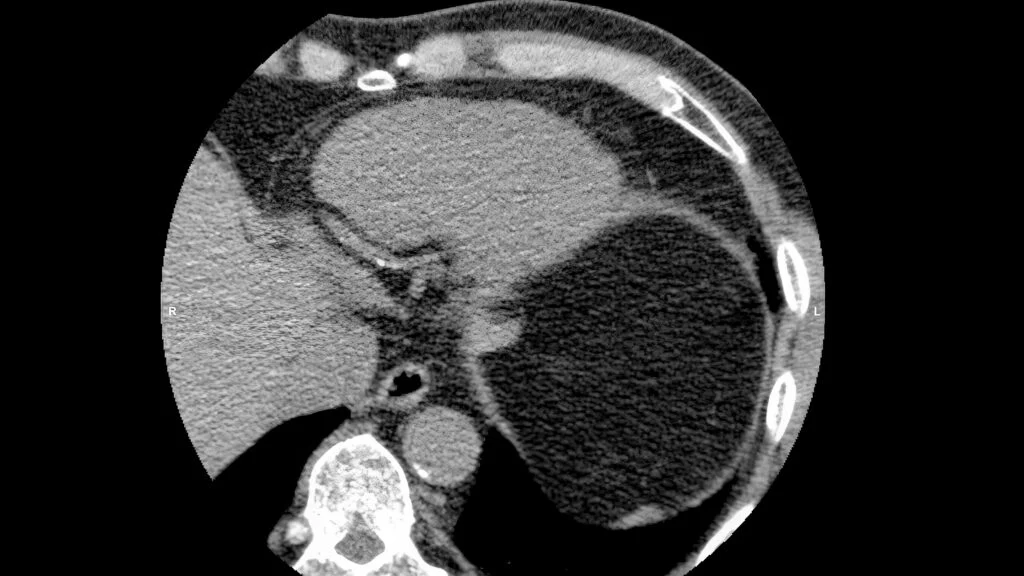
For decades, the medical community has sought the "holy grail" of cardiovascular risk assessment—a method so precise that it can tell a patient exactly when and if their arteries will fail. As cardiovascular disease remains the leading cause of death globally, accounting for nearly 20 million deaths per year, the stakes for accurate prediction could not be higher. Traditionally, doctors have relied on clinical calculators, which generate a numerical percentage of risk based on a patient’s health profile. More recently, however, advanced imaging in the form of coronary artery calcium (CAC) scans has offered a literal "picture" of the damage already done.
Two major clinical trials, building on a foundation of previous research, have now clarified the relationship between these two diagnostic powerhouses. The studies specifically examine the utility of CAC scans when paired with the newly adopted PREVENT (Predicting Risk of cardiovascular disease EVENTs) calculator. The findings suggest a nuanced reality: while the "picture" provided by a scan is a powerful tiebreaker for patients in the middle of the risk spectrum, it is not a universal necessity. For the majority of the population, the "number" generated by a clinical calculator remains the most efficient and accessible starting point for life-saving interventions.
The PREVENT calculator, introduced by the American Heart Association (AHA) in late 2023, represents a significant evolution in how doctors estimate the 10-year and 30-year likelihood of a heart attack or stroke. Unlike its predecessor, the Pooled Cohort Equations (PCE), the PREVENT tool incorporates a broader range of health metrics, including kidney function (estimated glomerular filtration rate) and measures of metabolic health. Crucially, it removes race as a variable, acknowledging that cardiovascular risk is driven more by biological markers and social determinants of health than by racial categorization. It also accounts for "risk enhancers" such as chronic kidney disease, inflammatory conditions like lupus or rheumatoid arthritis, and even certain pregnancy-related complications.
In contrast, the CAC scan is a specialized, non-contrast CT scan that measures the amount of calcified plaque in the coronary arteries. This plaque is a hallmark of atherosclerosis—the hardening and narrowing of the arteries caused by the buildup of fats, cholesterol, and other substances. The result is expressed as an Agatston score: a score of 0 indicates no visible calcium and a very low risk of a near-term heart attack; 1 to 99 represents mild buildup; 100 to 300 is moderate; and anything above 300 (or sometimes 400, depending on the criteria) is considered severe.
The dilemma for modern cardiology is that while the PREVENT calculator is free and relies on data already gathered during a standard check-up—such as blood pressure, cholesterol levels, and age—the CAC scan is an out-of-pocket expense for many. Most insurance providers do not cover the scan for screening purposes, leaving patients to pay between $100 and $400. Furthermore, while the scan is low-radiation, it still involves exposure that must be justified by its clinical utility.
However, recent research published in Circulation suggests that the data needed for a calcium score might already be hiding in plain sight. Millions of patients undergo chest CT scans every year for unrelated reasons, such as investigating a persistent cough, screening for lung cancer, or evaluating back pain. The study found that "incidental" calcium findings on these routine CTs were just as accurate at predicting coronary heart disease and cardiovascular death over a 10-year period as dedicated CAC scans. This "opportunistic screening" could provide millions of patients with vital heart health data without the need for additional costs or radiation.
Despite the growing popularity of CAC scans as a personalized "wellness" metric, the latest research emphasizes that they should not be used indiscriminately. Two pivotal studies published in August—one in the Journal of the American College of Cardiology (JACC) and another in JAMA—analyzed data from the Multi-Ethnic Study of Atherosclerosis (MESA). This longitudinal study followed more than 6,000 individuals aged 45 to 79 for over a decade.
The JACC study, co-authored by Dr. Michael Shapiro, a preventive cardiologist at Wake Forest University School of Medicine, found that adding CAC scores to the PREVENT calculator for every patient only provided a "modest" improvement in statistical prediction—roughly 1% to 2% in some cohorts. "The main message is that not everyone needs a CAC scan," Shapiro noted. He emphasized that a CAC score of zero should not be viewed as a "veto" against starting statin therapy if other risk factors are high. For example, a patient with very high blood pressure and a history of smoking might have "soft plaque" that hasn’t yet calcified, meaning it wouldn’t show up on a CAC scan but still poses a massive rupture risk.
The JAMA study, led by Dr. Nilay Shah of Northwestern University Feinberg School of Medicine, reached a similar conclusion but highlighted the "tiebreaker" effect. In his analysis, Shah found that for patients classified by PREVENT as being at "borderline" (3% to 5%) or "intermediate" (5% to 10%) risk, the CAC scan was transformative. In these specific groups, the scan allowed doctors to "reclassify" patients with high precision. Those with high calcium scores were moved into the high-risk category, where statin therapy is strongly recommended, while those with a score of zero could sometimes safely defer medication in favor of lifestyle changes.
"We much better identified those who had a heart disease event later, within the next 10 years, and we much better identified those who didn’t," Shah said. This reclassification is vital because it helps resolve the "statin hesitancy" that many patients feel. Statins, such as atorvastatin (Lipitor) and rosuvastatin (Crestor), are among the most studied and effective drugs in medical history, significantly lowering LDL (the "bad" cholesterol) and reducing the risk of heart attack and stroke. Yet, because they are often taken for decades, patients are frequently wary of side effects or the idea of being "medicalized" too early.
The latest guidelines from the American College of Cardiology (ACC) and the AHA now suggest that doctors and patients should begin discussing heart disease prevention as early as age 30. This is a significant shift from previous decades, where the focus was primarily on middle-aged and older adults. The rationale is that atherosclerosis is a cumulative process; the damage done by high cholesterol in one’s 30s and 40s sets the stage for a heart attack in one’s 60s.
For a 40-year-old man or a 45-year-old woman with borderline risk, the CAC scan offers a tangible piece of evidence that a numerical calculator cannot match. "We can estimate somebody’s risk with a calculator, and you get a number," Shah explained. "Or you can actually see an image of your heart and say, ‘OK, that’s actually what’s going on in my heart.’ I think that appeals to a lot of people because it’s much more tangible."
However, the medical community remains cautious about over-relying on the "picture." Dr. Harlan Krumholz, a renowned cardiologist and health outcomes researcher at Yale University, points out the distinction between the value of the test and the value of the information. While knowing one’s calcium score is undeniably useful, ordering the test for everyone might not be. Krumholz suggests that the focus should remain on "disciplined" ordering—using the scan specifically when it will change a treatment decision. If a patient’s risk is already clearly high (over 10%), they should likely be on a statin regardless of what the scan shows. Conversely, if their risk is exceptionally low, the scan is an unnecessary expense.
Looking forward, the integration of artificial intelligence (AI) may change the landscape once again. New AI algorithms are being developed to automatically scan every chest CT taken in a hospital system for coronary calcium, flagging patients who might not even know they are at risk. This "opportunistic" approach could bridge the gap between the cost of the scan and the need for the data.
Ultimately, the choice between a number and a picture is not an "either-or" proposition but a "yes-and" strategy for high-stakes cases. The PREVENT calculator provides the roadmap, identifying who is at risk based on the broad strokes of their health history. The CAC scan provides the "ground truth," showing the actual physical manifestation of that risk within the arteries. For the patient sitting in a doctor’s office, unsure whether to start a lifelong medication, that picture might be the only thing that makes the invisible threat of heart disease feel real. As the research continues to evolve, the goal remains the same: using every tool available—whether a mathematical equation or a high-tech image—to stop a heart attack before it ever begins.
