
 By admin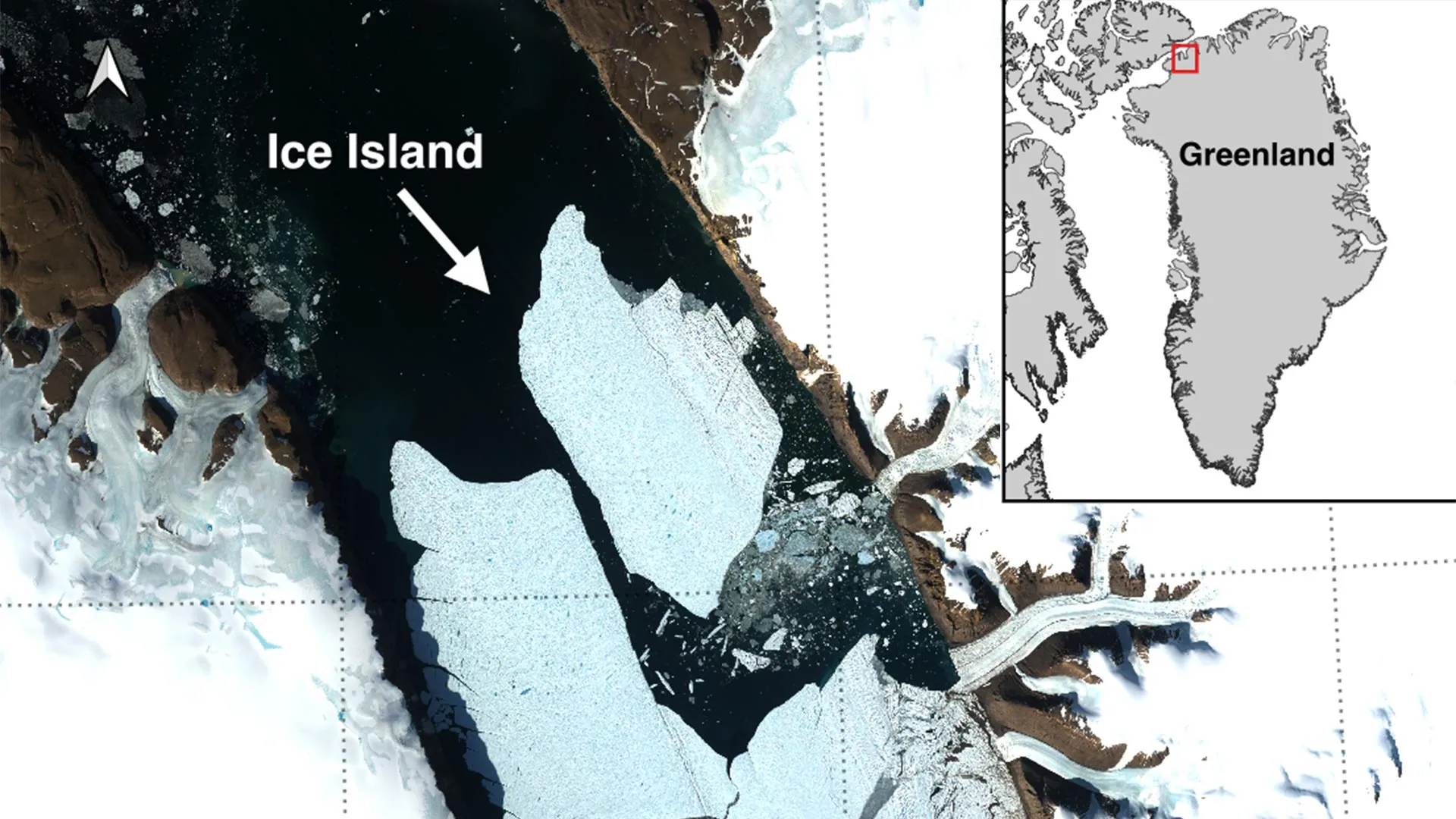
The newly separated tabular iceberg, a colossal block of ice, broke away from Petermann Glacier’s extensive floating ice tongue. Measuring approximately 150 meters in thickness, its surface area is roughly comparable to that of Manhattan Island, making it an unprecedented natural laboratory. Such events are increasingly vital for researchers to observe firsthand how enormous Arctic ice masses develop, move through the ocean’s complex currents, and eventually fragment into smaller, potentially hazardous pieces. The sheer scale of this ice island, often referred to as a "mega-iceberg," offers an unparalleled chance to gather data on the physical processes governing ice sheet stability and ocean-ice interactions, phenomena crucial for refining climate models and sea-level rise projections.
The identification of this significant event was made by Adam Garbo, a PhD student specializing in glaciology at the University of Ottawa’s Department of Geography, Environment and Geomatics. His keen observation and analysis of satellite imagery were instrumental in confirming the detachment. This discovery is a testament to the power of international scientific collaboration, forming part of an ongoing research partnership that includes the University of Ottawa, the University of Stirling in Scotland, Environment and Climate Change Canada, Lancaster University, and the University of Leeds. Each institution brings unique expertise to the table, from glaciological modeling and satellite remote sensing to oceanography and climate science, creating a comprehensive approach to understanding the Arctic’s evolving landscape.
Petermann Glacier: A Sentinel of Arctic Change
Petermann Glacier, located in the remote northwest of Greenland, is one of the largest and most dynamic outlet glaciers of the Greenland Ice Sheet. It flows into the Nares Strait, a narrow passage between Greenland and Ellesmere Island, and extends a considerable distance into the ocean as a floating ice tongue. This ice tongue acts as a buttress, slowing the flow of ice from the main glacier into the ocean. Its stability is therefore directly linked to the rate at which the interior ice sheet contributes to global sea-level rise. Historically, Petermann Glacier has been known for its significant calving events, notably in 2010 when it released an ice island roughly four times the size of Manhattan, and again in 2012. These previous events serve as benchmarks, highlighting the cyclical, yet seemingly accelerating, nature of its ice loss. The current event, being the largest since 2012, places it firmly within a worrying trend observed by glaciologists worldwide.
Satellite Monitoring Revealed Years of Growing Instability
The latest calving event at Petermann Glacier was not an abrupt surprise but the culmination of years of meticulous observation. Scientists have been tracking changes at Petermann Glacier with long-term satellite observations since 2019, utilizing advanced remote sensing technologies. Over that period, they closely followed the condition of the glacier’s expansive floating ice tongue, recording the gradual expansion of fractures and watching for clear signs that a major section might eventually break away. This sustained vigilance allowed researchers to develop a predictive understanding of the glacier’s behavior.
"Petermann Glacier has long been one of Greenland’s largest remaining ice tongues, and its structural integrity is critical to the broader ice sheet dynamics," says Garbo. "We’ve anticipated this break for years, carefully monitoring the propagation of rifts and the subtle shifts in its ice front. Seeing it finally happen is remarkable, not just for the sheer scale of the event, but for the confirmation of our long-term observational models."
The crucial data came from images collected by the European Space Agency’s Sentinel-1 mission. Sentinel-1, equipped with an advanced Synthetic Aperture Radar (SAR) instrument, is particularly well-suited for monitoring polar regions because it can penetrate cloud cover and operate independently of daylight, providing continuous observation even during the long Arctic night. The SAR images showed clear signs of significant deterioration along the centerline of the ice tongue on August 3. This precursory fracturing rapidly progressed, and by 20:00 UTC on August 4, the new ice island had fully separated from the glacier’s eastern side, drifting freely into the Nares Strait. The ability of Sentinel-1 to detect subtle changes in ice surface roughness and deformation allowed researchers to pinpoint the precise timing and location of the detachment.
Rare Arctic Ice Islands Offer a Window Into Polar Change
While large, flat-topped icebergs are relatively common around Antarctica, where massive ice shelves routinely calve vast tabular icebergs, comparable "ice islands" are much less frequently seen in the Arctic. This rarity is primarily due to fundamental differences in the glaciological and oceanographic environments of the two poles. Antarctic ice sheets are vast and flow into extensive, thick ice shelves, which are prone to forming immense, flat icebergs. In contrast, Arctic glaciers are generally smaller, often confined by topography, and calve into fjords or straits, producing more irregular, pinnacle-shaped icebergs. The few instances of large tabular ice islands in the Arctic, such as those from Petermann Glacier, are therefore exceptionally valuable to researchers.
Their rarity and remarkable longevity make them especially significant to researchers studying glacier retreat, changing ocean conditions, and the risks posed by drifting ice in polar regions. "While large, tabular icebergs are relatively common in the Southern Ocean that surrounds the Antarctic Ice Sheet, Arctic ice islands are far rarer," explains Dr. Anna Crawford of the University of Stirling, a leading expert in glaciology and remote sensing. "By studying Arctic ice islands, their formation, drift paths, and eventual fragmentation, we will gain knowledge that can be transferred across Polar regions, helping us to understand how ice sheets respond to a warming climate globally." These ice islands provide unique platforms for in-situ measurements, allowing scientists to deploy sensors directly onto the ice to monitor temperature, salinity, and ocean currents beneath them, offering unprecedented insights into ice-ocean interactions.
Scientists do not expect the August 2026 calving event to be the last major change at Petermann Glacier. The long-term satellite monitoring has identified additional structural weaknesses. Two additional large sections of the floating ice tongue are expected to detach in the near future as rifts that have been developing for years continue to cut through the remaining ice. These future ice islands are projected to measure approximately 94 km2 and 84 km2, respectively. If both of these anticipated breaks occur, the three calving events combined would remove approximately 254 km2 from Petermann Glacier’s ice tongue, reducing its overall extent by about 22 percent. This significant reduction in the ice tongue’s buttressing capacity could potentially accelerate the flow of the main glacier, leading to an increased contribution to global sea-level rise in the coming decades.
Drifting Ice Could Create Hazards for Arctic Shipping and Operations
Beyond its scientific significance, the newly formed ice island poses tangible practical challenges, particularly for marine safety and navigation in the increasingly accessible Arctic. Massive pieces of floating ice, especially those of this immense size and thickness, can remain intact for years as they drift through the Arctic waterways. As they encounter warmer waters and strong currents, they gradually fracture into smaller sections, which may become increasingly difficult to track using conventional methods.
The implications for Arctic shipping are profound. As the Arctic ice cap recedes due to climate change, new shipping routes like the Northwest Passage and the Northern Sea Route are becoming more viable for commercial vessels, tourism, and resource extraction. The presence of large, unpredictable ice islands and their fragments introduces significant hazards. Environment and Climate Change Canada (ECCC) is actively monitoring the ice island’s movement, as it has done following previous Arctic ice shelf calving events, while continuously evaluating potential risks to vessels, offshore oil and gas infrastructure, and coastal communities. This monitoring involves a combination of satellite imagery, aerial reconnaissance, and predictive modeling to forecast drift paths and fragmentation patterns.
"These are thick blocks of ice that can drift for years, traversing vast distances across the Arctic Ocean," specifies Dr. Abigail Dalton of the Canadian Ice Service, a division of Environment and Climate Change Canada responsible for providing ice information and forecasts. "Over time, they fracture into smaller, harder-to-track pieces that pose significant hazards to vessels, resource operations, and even coastal infrastructure. A vessel colliding with an iceberg of this scale, or even its substantial fragments, could lead to catastrophic consequences, including loss of life, environmental damage from spills, and severe economic disruption." The Canadian Ice Service issues regular ice charts and warnings to mariners, but the dynamic nature of these mega-icebergs presents an ongoing challenge for accurate forecasting.
Garbo and his collaborators plan to continue following the aftermath of this calving event with a multi-faceted approach, employing further satellite imagery, targeted aerial observations, and advanced tracking data. Their work is part of a broader, concerted international effort to better understand the complex processes responsible for the calving and retreat of Arctic ice shelves and glaciers. This research is critical not only for predicting future sea-level rise but also for informing policy decisions regarding Arctic resource development, environmental protection, and ensuring the safety of human activities in this rapidly transforming polar region. The Petermann Glacier event serves as a stark reminder of the planet’s warming trajectory and the cascading effects it has on the cryosphere, demanding sustained scientific inquiry and global action.
