
 By admin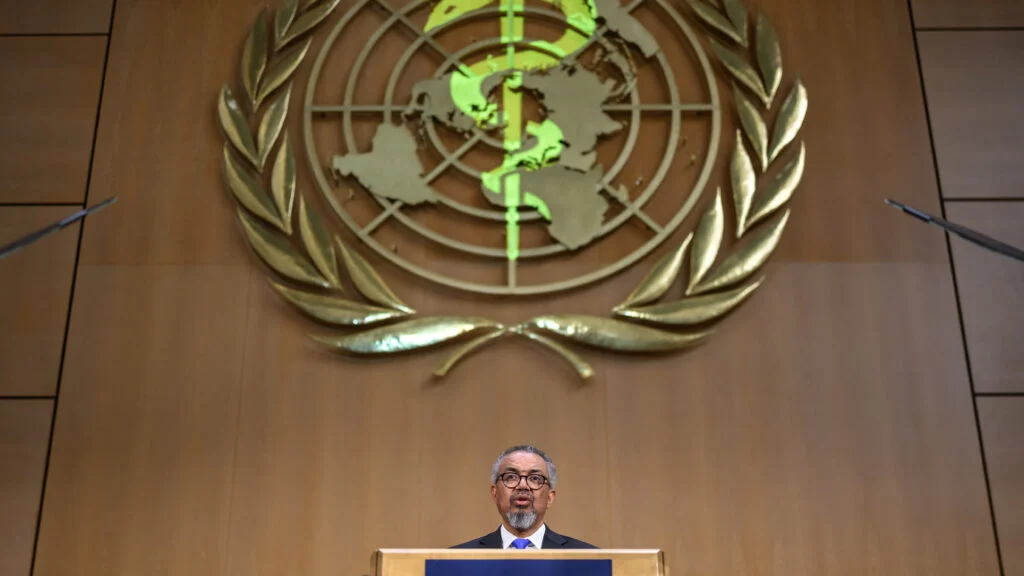
In a sharp and rare rebuke of a member state’s domestic health policy, senior officials of the World Health Organization (WHO) have launched a stinging critique of the Trump administration’s latest efforts to fundamentally restructure the United States’ vaccination guidelines. Speaking from the agency’s headquarters in Geneva, WHO Director-General Tedros Adhanom Ghebreyesus and several leading immunization experts characterized the administration’s new executive order as a politically driven maneuver that flies in the face of decades of established medical research and global public health consensus. The confrontation marks a significant escalation in the tension between the international health body and the U.S. executive branch, highlighting a growing divide over the role of scientific evidence in shaping federal health mandates.
The controversy centers on an executive order signed by President Trump on Monday, which outlines a sweeping plan to reduce the number of childhood vaccinations recommended by federal health agencies. Most notably, the order seeks to dismantle the long-standing practice of using combination vaccines—which protect against multiple diseases with a single injection—in favor of "monovalent" or single-pathogen shots. The administration’s primary target for this transition is the measles, mumps, and rubella (MMR) vaccine, a cornerstone of pediatric medicine for over half a century. According to the administration, these changes are intended to provide parents with more "choice" and to address concerns regarding the safety of the current immunization schedule.
However, the WHO leadership was quick to point out that the premise of the executive order is rooted in the long-debunked and scientifically fraudulent claim that the rising number of vaccinations is linked to increased rates of autism spectrum disorder (ASD) in children. This narrative, which originated from a retracted and discredited 1998 study, has been refuted by dozens of large-scale epidemiological studies involving millions of children across multiple continents.
“Vaccines, including the MMR vaccine, are safe, and do not cause autism,” Director-General Tedros Adhanom Ghebreyesus stated during a press conference on Wednesday. His tone was one of both frustration and urgency as he addressed the potential fallout of the U.S. policy shift. “Delaying vaccines or separating doses unnecessarily does not make vaccinations safer and can leave children unprotected during their most vulnerable developmental windows. Vaccination policy should be guided by rigorous, independent, and transparent review of the best available science and not by political influence.”
The executive order does not immediately alter the Centers for Disease Control and Prevention (CDC) schedule, but it serves as a powerful directive to federal health officials to begin the process of revising recommendations. The administration has argued that the U.S. schedule is "overburdened" and that by reducing the number of required shots, the country would be moving closer to the practices of "peer nations" in Europe. To support this, the administration specifically cited Denmark as a model for a more streamlined approach to immunization.
However, a deep-dive analysis by health news outlet STAT, as well as data maintained by the WHO, suggests that this justification is factually inaccurate. While it is true that different countries have varying schedules based on local disease prevalence and healthcare infrastructure, the U.S. would actually become a global outlier if it moved away from combination vaccines. A STAT analysis found that the U.S. currently aligns closely with the majority of high-income nations. By contrast, the administration’s proposed changes would put the U.S. in a category shared by almost no other developed nation.
Brigitte Giersing, the unit head for vaccine research, development, and policy for the WHO’s department of immunization, vaccines, and biologicals, provided data to illustrate the isolation of the administration’s proposal. She noted that of the WHO’s 194 member states, only 15 currently utilize monovalent vaccines for measles, mumps, and rubella. The vast majority of the world relies on the combined MMR shot because it is more efficient, less traumatic for the child, and ensures higher completion rates.
“The MMR schedule is a two-dose schedule with those three vaccines,” Giersing explained. “If we break that up into separate components, we would be moving from two injections to six. This would not only increase the number of needle sticks a child must endure but would also vastly increase the complexity of the schedule for both parents and healthcare providers.”
Beyond the logistical hurdles, there is the significant issue of vaccine availability. Currently, there are no monovalent vaccines for measles, mumps, or rubella licensed for use in the United States. For the administration’s order to be realized, pharmaceutical manufacturers would need to develop, test, and seek FDA licensure for three separate products. Early indications from the pharmaceutical industry suggest little to no appetite for such an undertaking. Industry analysts point out that the cost of bringing a vaccine through the rigorous clinical trial and regulatory approval process can run into the hundreds of millions, if not billions, of dollars. Given that the global and domestic medical community overwhelmingly supports combination shots, manufacturers see no viable market for monovalent alternatives that are medically unnecessary.
The public health risks of such a policy shift are profound. Jeremy Farrar, the WHO’s assistant director-general for health promotion and disease prevention and care, warned that increasing the number of required clinic visits would inevitably lead to a decline in vaccination coverage. This phenomenon, often referred to as "vaccine fatigue" or "logistical attrition," occurs when the burden of multiple appointments leads parents to miss doses.
“If you break up these vaccines and force people to go back with their children to six or seven clinics to get a series of vaccines, the reality is many will not return for those subsequent vaccines,” Farrar said. “Children at their most vulnerable stage for these diseases will get infected. We are talking about pathogens that can cause permanent disability or death.”
Farrar took a moment to remind the public that measles, mumps, and rubella are not the "minor" childhood illnesses that some anti-vaccination advocates claim them to be. Measles, in particular, is one of the most contagious diseases known to man and can lead to severe pneumonia, lifelong deafness, and subacute sclerosing panencephalitis (SSPE)—a fatal neurological condition. “If anybody has seen a child post-measles with encephalitis—inflammation of the brain—you remember it for the rest of your life,” Farrar added.
The WHO’s Director of the Department of Immunization, Vaccines and Biologicals, Kate O’Brien, echoed these concerns, emphasizing that the move toward combination vaccines was one of the greatest achievements in pediatric medicine. Combination shots like the MMR, the DTaP (diphtheria, tetanus, and acellular pertussis), and the pentavalent vaccine have significantly boosted global immunity by making the process of protection easier for families.
“This is going in exactly the wrong direction. And there is no evidence that would drive this decision,” O’Brien said. “We know that the more you can enable families to be able to do what they want to do—which is protect their children—the higher the coverage is. Adding barriers, adding pain, and adding cost does the opposite.”
The scientific consensus on the safety of the current U.S. vaccine schedule is supported by organizations ranging from the American Academy of Pediatrics (AAP) to the Institute of Medicine (IOM). These organizations have repeatedly reviewed the "antigenic load" of vaccines—the number of immune-triggering components—and found that even with the expanded schedule, children today are exposed to fewer antigens through vaccines than children were in the 1960s, thanks to advances in protein purification and vaccine technology. Furthermore, the human immune system is capable of responding to thousands of antigens simultaneously; the handful of antigens in a combination shot represents a tiny fraction of what a child encounters in their daily environment.
The political implications of the executive order are equally significant. Critics argue that by entertaining the "too many, too soon" narrative, the administration is giving federal legitimacy to a movement that has already contributed to the resurgence of measles in the U.S. and Europe. In 2019, the U.S. nearly lost its measles-elimination status due to large outbreaks in communities with low vaccination rates.
As the WHO officials concluded their briefing, the message was clear: the global health community views the U.S. administration’s move not as a legitimate policy debate, but as a dangerous departure from reality. By prioritizing political optics and catering to fringe theories over established biological science, the order threatens to undermine decades of progress in child survival. The WHO’s rare and pointed intervention serves as a warning that when the world’s leading economy retreats from evidence-based medicine, the health of children everywhere hangs in the balance. The struggle now moves to the halls of the CDC and the FDA, where scientists will have to decide whether to uphold the rigorous standards of their fields or yield to the directives of an executive order that many experts believe is fundamentally flawed.
