
 By admin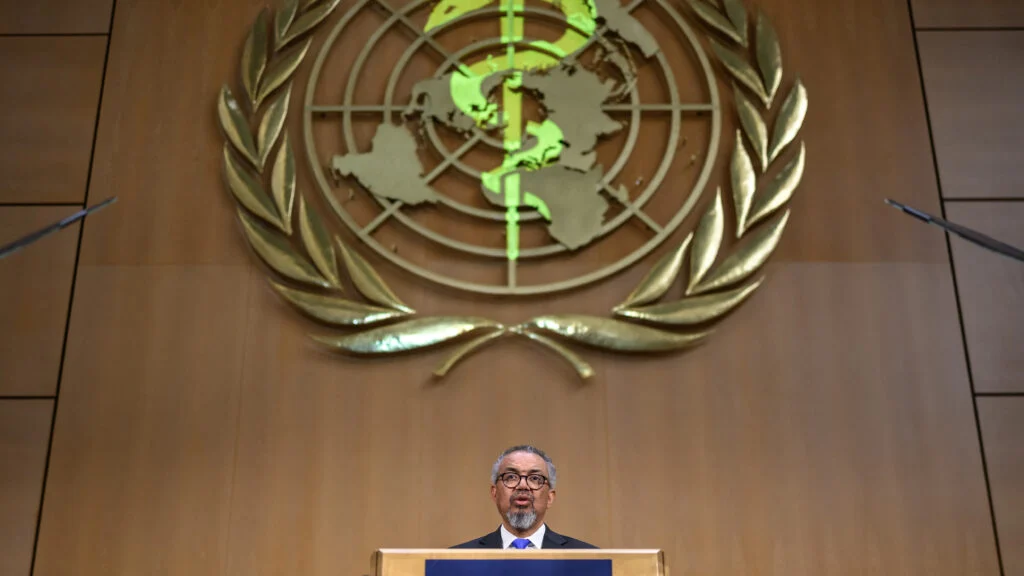
The controversy centers on an executive order signed by President Trump on Monday, which outlines a radical departure from the current U.S. pediatric vaccine schedule. The order calls for a significant reduction in the total number of vaccinations recommended for children and advocates for a transition away from "combination" vaccines—which protect against multiple diseases with a single injection—toward "monovalent" or single-pathogen shots. The administration has specifically targeted the Measles, Mumps, and Rubella (MMR) vaccine as the primary candidate for this de-bundling process. This policy shift is predicated on the long-disproven and scientifically hollow claim that the current volume of childhood vaccinations is linked to the rising rates of autism spectrum disorder in the United States.
Director-General Tedros Adhanom Ghebreyesus was blunt in his assessment of the administration’s rationale. “Vaccines, including the MMR vaccine, are safe, and do not cause autism,” Tedros stated, addressing the persistent misinformation that has fueled vaccine hesitancy globally. He emphasized that the safety of children is compromised, not enhanced, by the proposed changes. “Delaying vaccines or separating doses unnecessarily does not make vaccinations safer and can leave children unprotected during their most vulnerable developmental stages. Vaccination policy should be guided by rigorous, independent, and transparent review of the best available science and not by political influence.”
The scientific community has spent more than two decades debunking the alleged link between vaccines and autism, a myth that originated from a fraudulent and subsequently retracted 1998 study. Since then, massive epidemiological studies involving millions of children across multiple continents have consistently shown no correlation between the MMR vaccine—or the cumulative number of vaccines received—and the development of autism. By reviving this narrative through an executive order, the Trump administration is accused of elevating fringe conspiracy theories to the level of federal policy, a move that WHO officials warn could have catastrophic consequences for herd immunity and public trust in medical institutions.
While the executive order does not immediately rewrite federal law or bypass the regulatory authority of the Centers for Disease Control and Prevention (CDC), it serves as a powerful directive to federal agencies to begin the process of scaling back recommendations. The administration has defended the move by claiming it seeks to bring the United States into alignment with the vaccination schedules of "peer nations" in Europe. However, this justification has been met with skepticism and data-driven refutation. A comprehensive analysis conducted by STAT News revealed that the U.S. vaccination schedule is largely consistent with most developed European nations. In fact, the analysis showed that by reducing the number of recommended vaccines, the U.S. would become a global outlier. The administration frequently cites Denmark as a model for a more "streamlined" schedule, yet experts point out that Denmark is itself an anomaly in the European landscape and that its specific epidemiological context does not necessarily translate to the much larger and more diverse population of the United States.
One of the most concerning aspects of the order, according to WHO experts, is the push for monovalent vaccines over combination shots. Combination vaccines, such as the MMR or the DTaP (diphtheria, tetanus, and acellular pertussis), were developed specifically to reduce the "pincushion effect"—the number of physical injections a child must endure during a single doctor’s visit. Brigitte Giersing, unit head for vaccine research, development, and policy at the WHO’s department of immunization, vaccines, and biologicals, provided a global perspective on the rarity of the administration’s proposal. She noted that of the WHO’s 194 member states, only 15 still utilize monovalent vaccines for measles, mumps, and rubella. The vast majority of the world has transitioned to the MMR combination shot because of its proven safety profile and its ability to simplify complex immunization schedules.
“The MMR schedule is a two-dose schedule that covers those three diseases simultaneously,” Giersing explained. “If we break that up, we would essentially be tripling the number of injections required to achieve the same level of protection. This would significantly increase the complexity of the schedule for both healthcare providers and parents, likely leading to lower compliance rates.”
The logistical hurdles are further complicated by the current state of the pharmaceutical market. In the United States, there are currently no monovalent vaccines for measles, mumps, or rubella licensed by the Food and Drug Administration (FDA). Manufacturing these single-pathogen shots would require pharmaceutical companies to invest hundreds of millions of dollars in research, development, and the rigorous FDA licensure process. Early indications from the industry suggest that manufacturers have little appetite for such an undertaking. The cost of bringing these products to market would be astronomical, and given the overwhelming medical consensus favoring combination shots, the market for monovalent alternatives would likely be too small to justify the investment.
Jeremy Farrar, the WHO’s assistant director-general for health promotion and disease prevention and care, warned of the "attrition risk" inherent in a de-bundled schedule. He argued that requiring families to make six or seven separate clinic visits instead of two or three would inevitably lead to children missing doses. “The reality of public health is that the more barriers you put in the way of completion, the lower the completion rate will be,” Farrar said. “If you force parents to return to the clinic repeatedly, many will not return for those subsequent vaccines. This leaves children at their most vulnerable stage unprotected against pathogens that can cause permanent disability or death.”
Farrar also took the opportunity to remind the public that the diseases the MMR vaccine prevents are far from trivial. While some may perceive measles or mumps as minor childhood illnesses, the clinical reality is often much grimmer. Measles, in particular, can lead to severe complications, including pneumonia and encephalitis—a dangerous inflammation of the brain. “If anybody has seen a child post-measles with encephalitis, you remember it for the rest of your life,” Farrar remarked, emphasizing the high stakes of the policy debate. He noted that even in high-income countries, measles outbreaks can lead to hospitalizations and long-term neurological damage.
The consensus among WHO leadership is that the Trump administration is moving in "exactly the wrong direction." Kate O’Brien, the director of the WHO’s department of immunization, vaccines, and biologicals, stressed that the goal of public health policy should be to make life-saving interventions as accessible as possible. “There is overwhelming evidence that making vaccinations easier to receive actually increases uptake and saves lives,” O’Brien said. “This executive order ignores that evidence. We know that the more you can enable families to be able to do what they want to do—which is protect their children—the higher the coverage is. Adding unnecessary injections and clinic visits does the opposite.”
Beyond the immediate impact on U.S. children, global health experts are concerned about the "export" of vaccine hesitancy. As the United States is a leader in medical research and public health policy, an official government stance that lends credence to anti-vaccine tropes could embolden similar movements in other countries. This comes at a time when the WHO has already identified vaccine hesitancy as one of the top ten threats to global health. The resurgence of measles in regions where it was once nearly eradicated serves as a stark reminder of how fragile herd immunity can be.
The critique from the WHO reflects a broader alarm within the scientific community regarding the politicization of health data. By challenging the recommendations of the CDC’s Advisory Committee on Immunization Practices (ACIP)—a group of independent medical and public health experts who develop the U.S. vaccine schedule based on rigorous data review—the administration is perceived as undermining the very foundations of evidence-based medicine. As the debate continues, the WHO remains steadfast in its position: vaccines are a triumph of modern science, and any policy that threatens to dismantle their delivery system poses a direct threat to the lives of children. The organization has called on the administration to rescind the order and return to a policy framework dictated by laboratory results and clinical trials rather than political rhetoric.
