
 By Rifan Muazin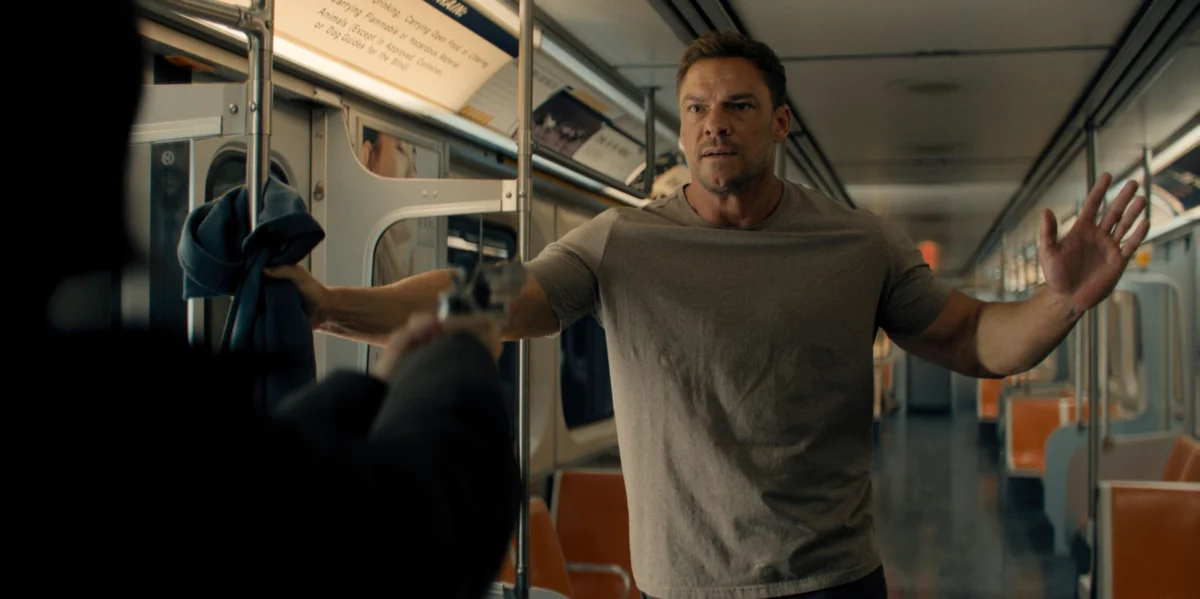
The flickering lights of a late-night Philadelphia subway car set a somber stage for a high-stakes drama that most passengers are too tired or too distracted to notice. In the corner of the sparsely populated carriage, a woman sits in the throes of a desperate crisis, her eyes darting with the frantic energy of someone whose options have finally run out. She believes she is invisible, a ghost in the machine of the city’s transit system, executing a dangerous plan under the cover of urban anonymity. What she does not realize is that she is being observed by a man whose entire existence is predicated on seeing what others miss. He is a ghost of a different kind—a former U.S. Army Military Police officer, a man trained by one of the world’s most formidable military organizations to be a human radar system. When he rises from his seat to offer assistance, the air in the car seems to displace under his sheer mass. She isn’t sure if she can trust him, and for those who have yet to experience the visceral thrill of Prime Video’s Reacher, that hesitation is understandable. However, for the millions of fans who have turned this series into a global phenomenon, the arrival of Jack Reacher is the only signal that justice—often of the most brutal variety—is finally on its way.
As Reacher enters its fourth season, the series has cemented its place as the gold standard of the modern action-procedural. Based on the massive literary franchise by Lee Child—the pen name of Jim Grant—the show has successfully navigated the transition from the page to the screen by leaning into the very qualities that made the books a staple of airport bookstores for nearly three decades. With 30 works of fiction currently in the Reacher canon, the source material offers a nearly bottomless well of narratives. The television adaptation, spearheaded by showrunner Nick Santora, has mastered the art of the seasonal anthology, ensuring that the show remains accessible to newcomers while rewarding long-time viewers with escalating stakes and refined character beats. If you have been sitting on the sidelines, here are the definitive reasons why Season 4 is the perfect moment to dive into the world of the big man with the even bigger sense of justice.
One of the most significant strengths of the Reacher series is its modular structure. Unlike many prestige dramas that require a flowchart to track multi-season character arcs and dense lore, Reacher is designed with a "pick-up-and-play" philosophy. Author Lee Child famously wrote the books to jump around in time; sometimes Reacher is a serving Major in the 110th Special Investigators Unit, but more often, he is the "drifter" version of the character—a man with no home, no phone, and no master, traveling the United States via Greyhound bus with nothing but a folding toothbrush and a passport.
Season 4 follows this tradition by adapting Gone Tomorrow, the 13th novel in the series, but shifting the setting from the book’s New York City to the gritty streets of Philadelphia. The season begins with Reacher arriving in the City of Brotherly Love for a characteristically eccentric reason: he wants to see a legendary baseball prospect pitch a perfect game before the inevitable toll of professional sports blows out the young man’s arm. This self-contained nature means that a viewer can start with Season 4 and lose nothing in terms of narrative coherence. While Seasons 2 and 3 serve as an excellent primer for the upcoming Neagley spinoff series—featuring Maria Sten as Reacher’s indispensable former colleague Frances Neagley—Season 4 stands on its own as a taut, urban thriller that captures the "Reacher-versus-the-World" dynamic in its purest form.
While the series is technically a traveling show, Season 4 leans heavily into the "local color" of Philadelphia, even if the production’s reality is a bit more complex. Much of the series is filmed in Toronto and the surrounding Ontario landscape, a common practice in modern television production due to tax incentives and infrastructure. Sharp-eyed viewers might spot Toronto’s Sankofa Square standing in for a bustling Philadelphia plaza, or notice that a "water ice" stand looks a bit more like a temporary movie prop than a South Philly staple. However, the production budget for Season 4 clearly allowed for strategic location shooting that elevates the visual storytelling.
The show makes stunning use of The Rail Park, Philadelphia’s answer to the High Line, and the kaleidoscopic, mosaic-filled wonder of Philadelphia’s Magic Gardens. These locations aren’t just background dressing; they are integrated into the action with a creative flair that suggests the producers have a deep appreciation for the city’s unique aesthetic. The contrast between the grit of the subway and the vibrant, jagged beauty of the Magic Gardens provides a visual metaphor for Reacher himself: a man of rough edges and hard surfaces who nevertheless possesses a complex, almost artistic internal logic.

Central to the appeal of Jack Reacher is his inherent skepticism of authority. Despite his military pedigree, Reacher has zero interest in the bureaucracy of law enforcement. This season, that friction is front and center from the very first episode. After the inciting incident on the subway, Reacher finds himself in an interrogation room facing off against Detective Shaun Docherty, played with a weary, cynical charm by veteran character actor Kevin Corrigan, and his partner Tamara Green, portrayed by Sydelle Noel. The dialogue in these scenes is a masterclass in stoic wit. When Docherty notes that Reacher has a passport but no driver’s license and asks if there’s an answer for that, Reacher simply replies, "It wasn’t a question."
This distrust of the system isn’t born out of a desire to be an outlaw, but rather from a deep-seated belief in personal competence. Reacher views most official investigations as slow, compromised, or hindered by red tape. As the plot thickens and federal agents begin to swarm around the case, Reacher’s disdain only grows. In a recurring bit of levity that balances the show’s darker themes, Reacher begins assigning nicknames to the various shadowy government operatives tailing him. One group of suit-clad agents is dubbed after cereal mascots; another squad is named after nursery rhyme characters. It is a subtle way of asserting dominance, signaling that he doesn’t fear the "men in black" because, to him, they are as predictable and flimsy as cartoons.
Of course, no discussion of Reacher is complete without addressing the "bone-crunching" elephant in the room. The action choreography in Season 4 continues to push the boundaries of what is possible on a television budget. Reacher’s sense of justice is as massive as his deltoids, and his method of conflict resolution is famously efficient. He doesn’t just win fights; he dismantles his opponents with a combination of overwhelming force and high-level tactical intelligence.
One standout sequence in the new season involves Reacher dropping out of a window and scaling down the side of a building to a lower ledge, all while holding a pair of takeout chopsticks in his teeth. It sounds absurd on paper, but within the context of the show’s grounded physics, it becomes a terrifying display of resourcefulness. Later, a fight in the basement of a library utilizes hand-cranked compact shelving in a way that will make you never look at archival storage the same way again. These moments highlight the show’s commitment to "environmental combat"—the idea that Reacher can turn any object or setting into a lethal weapon.
Finally, there is the sheer physicality of Alan Ritchson. For years, fans of the Lee Child novels complained that the feature film adaptations starring Tom Cruise, while well-made, failed to capture the essential "bigness" of the character. In the books, Reacher is described as a 6-foot-5, 250-pound force of nature with hands the size of dinner plates. Alan Ritchson is the living embodiment of that description. His presence on screen is so commanding that the show often plays his size for laughs, as various "normal-sized" henchmen attempt to tackle him with the success rate of a toddler trying to stop a freight train.
In Season 4, the writers even poke fun at the difficulty of subduing such a man, introducing a group of antagonists who resort to using gorilla tranquilizers just to stand a chance. Beyond the violence, Ritchson brings a surprising amount of soul to the role. There is a quiet intelligence in his eyes that justifies the character’s reputation as a brilliant investigator. And yes, the show maintains its tradition of "horny" interludes—brief moments of respite where the action pauses long enough for Reacher to find a romantic connection with a capable woman. These scenes serve as a reminder that for all his lethality, Reacher is still human, even if his abdominal muscles resemble a pack of soup cans.
Reacher Season 4 is more than just a continuation of a hit series; it is a refinement of a genre. It balances the procedural satisfaction of a mystery with the visceral thrill of an elite action movie, all while anchored by a protagonist who feels like a throwback to the legendary stoic heroes of American cinema. Whether he’s navigating the complexities of a federal conspiracy or simply trying to find a clean change of clothes in a city that isn’t his own, Jack Reacher remains the most compelling drifter on television. If you haven’t started your journey with him yet, Philadelphia is waiting, and the train is about to leave the station.
