
 By admin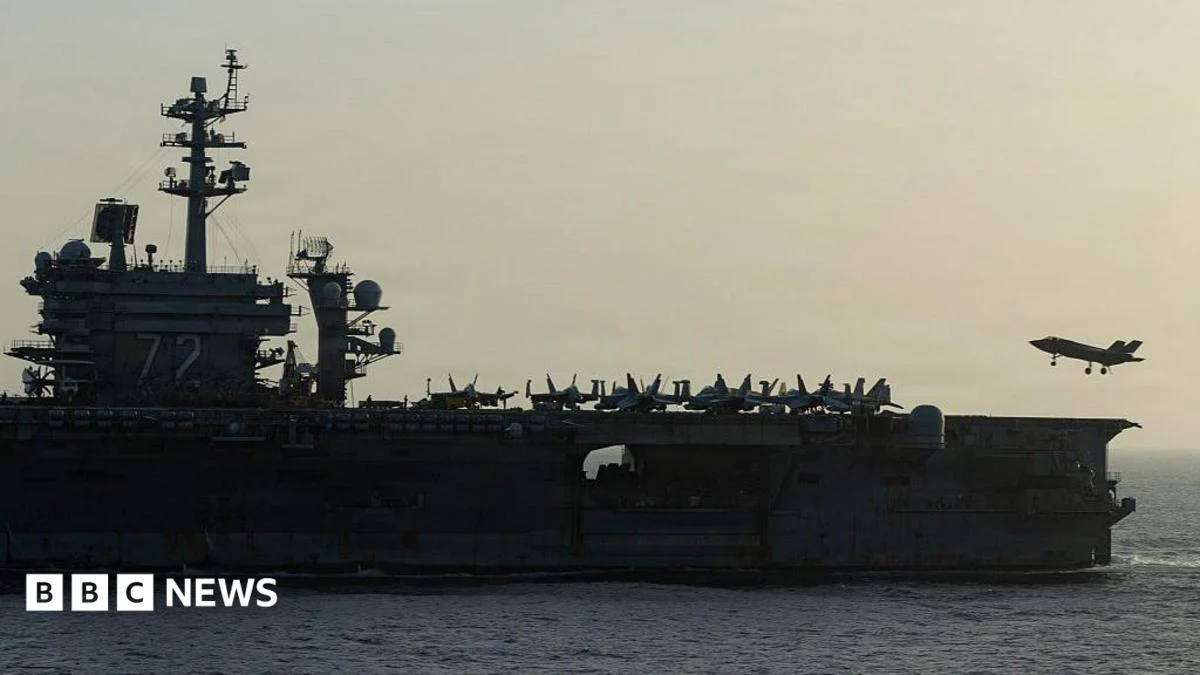
Deepening concerns over the living conditions aboard the USS Abraham Lincoln, an American aircraft carrier currently engaged in a prolonged deployment in the Middle East, have prompted a US senator to demand a comprehensive briefing from military leadership. The vessel, having been at sea for over 250 days, faces allegations of severe supply shortages, malfunctioning essential services, and a disturbing rise in mental health crises among its crew. This situation is not only drawing scrutiny from Capitol Hill but also amplifying pressure on the Trump administration concerning its escalating posture towards Iran.
Reports circulating through military publications and echoed by family members of sailors paint a grim picture of life aboard the USS Abraham Lincoln. These accounts suggest that service members are contending with a significant scarcity of basic provisions, including food, and are experiencing widespread issues with broken plumbing. More alarmingly, these reports indicate a concerning number of suicide attempts and ideations among the crew, highlighting a potential mental health crisis exacerbated by the extended and arduous deployment.
However, the Pentagon has vehemently contested these claims. Defense Secretary Pete Hegseth, in a public statement on Thursday, dismissed the reports as "completely misrepresented," suggesting a deliberate distortion of the facts. Despite these assurances, the senator’s intervention signals a significant escalation in the challenge to the military’s narrative and underscores the gravity of the allegations.
The USS Abraham Lincoln’s current deployment is a complex and prolonged one, originating from its departure from San Diego in November. Initially tasked with operations in the South China Sea, the carrier was subsequently rerouted to the Middle East in anticipation of heightened tensions and potential conflict with Iran, particularly following attacks in February. Critically, no definitive return date has been communicated to the crew or the public, contributing to the uncertainty and stress experienced by those on board.
Senator Richard Blumenthal of Connecticut, a prominent member of the Senate Armed Services Committee, has articulated his specific concerns in a detailed letter addressed to Secretary Hegseth. The senator meticulously listed the reported hardships faced by the approximately 5,000 individuals serving on the aircraft carrier. These include "shortages of basic supplies, water contamination, plumbing issues, deteriorating mental health, deck safety concerns, and disruptions in the mail system, which have caused many care packages in route to the ship to be lost in transit for months." This comprehensive enumeration of problems underscores a systemic failure in logistical support and crew welfare.
"These reports warrant immediate attention," Senator Blumenthal emphatically stated in his letter, underscoring the urgency of the situation. Beyond the immediate welfare of the sailors, the Democrat also raised a more profound strategic question: "whether the Navy can sustain the operational tempo now being demanded of its carrier force." This query points to a potential overstretch of naval resources and a need to re-evaluate the sustainability of current deployment strategies in an increasingly volatile geopolitical landscape.
The reports of severe mental health distress have been particularly prominent. The Military Times and Stars and Stripes, reputable publications within the defense community, reported on Tuesday that multiple sailors on the carrier had considered suicide or even attempted to jump overboard, citing statements from their family members. These personal accounts, often the first to emerge when official channels are perceived as unresponsive, carry significant weight and suggest a breakdown in communication and support systems.
Adding to the gravity of these accounts, CBS News, a trusted partner of the BBC, reported last month that a sailor had gone overboard and was subsequently recovered safely. Citing two unnamed officials, the report indicated that the circumstances surrounding this incident are currently under investigation, further fueling concerns about the safety and well-being of the crew.
In response to these escalating reports, a Navy official offered a counter-narrative to the BBC, asserting that the service had not identified an increase in reported suicidal ideation or suicide attempts aboard the ship. This official attributed any supply disruptions to "traditional supply hubs" being "disrupted by combat actions." The Navy, according to this statement, has been prioritizing "mission-critical supplies," with a clear hierarchy: "First food, then hygiene items, then mail." The official concluded by stating that "Current reports from the ship confirm continuous access to clean water, functional AC (air conditioning), and healthy meal options." This assertion directly contradicts many of the reported issues, creating a significant discrepancy that demands further investigation.
The deployment of the USS Abraham Lincoln has been a subject of continuous extension. Originally slated to conclude in May, the mission has been repeatedly prolonged, a common occurrence in sustained military operations but one that places immense strain on personnel and equipment. This pattern of extensions, coupled with the alleged supply and welfare issues, raises questions about the strategic planning and logistical capabilities supporting these extended naval deployments.
Secretary Hegseth, addressing reporters in Panama on Thursday, reiterated the administration’s commitment to its forces. He stated that the government ensures "every ship, every crew, every captain has everything we can provide them at every single moment." He further expressed profound respect and gratitude for the sailors’ service, acknowledging that "Some deployments are longer than others, and I have more respect and gratitude for those sailors than anybody." He lauded their resilience, stating, "What they do in those high seas in those austere conditions with less port calls – it’s incredible." While his words aim to reassure, they stand in stark contrast to the lived experiences reportedly being faced by the crew of the USS Abraham Lincoln.
In a development that could potentially alleviate some of the strain, the Wall Street Journal and CNN reported on Thursday that the US is preparing to replace the USS Abraham Lincoln with the aircraft carrier USS George Washington. This potential replacement is reportedly part of a previously scheduled rotation plan, suggesting that the current issues may have been a contributing factor, or at least highlighted the need for such a rotation. The BBC has reportedly contacted the Pentagon for confirmation and further details regarding this potential rotation.
The extended deployment of the USS Abraham Lincoln and the accompanying allegations of hardship come at a particularly sensitive time in US foreign policy, specifically concerning Iran. The carrier’s presence in the Middle East has been a significant element of the US military’s deterrence posture against Iran. The reported issues onboard raise questions about the readiness and effectiveness of this key strategic asset. If the troops are suffering from inadequate supplies and deteriorating morale, their operational capacity could be compromised, potentially impacting the effectiveness of US deterrence and its ability to respond to any escalation of conflict.
The strategic context of the USS Abraham Lincoln’s deployment cannot be overstated. For months, the United States has been engaged in a high-stakes diplomatic and military standoff with Iran. The deployment of an aircraft carrier strike group is a potent symbol of American power and a crucial component of its regional security strategy. However, the efficacy of such a deployment is intrinsically linked to the well-being and readiness of the personnel and the operational status of the vessel itself. The allegations of food shortages, broken plumbing, and mental health crises directly challenge the image of a fully operational and capable force.
The timing of Senator Blumenthal’s inquiry is also significant. As a member of the Armed Services Committee, he holds considerable influence in shaping defense policy and overseeing military spending. His demand for answers signals a potential shift in congressional oversight, moving from general support for military operations to a more critical examination of the practicalities and human costs of prolonged deployments. This could lead to increased scrutiny of Navy operational tempo, resource allocation, and the adequacy of support systems for deployed personnel.
Furthermore, the discrepancy between the Pentagon’s assurances and the reports from sailors’ families highlights a persistent challenge in military communication. The military often struggles to balance operational security with transparency regarding the welfare of its service members. In this instance, the stark contrast in narratives necessitates a thorough and independent investigation to ascertain the truth and implement necessary corrective actions.
The reference to "combat actions" disrupting supply chains, while plausible in a conflict zone, must be examined in the context of the specific threats and operational environment. If these disruptions are indeed the primary cause of the shortages, it raises questions about the contingency planning and resilience of the US military’s logistical network in the face of prolonged or evolving threats.
The concept of "mission-critical supplies" also warrants closer examination. While understandable in a wartime scenario, the definition of "mission-critical" can be subjective and may inadvertently overlook the essential needs for maintaining crew morale and physical well-being, which are themselves critical for mission success. The reported loss of mail and care packages, for example, while not directly life-threatening, can have a profound impact on the mental health of sailors who are far from home.
The alleged suicide attempts and overboard incidents are particularly alarming and demand the highest level of attention. These are not merely logistical issues; they are indicators of severe distress that can have devastating consequences. The Navy’s statement that it has not identified an increase in reported suicidal ideation needs to be reconciled with the reports from families who are in direct contact with the sailors. It is possible that reporting mechanisms are not capturing the full extent of the problem, or that there is a reluctance to report due to fear of repercussions.
The potential replacement of the USS Abraham Lincoln with the USS George Washington, if confirmed, would offer a much-needed respite for the current crew. However, it does not address the systemic issues that may have contributed to the current crisis. It is crucial that any rotation plan is implemented efficiently and that lessons learned from this deployment are used to prevent similar situations in the future.
In conclusion, the situation aboard the USS Abraham Lincoln is a complex and multifaceted issue that requires urgent attention. Senator Blumenthal’s demand for answers is a critical step in ensuring accountability and addressing the welfare of the service members. The allegations of severe living conditions, coupled with the broader geopolitical context of rising tensions with Iran, underscore the need for a comprehensive review of the Navy’s operational tempo, logistical capabilities, and mental health support systems for its deployed forces. The truth behind these reports, and the subsequent actions taken, will have significant implications for the readiness of the US military and the well-being of its dedicated sailors.
