
 By Lina Irawan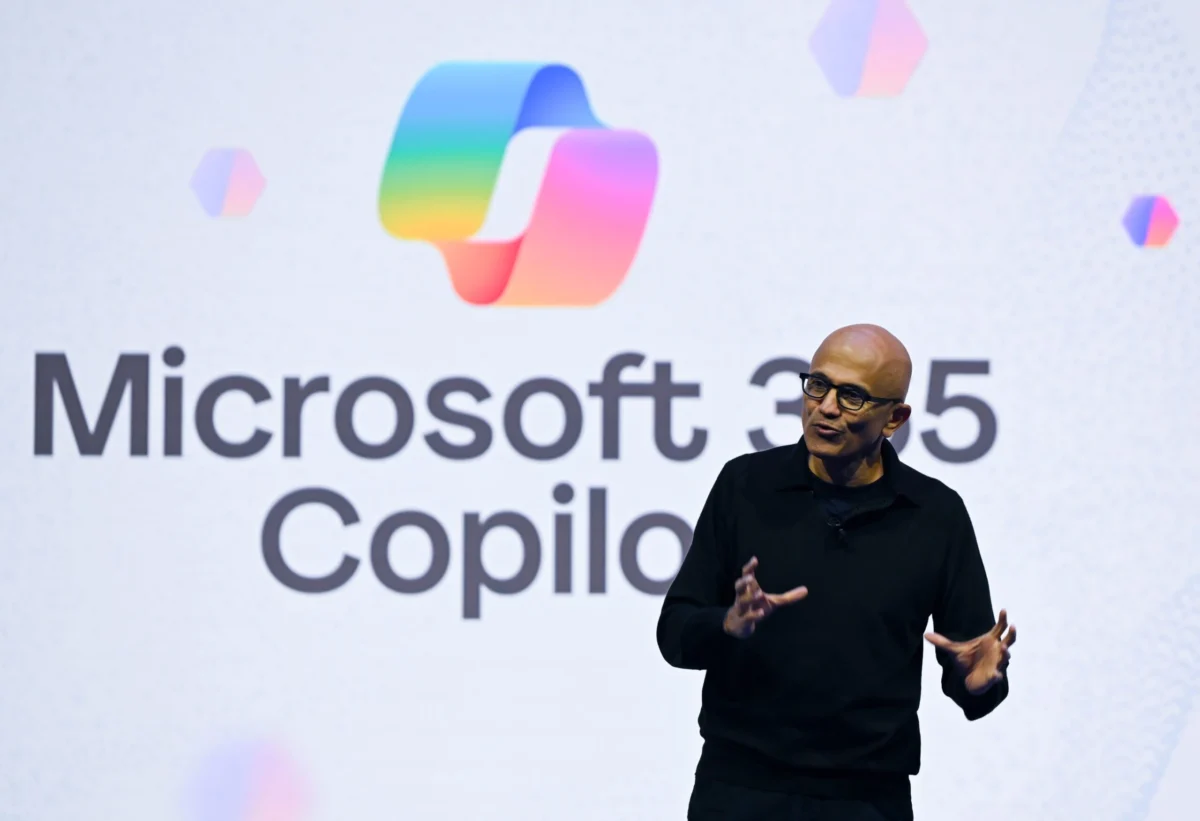
The company has officially commenced the rollout of a unified experience across its two primary Copilot platforms, beginning this week with a carefully selected, small subset of users. This phased introduction is designed to allow for iterative feedback and refinement, ensuring a smooth transition for the broader user base. Users included in this initial wave will immediately observe significant alterations in navigation, a streamlined sign-in experience, and a more consistent availability of features. A key enhancement to facilitate user clarity and data security is the implementation of a color-coded cue, which will visually inform users whether they are currently logged into their business (enterprise) or personal (consumer) accounts. This distinction is crucial for maintaining data separation and ensuring compliance with organizational policies, while still offering the flexibility to switch contexts seamlessly within the same application interface. The integration is not merely a cosmetic change but a foundational shift, laying the groundwork for a more intelligent, interconnected AI assistant that understands and adapts to a user’s varying needs throughout their day.
While the integration aims for a unified experience, the immediate impact will be more pronounced for existing Copilot consumer users. As part of this consolidation, certain features previously available in the consumer version of Copilot are slated for deprecation, beginning on August 18. These include Copilot Podcasts, Group Chat, and Deep Research. The decision to sunset these features likely stems from a strategic realignment to focus on core AI capabilities that will be central to the forthcoming super app, or perhaps due to low adoption rates or redundancy with other Microsoft offerings. Simultaneously, in a significant branding move, the existing Microsoft 365 app will undergo a rebranding to become simply the "Microsoft Copilot" app. This renaming solidifies Copilot’s position as the primary, ubiquitous AI entry point across the entire Microsoft 365 ecosystem, emphasizing its role as the intelligent layer infused throughout productivity applications rather than a standalone feature. This strategic consolidation not only simplifies the product landscape for users but also reinforces Microsoft’s commitment to Copilot as its flagship AI brand, echoing the success seen with its GitHub Copilot for developers.
These profound changes represent the genesis of what Microsoft internally considers one of its most critical and strategically vital projects. The technology giant is accelerating its efforts to launch a comprehensive "super app" in the coming months, an ambitious endeavor first reported by Fortune in May. This super app is envisioned as an all-encompassing digital hub, designed to integrate a multitude of functionalities that span communication, creation, and complex problem-solving. It is expected to prominently feature an advanced chat function, leveraging Microsoft’s latest large language models for sophisticated conversational AI. Crucially, it will incorporate the highly acclaimed GitHub Copilot, Microsoft’s AI-powered coding assistant, extending its capabilities beyond traditional development environments into a more integrated productivity workflow. The super app will also introduce the Copilot Cowork tool, hinting at advanced collaborative AI functionalities that could revolutionize team-based projects and shared task management.
However, perhaps the most groundbreaking element teased for the super app is a new agentic workflow capability, internally codenamed "Autopilot." Agentic AI represents a significant leap beyond reactive AI, enabling the system to autonomously plan, execute, and monitor multi-step tasks to achieve a defined goal, often without continuous human intervention. For instance, instead of merely answering a query, an agentic AI could book a complex trip, analyze market data and draft a report, or even manage a project from inception to completion, coordinating various sub-tasks and integrating with multiple applications. This capability could fundamentally transform how users interact with technology, moving from command-based instructions to goal-oriented delegation, empowering individuals and organizations with unprecedented levels of automation and intelligent assistance. The inclusion of Autopilot underscores Microsoft’s ambition to not just enhance existing workflows but to create entirely new paradigms of productivity.
This aggressive pursuit of a super app is a direct response to the fiercely competitive landscape of the artificial intelligence sector. Microsoft is racing to solidify its position and better compete with emerging market leaders such as Anthropic, known for its Claude models, and OpenAI, its long-time strategic partner. While Microsoft has a deep partnership with OpenAI, the broader market demands agility and independent innovation. By developing a comprehensive in-house super app, Microsoft aims to offer a differentiated, deeply integrated experience that leverages its vast ecosystem of Windows, Microsoft 365, Azure, and LinkedIn. This strategy also aligns with its continued efforts to grow its enterprise Copilot business, which has already demonstrated significant traction. In the company’s latest earnings report, Chief Executive Satya Nadella proudly announced that Microsoft 365 Copilot service had already surpassed an impressive 30 million paid seats. This rapid adoption within the enterprise sector validates Microsoft’s vision for AI-driven productivity and provides a robust foundation for the super app’s broader rollout. The success of 365 Copilot underscores the massive demand from businesses for AI tools that can enhance employee productivity, automate routine tasks, and unlock new insights from organizational data.
The weighty responsibility of leading this transformative super app project has been entrusted to Jacob Andreou, a 33-year-old executive whose rapid ascent within Microsoft’s ranks has caught the attention of the industry. Fortune reported in June that Nadella is placing considerable faith in Andreou to steer Microsoft’s AI strategy and overcome perceived shortcomings after falling behind some competitors in the initial phases of the generative AI boom. Andreou’s appointment signals Microsoft’s commitment to injecting fresh perspectives and agile leadership into its most critical AI initiatives. His mandate is not just to integrate technologies but to craft a compelling user experience that differentiates Microsoft in a crowded and rapidly evolving market, ensuring that the super app becomes a cornerstone of Microsoft’s future growth.
Underpinning Microsoft’s entire AI expansion is its robust Azure cloud business, which continues to serve as the company’s primary growth engine. Azure recently crossed a monumental milestone, achieving over $100 billion in annual revenue in its most recent quarter, a testament to its dominant position in the global cloud computing market. A substantial portion of this remarkable growth has been directly fueled by the escalating demand for AI infrastructure and services, with a significant part of its business coming from supporting OpenAI’s massive computational needs. However, recognizing the strategic imperative of diversification and reducing over-reliance on a single partner, Microsoft has actively sought to broaden its AI capabilities internally. This includes diverting substantial computing resources and engineering talent toward independently improving and expanding its own Copilot offerings, aiming to build a more resilient and self-sufficient AI ecosystem. This strategic pivot ensures that Microsoft retains full control over its core AI intellectual property and is not solely dependent on external partnerships for its long-term AI vision.
Microsoft’s commitment to advancing the state of AI research and development is also evident in its recent innovations from its internal AI labs. Just this week, the company unveiled its first dedicated reasoning model, MAI-Thinking-1. This model is designed to tackle complex problems requiring multi-step logical deduction and planning, rather than merely pattern matching. Microsoft stated that MAI-Thinking-1 already matches leading models on some demanding software engineering benchmarks, indicating its potential for significant impact in automated code generation, debugging, and system design. Furthermore, the lab also announced that its latest coding model is 25% more efficient than its predecessor, a crucial improvement that translates into faster development cycles, reduced computational costs, and more sustainable AI operations for developers worldwide. These advancements are not isolated achievements but foundational building blocks that will undoubtedly power the advanced functionalities, particularly the coding and agentic capabilities, of the forthcoming super app.
Beyond its internal technological strides, Satya Nadella has also emerged as a prominent voice in the broader industry debate surrounding AI development, notably advocating for open-weight AI models. This stance aligns him with several other tech industry CEOs, including NVIDIA’s Jensen Huang. While critics express concerns that open-weight models, which allow full access to a model’s underlying parameters, could be more vulnerable to misuse or security breaches, proponents argue they are essential for fostering innovation, democratizing AI access, and creating a level playing field. This openness is also seen as a crucial strategy to compete effectively with closed-source models and the rapidly advancing open-source AI initiatives originating from China.
Nadella’s philosophy on AI deployment was succinctly captured during Microsoft’s July earnings call: "You can’t depend on any one model. You will maybe need multiple models to even remediate some challenges that get caused by one model." This statement encapsulates a strategic vision of modularity and redundancy in AI. It suggests that a robust AI system, especially one as ambitious as the planned super app, should not be built upon a monolithic AI model. Instead, it should leverage a diverse array of specialized models, each excelling in particular tasks, to ensure greater accuracy, resilience, and ethical safeguards. This multi-model approach allows for greater flexibility, enabling Microsoft to integrate the best available AI for specific functions, mitigate biases or limitations inherent in any single model, and adapt more quickly to future advancements. This nuanced perspective underscores Microsoft’s long-term commitment to building a comprehensive, reliable, and ethically sound AI ecosystem, with the super app poised to be its most tangible and impactful manifestation to date. The coming months will reveal the full scope of Microsoft’s ambition as it transforms its AI offerings into a singular, intelligent companion for billions of users worldwide.
