
 By admin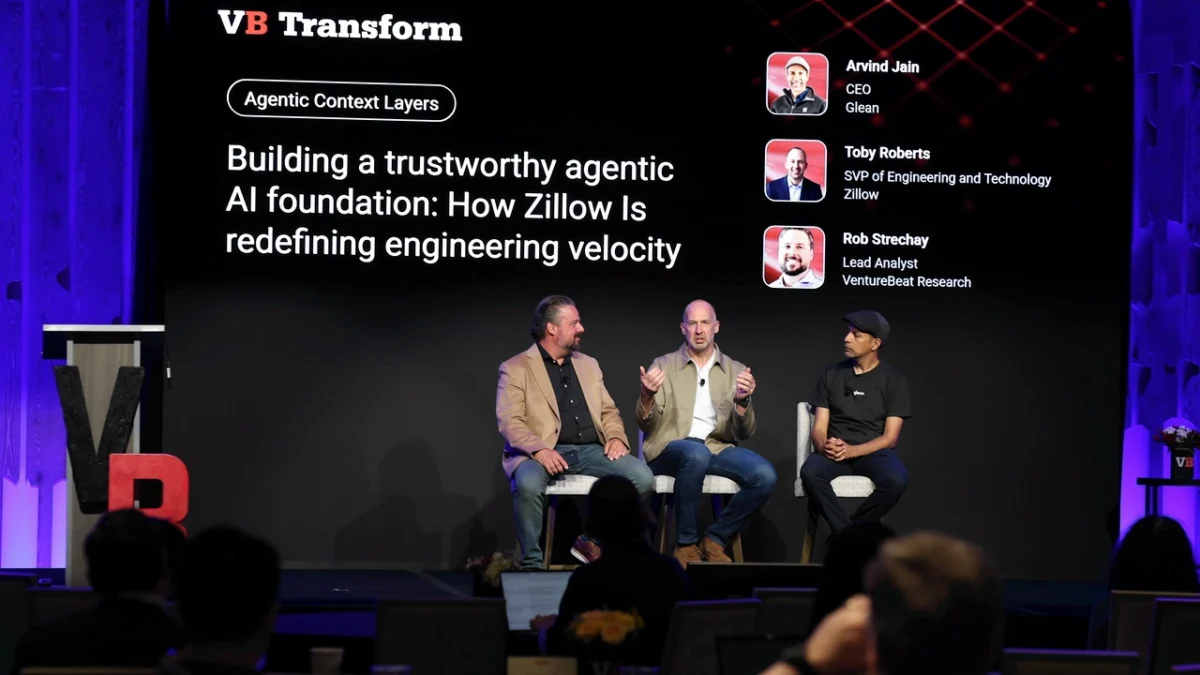
In the intricate and often lengthy journey of buying or selling a home, consumers interact with a fragmented ecosystem of digital tools and human professionals. For Zillow, the dominant force in real estate technology, this reality presented a critical challenge: how to maintain a seamless, context-aware experience for its users across a multitude of touchpoints, from initial property browsing on a phone screen to engaging with loan officers and real estate agents, a process that can span months or even years. The realization dawned that a singular chatbot, however advanced, could never adequately bridge these disparate interactions. It was this profound understanding of the customer journey, rather than the sheer volume of data, that catalyzed Zillow’s groundbreaking approach to artificial intelligence.
At the recent VB Transform 2026 conference, Toby Roberts, Zillow’s Senior Vice President of Engineering, and Arvind Jain, co-founder and CEO of Glean, a prominent enterprise AI company, illuminated the sophisticated AI architecture they collaboratively built. Their discussion offered a compelling narrative not just about the technical intricacies of AI development, but more crucially, about the formidable challenge of imbuing AI systems with persistent, transferable context. This context, they argued, is the true linchpin for transforming customer experiences in complex, multi-stage transactions, a far more elusive goal than simply accumulating vast datasets. Zillow’s influence is undeniable, touching approximately 80% of U.S. real estate transactions annually, and their strategic embrace of AI predates the public explosion of tools like ChatGPT by a considerable margin.
"We pretty quickly identified that we were going to need a persistent context layer that was going to meet our customers and the professionals wherever they were," Roberts articulated, underscoring the strategic imperative to create an AI infrastructure that transcended the limitations of isolated interactions. This foundational insight dictated Zillow’s departure from a singular, surface-level chatbot approach, prioritizing instead a deeply embedded intelligence that understood the user’s evolving needs and history.
The Data Deluge vs. The Context Conundrum
Roberts candidly shared that Zillow’s AI journey, much like many enterprise endeavors, initially focused on the foundational element: data. "We started with a large push around making sure our data did have the right foundation," he explained. This involved implementing a robust data mesh architecture, ensuring meticulous data lineage, and establishing a comprehensive governance structure that incorporated granular permissions and identity management directly tied to the data itself. These were, by all accounts, significant technical undertakings, demanding substantial investment in data engineering and infrastructure.
However, the narrative took a significant turn when Zillow’s leadership realized that while data accessibility and integrity were crucial, they were not the "hard problem." The true hurdle lay in architecting a system that could intelligently "remember" a customer’s position within their complex real estate journey and seamlessly carry that understanding forward, irrespective of the platform or professional they engaged with next. This persistent memory, this thread of context, was the missing piece.
"This context layer has to live to be able to support you where you are at any given point in your journey," Roberts emphasized. This necessity led Zillow to make a pivotal strategic decision: to own and develop this critical context layer in-house, rather than outsourcing it to a singular external chat interface. This decision was not born of indecision but from a clear-eyed assessment of the multifaceted nature of real estate transactions, which inherently involve a series of interconnected stages rather than a single, discrete conversation. The sheer complexity of a home purchase—from initial browsing and mortgage pre-approval to property showings and closing—demanded an AI that could grasp the cumulative narrative of the user’s progress.
Architecting for Continuity: Zillow’s In-House Engine and Glean’s Strategic Integration
Rather than funneling customers through a monolithic model API, Zillow opted for a more nuanced approach, building its own sophisticated "harness" for AI applications. This decision was informed by two decades of machine learning expertise cultivated through products like the Zestimate. Instead of relying on a single, all-encompassing general-purpose AI model, Zillow strategically embraced a paradigm of smaller, highly specialized, fine-tuned models. This modular approach allows for greater efficiency, accuracy, and adaptability, tailoring AI capabilities to specific tasks within the broader real estate ecosystem.
Internally, this proprietary AI harness operates in tandem with Glean’s powerful enterprise AI platform. Roberts revealed that Zillow has deployed thousands of Glean agents across its operations, effectively automating repetitive tasks and executing tens of thousands of operations company-wide. Arvind Jain articulated Glean’s core value proposition: to centralize the complex and often duplicated effort of integrating various enterprise systems. Through the Glean MCP (Multi-Cloud Platform) gateway, companies can establish these integrations once, obviating the need for individual departments like finance, legal, and marketing to each independently build their own connections to the same underlying systems. This consolidation not only streamlines operations but also serves as a significant cost-saving mechanism.
Jain highlighted two key areas where Glean drives cost efficiency. Firstly, "model routing" intelligently directs tasks to smaller, more cost-effective AI models, thereby avoiding the unnecessary use of expensive, cutting-edge "frontier" models for simpler queries. Secondly, "precomputed context" ensures that AI agents do not have to expend valuable computational resources and "tokens" (a measure of AI processing cost) to reassemble contextual information from scratch for every request.
"Claude is also very slow because the first part of assembling that context actually takes forever," Jain remarked, illustrating the inefficiency of current LLM architectures when faced with the need to build context from the ground up. By routing these requests through Glean, which can provide precomputed or efficiently retrieved context, token consumption can be reduced by as much as 50%, a substantial saving for large-scale enterprise deployments. This sophisticated orchestration of AI models and contextual data is what enables Zillow to deliver a personalized and informed experience to its users at every stage of their real estate journey.
Key Takeaways for Enterprise AI Adoption
The session at VB Transform 2026 offered a treasure trove of practical insights for enterprises embarking on the path of building agentic AI within their own systems, spanning critical areas of data management, cost optimization, and robust permission controls.
-
Establish a Measurement Baseline Before AI Implementation: Roberts strongly advocated for the proactive establishment of a measurement baseline, a critical step often overlooked in the rush to adopt AI. Zillow’s ability to confidently attribute a remarkable 40% increase in shipped code to AI adoption was not a post-hoc rationalization but a direct consequence of a robust DORA (DevOps Research and Assessment) metrics baseline that had been in place for years prior to the AI rollout. This allows for objective quantification of AI’s impact, moving beyond anecdotal evidence to demonstrable performance gains. Without such a baseline, discerning the true contribution of AI becomes a challenging, if not impossible, task.
-
Centralize Contextual Integration Efforts: Arvind Jain’s central thesis for Glean’s platform revolves around the concept of duplicated integration work. He pointed out that when individual departments like finance, legal, and marketing each independently build connections to the same enterprise systems, it creates a significant, often hidden, cost. This redundant effort drains resources and can lead to inconsistencies. By centralizing these integration efforts once through a platform like Glean, enterprises can achieve greater efficiency, reduce costs, and ensure a more unified approach to data access and AI utilization across the organization.
-
Beyond Permission Inheritance: Robust Safeguards for Regulated Data: The discussion underscored that even with a sophisticated context platform that is permission-aware, enterprises cannot afford to be complacent when dealing with highly regulated data. Zillow, despite having such a platform, chose to layer additional "hard rules" and implement standing compliance checks on top of its most sensitive data categories. This proactive measure ensures that the architecture itself is not solely relied upon for automatic compliance, providing an extra layer of security and adherence to stringent regulatory requirements. The assumption that permission inheritance alone is sufficient for sensitive data is a perilous one in today’s complex regulatory landscape.
-
Treat Context as a Cost Lever, Not Merely a Capability: Jain’s emphasis on context as a cost-saving mechanism was particularly insightful. The two primary mechanisms he identified for cutting AI expenditure—model routing and precomputed context—are both directly aimed at minimizing wasted token consumption rather than simply adding new features. This reframing of context from a mere functional attribute to a strategic cost-control element is crucial for enterprises seeking to manage the financial implications of widespread AI adoption. By intelligently managing how and when context is accessed and processed, organizations can significantly reduce their AI operational expenses.
"Models by themselves are not enough to bring automation with AI inside your enterprise," Jain concluded, offering a potent summary of the session’s core message. "You do have to connect it with your enterprise context." This statement encapsulates the paradigm shift Zillow has pioneered: recognizing that the true power of AI in an enterprise setting lies not in the isolated intelligence of the models themselves, but in their ability to seamlessly integrate with and leverage the unique, persistent, and contextually rich tapestry of an organization’s data and operational history. Zillow’s journey demonstrates that by mastering this intricate interplay of data, context, and intelligent architecture, companies can unlock transformative potential, redefining customer experiences and driving significant operational efficiencies in the process.
