
 By admin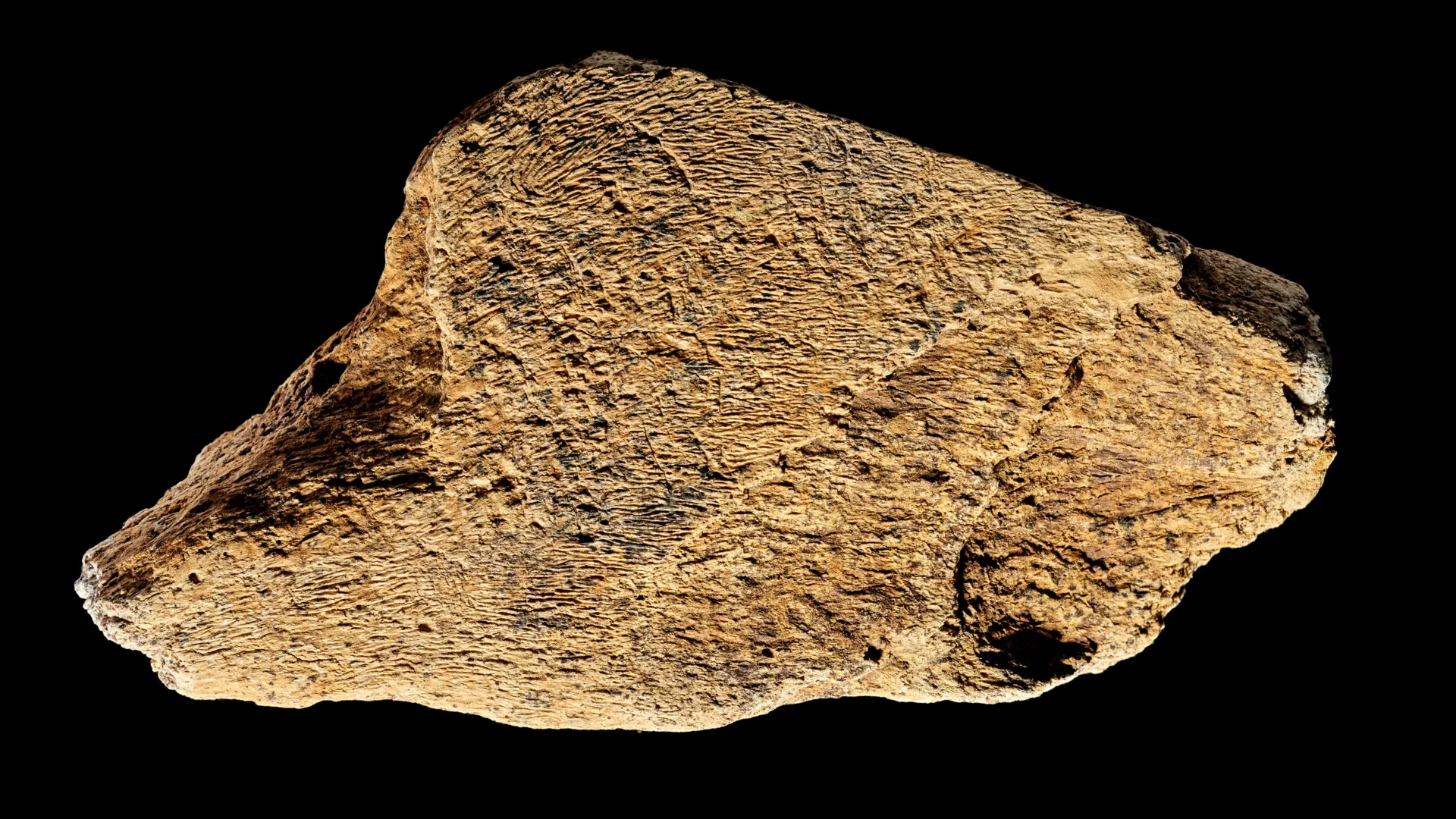
Researchers from University College London (UCL) and the Natural History Museum, London, meticulously analyzed the rare artifact, presenting their groundbreaking findings in the prestigious journal Science Advances. Their interdisciplinary study combines archaeological expertise with advanced material science, shedding new light on the capabilities of the hominin populations inhabiting ancient Britain. The artifact, a fossilized bone fragment, has been identified not merely as a piece of bone, but as a deliberately shaped and repeatedly utilized tool, indicating complex planning and technical skill.
The tool was likely crafted and employed by either early Neanderthals or their direct ancestors, Homo heidelbergensis, a species known for its advanced stone tool technology and presence across Europe during the Middle Pleistocene. Rather than serving as a heavy, blunt instrument for crushing, the artifact’s distinctive wear patterns indicate its function as a softer striking tool. Its primary purpose was to repair and sharpen stone handaxes and other cutting implements, meticulously maintaining their effectiveness long after their edges became worn. This specialized application highlights a sophisticated understanding of tool maintenance and the properties of different materials.
Lead author Simon Parfitt, a researcher at the UCL Institute of Archaeology and a Scientific Associate at the Natural History Museum, emphasized the profound implications of this discovery. "This remarkable discovery showcases the ingenuity and resourcefulness of our ancient ancestors," Parfitt stated. "They possessed, not only a deep knowledge of the local materials around them, but also a sophisticated understanding of how to craft highly refined stone tools. Elephant bone would have been a rare but highly useful resource, and it’s likely this was a tool of considerable value." His comments underscore the rarity of the material and the strategic thought involved in its selection and preservation, suggesting a cognitive leap beyond simple opportunistic tool use.
The 500,000-year-old elephant bone tool presents a tangible link to a distant past. The fossilized object, roughly triangular in shape, measures approximately 11 centimeters long, six centimeters in width, and about three centimeters thick. Its dimensions suggest it was a manageable, handheld implement, designed for precision rather than brute force. Careful examination of its surface reveals distinct modifications: deliberate shaping marks, scratches, and abrasions that are not random but indicative of intentional human alteration and repeated use. These features differentiate it from naturally fractured or weathered bone fragments.
A significant portion of the fragment consists of cortical bone, the dense and hard outer layer of bones that provides structural integrity. The unusual thickness and robust nature of this cortical bone strongly suggest its origin from a large pachyderm – either an elephant or a mammoth. While the precise species, whether the straight-tusked elephant (Palaeoloxodon antiquus) or an early form of mammoth, cannot be definitively identified due to the limited amount of original bone remaining, its megafauna origin is certain. Similarly, pinpointing the exact part of the skeleton from which the bone originated remains elusive, but its structural properties made it an ideal candidate for a specialized tool. The age of the artifact, approximately half a million years old, is established through comprehensive dating of the Boxgrove archaeological site, utilizing methods such as luminescence dating of sediments and biostratigraphy of associated faunal remains, placing it firmly within the Middle Pleistocene epoch.
Remarkably, this significant artifact was not an immediate discovery. The fragment was first recovered during the early 1990s as part of extensive excavations at the Boxgrove site. At the time, amidst a wealth of flint tools and other faunal remains, researchers did not recognize its true nature as a deliberately fashioned tool. Its appearance as a somewhat nondescript piece of bone meant its potential was overlooked for decades. Its true purpose only became clear much later, after scientists recently embarked on a more detailed and systematic re-examination of the vast collection of objects recovered from the site. This re-evaluation highlights the ongoing importance of archaeological curation and the power of new analytical techniques to unlock secrets hidden in plain sight.
The scientific team employed cutting-edge diagnostic technologies to scrutinize the bone fragment. Using advanced 3D scanning technology, they created highly detailed topographical maps of the object’s surface, allowing for precise measurements and visualization of minute features. Coupled with high-resolution electron microscopes, their analysis revealed a microscopic landscape of distinctive notches, minute impact damage, and subtle striations – all undeniable signs that the object had been repeatedly used as a hammer. Crucially, tiny pieces of flint were found embedded within these impact marks and surface depressions. These microscopic flint fragments provided strong, direct evidence that the bone had been repeatedly used to strike, reshape, and maintain stone tools on multiple occasions, confirming its function as a tool for lithic reduction.
The choice of bone over stone for this particular task is significant. Bone, being softer and more elastic than flint or other stones, allows a toolmaker to work with greater precision. When striking a stone implement with a bone retoucher, the impact is less violent and more controlled, enabling the removal of smaller, more predictable flakes. This reduces the risk of causing excessive damage, such as unintended shattering or large, uncontrolled fractures, which can occur when using a harder stone hammer. Early humans often leveraged the properties of bone implements to finely sharpen the cutting edges of handaxes and other tools crucial for tasks like butchering animals, preparing hides, and processing plant materials.
Researchers concluded that the object functioned as a "retoucher." In the context of prehistoric toolmaking, a retoucher is used to strike the edge of a worn stone tool, a process known as "knapping," to remove small flakes. This action restores the tool’s intended form, geometry, and, most importantly, its sharp cutting edge. This method of controlled flaking is fundamental to the creation and maintenance of effective lithic technology. Elephant bone would have been especially suitable for this task due to its unique structural properties. Its exceptionally dense outer cortical layer was notably harder and more durable than the bones of many other animals available in the region at the time. This inherent strength allowed it to withstand the repeated impacts necessary for knapping without rapidly degrading, making it a highly efficient and long-lasting specialized tool.
The presence of elephants and mammoths in prehistoric southern England, while not entirely absent, was certainly not common. Their availability would have fluctuated with climate shifts, making elephant bone a relatively rare and opportunistic resource. Therefore, the decision by early hominins to not only collect such a material but also to preserve it, shape it, and repeatedly use it for a specialized purpose, provides compelling evidence of their advanced resourcefulness and sophisticated mental abilities. They appear to have possessed an intrinsic understanding that elephant bone offered distinct advantages over more widely available animal bones, such as those from deer or horses. Instead of treating it as mere waste or a transient resource, they recognized its unique value and consciously saved it for a specialized, high-skill purpose.
The systematic use of a retoucher also points to a relatively advanced level of technology and cognitive planning. With such a specialized tool, early humans could create and maintain stone implements that were far more carefully shaped, standardized, and complex than those produced by some other prehistoric populations living during the same period. This suggests a more refined approach to toolmaking, where precision and efficiency were prioritized, leading to more effective hunting and processing implements.
Co-author Dr. Silvia Bello, a Merit Researcher at the Natural History Museum, underscored the cognitive implications of this find. "Our ancient ancestors were sophisticated in their use of tools," Dr. Bello stated. "Collecting and shaping an elephant bone fragment and then using it on multiple occasions to shape and sharpen stone tools shows an advanced level of complex thinking and abstract thought. They were resourceful gatherers of available materials, and savvy about how best to use them." This perspective highlights the ability of these early hominins to not only identify useful materials but also to conceptualize their potential, plan for their use, and execute a multi-step manufacturing process – hallmarks of complex cognitive function.
The elephant bone tool originated from Boxgrove, an internationally renowned archaeological site near Chichester in West Sussex, England. Boxgrove is celebrated for its exceptional preservation of Middle Pleistocene deposits and has been extensively excavated since the 1980s. These excavations have uncovered a wealth of artifacts, including numerous tools made from flint, bone, and antler, alongside extensive faunal remains and even hominin fossils, most notably a Homo heidelbergensis tibia. The site offers a unique snapshot of a coastal plain environment from half a million years ago, providing invaluable data on the flora, fauna, and hominin activities of the period. Until this recent identification, however, no tool made specifically from elephant bone had been recognized at Boxgrove, making this discovery a significant addition to the site’s already impressive inventory.
Scientists are currently unable to definitively determine whether early humans at Boxgrove hunted the massive animal to obtain its bone or if they scavenged it from a carcass that was already dead. Both strategies were likely employed by hominins of this period. However, detailed analysis of the damage and deformation on the artifact itself suggests that the bone was still relatively fresh – meaning it had not fully dried out and become brittle – when it was shaped and subsequently used. This implies that the hominins either had direct access to a recently deceased elephant or possessed the skills to quickly process and utilize parts of a carcass they encountered.
This Boxgrove artifact represents an exceptionally rare European discovery. While elephant bone tools have been identified in Africa, particularly at sites like Olduvai Gorge in Tanzania, with some examples dating back as far as 1.5 million years, their occurrence in ancient Europe is far less common. Only a small number of elephant bone tools are known from before approximately 43,000 years ago, a period that predates the widespread dispersal of modern humans (Homo sapiens) across the continent. It was Homo sapiens who later produced large quantities of intricate ivory and elephant bone tools, artworks, and even structural elements. Before this Boxgrove discovery, no European elephant bone tool was definitively known to be older than approximately 450,000 years. Furthermore, most of those earlier examples were found much farther south, in regions with significantly warmer climates, where such megafauna might have been more prevalent or easier to access.
The Boxgrove artifact, therefore, dramatically expands both the known history and the geographical range of elephant bone technology in Europe. Its discovery in Britain, a region that experienced significant climatic fluctuations during the Middle Pleistocene, reveals that early humans here were not only adept at selecting rare and valuable materials but also possessed the sophisticated knowledge to transform them into highly refined tools. This challenges previous assumptions about the technological capabilities and adaptive strategies of hominin populations in northern Europe during this ancient period, underscoring their advanced capacity for innovation and their ability to thrive in diverse and sometimes challenging environments.
The research was supported by English Heritage, UCL, and the Calleva Foundation, institutions dedicated to preserving and understanding our shared human heritage.
