
 By Lina Irawan
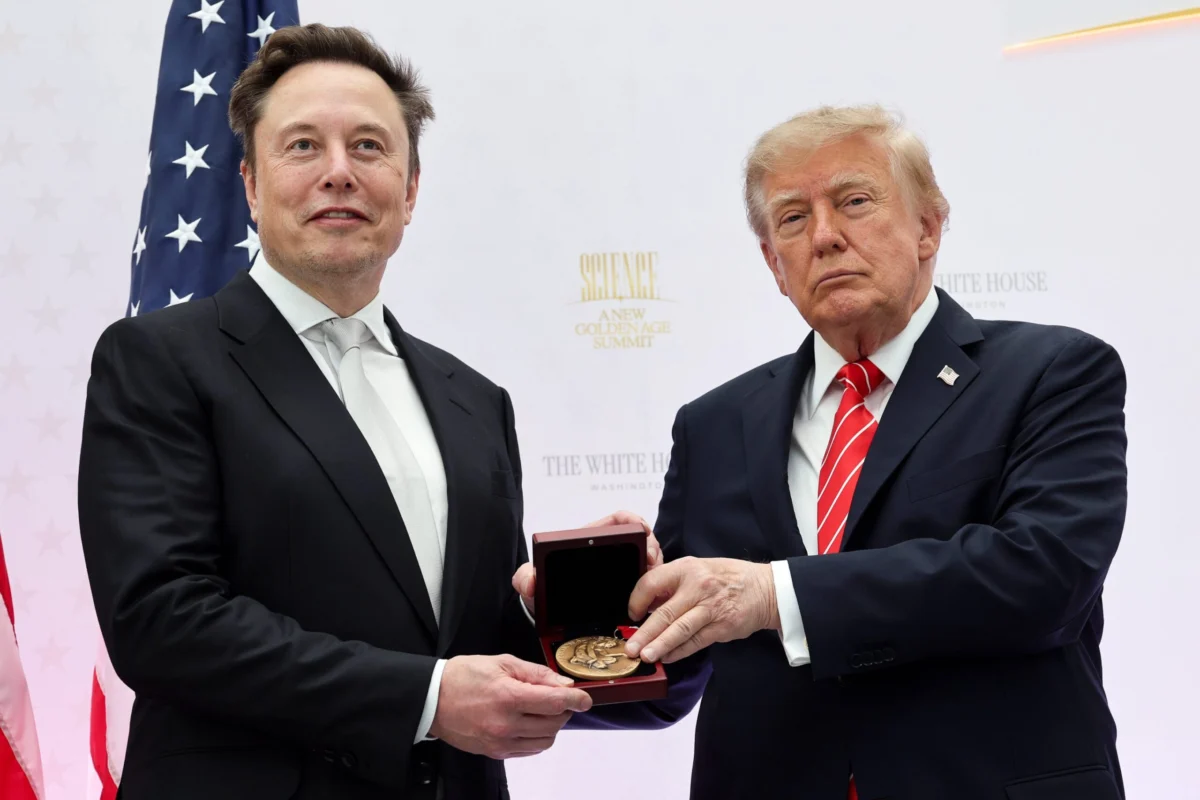
This monumental political investment, totaling at least $474 million, dwarfed his contributions to the 2024 presidential election by nearly double. The scale of this spending underscored a deep personal commitment from Musk to shift the political landscape, particularly in Texas, where his flagship companies, SpaceX and Tesla, are headquartered. An astonishing $200 million of this sum was directed specifically towards election efforts within the Lone Star State, a strategic move intended to solidify a pro-business, Republican-dominated environment.
However, the returns on this colossal investment were, at best, dismal. In Texas, the very heart of Musk’s political expenditure, Republican Senate nominee Ken Paxton and incumbent Governor Greg Abbott, both key beneficiaries of his largesse, were decisively defeated by their Democratic opponents. Paxton, whose campaign was heavily bolstered by Musk’s funds, suffered a particularly bruising loss in a race many Republicans had hoped to secure. Governor Abbott, despite his incumbent advantage, also fell short, signaling a broader rejection of the Republican platform in the state that had been so heavily targeted by Musk’s spending. This unexpected blue wave in Texas, a traditionally red state, sent shockwaves through the political establishment and raised serious questions about the efficacy of sheer financial might in modern electoral politics.
The financial fallout was swift and tangible. Following the announcement of the election results, shares of both SpaceX and Tesla, the crown jewels of Musk’s empire and significant employers in Texas, experienced a downturn on Wednesday. This market reaction suggested that investors perceived Musk’s political misstep as a potential liability, casting a shadow over his business ventures. The close intertwining of his personal political endeavors with his corporate interests became starkly apparent, highlighting the risks associated with such high-profile political engagement.
Beyond Texas, Musk’s donations painted a picture of broad support for Republican efforts to reclaim control of Congress. His contributions included a substantial $30 million to the Congressional Leadership Fund, the primary Super PAC dedicated to backing House Republicans, aimed at flipping key districts across the nation. An additional $44 million was channeled to various other Republican groups and candidates working to elect federal officials, indicating a comprehensive strategy to influence the national political narrative. This made him not just a major donor, but the largest individual donor in the 2026 midterm cycle, outspending other tech magnates like a16z’s Marc Andreessen and Ben Horowitz ($116.4 million) and OpenAI co-founder Greg Brockman and his wife Anna ($50 million), who also made significant contributions to Republican causes.
The collective disappointment reverberated through the political analysis community. Logan Phillips, founder of the influential election forecasting site Race to the White House, minced no words in his assessment. "I think this might just be the biggest defeat for big money in politics in American history," Phillips told Fortune. His statement underscored the unprecedented nature of Musk’s spending and the equally unprecedented failure to translate that spending into electoral success. The 2026 midterms served as a stark, expensive lesson in the limitations of financial influence, even from the world’s wealthiest individual.
Despite the immediate electoral losses, the long-term impact of Musk’s political investments remains a subject of intense debate among campaign finance experts. While he may not have achieved his immediate goal of securing Republican victories, some argue that his unprecedented financial outlay could still yield strategic advantages, potentially laying the groundwork for future political battles, notably the 2028 election cycle.
The Argument for $474 Million Not Wasted
Virginia Commonwealth University political science professor Alex Keena champions the view that political donations, especially of this magnitude, serve a purpose beyond merely helping a candidate win. "Those of us who study campaign money have been sort of realizing this for the past decade: It’s not about helping someone win," Keena explained to Fortune. He elaborated that the idea of "messaging domination" through sheer financial power is largely outdated. Instead, Keena argues, "first and foremost, money is affecting what we’re talking about."
By this standard, Musk’s half-a-billion-dollar investment might not be "wasted." His donations could be seen as an elaborate, long-term play to dictate the discourse and priorities of the Republican Party. Issues close to Musk’s heart and business interests, such as policies related to climate change (affecting Tesla’s renewable energy ventures), data centers (crucial for AI development and X.com’s infrastructure), and economic reform (particularly those favoring deregulation and reduced government oversight), could now be more firmly embedded in the GOP’s agenda. Even if the candidates he backed lost, the sheer volume of his contributions ensures a certain level of access and influence in shaping party platforms and legislative proposals for years to come.
Furthermore, the sheer magnitude of Musk’s donations signals an unparalleled level of commitment to key Republican figures, most notably former President Donald Trump. Such loyalty could prove invaluable as Musk navigates the complex regulatory landscape, particularly with the looming prospect of a SpaceX-Tesla merger. This potential mega-deal, which Democrats have signaled they would heavily scrutinize, could face fewer headwinds if Musk maintains a strong ally in a future Republican administration or if his influence helps to temper opposition within the party. Keena emphasized this point, stating, "He basically gets to steer a political party. This is one of the biggest influences of money. It’s not just about who wins. It’s about setting the agenda and what types of issues we talk about." In essence, the money buys a seat at the table, ensuring his voice is heard, and his concerns are considered, irrespective of individual electoral outcomes. This influence can manifest in policy white papers, legislative drafting, or even the selection of party leadership and committee assignments.
The Argument for Musk’s Shrinking Influence
Conversely, there’s a compelling argument that Musk’s influence might be shrinking, not expanding. The Democratic Party’s unexpected success in the 2026 midterms, securing control of both the House and Senate, fundamentally alters the political calculus. While former President Trump might threaten to "veto everything" a Democratic majority passes, the legislative branch possesses powerful tools independent of the presidency. Crucially, Democrats can now leverage subpoena powers, which do not require the president’s signature, to launch investigations into matters of public concern.
One immediate target for Democratic scrutiny is likely to be Elon Musk’s controversial role in the Department of Government Efficiency (DOGE). DOGE, a brainchild of the previous administration, saw Musk take a highly visible, if unofficial, leadership role. This involvement has already been mired in controversy, including a federal judge’s ruling that DOGE gained illegal access to sensitive data, and its widely acknowledged failure to achieve one of its primary stated goals: decreasing the federal deficit.
Sara Guerrero, a spokesperson for top Oversight Committee Democrat Rep. Robert Garcia of California, confirmed these intentions last month: "We definitely have a lot of questions about Elon Musk’s role in DOGE and it is something we plan to investigate." Such investigations could prove deeply uncomfortable for Musk, potentially exposing his companies to greater regulatory oversight and public criticism.
Casey Michel, author of United States of Oligarchy: How America’s Wealthiest Ally with Dictators, Weaken the U.S., and Destroy Democracy, argues that Musk’s very public and impactful role in the federal government might be a key reason his campaign efforts fell short. Michel contends that DOGE effectively functioned as a "fourth branch of government," one that appeared to leverage its political powers for private sector gain. A Washington Post analysis published just last month supported this view, revealing that two dozen former DOGE staffers capitalized on their government connections to enter the private sector, backing or founding startups that collectively raised over $500 million in venture capital and funding. Moreover, following Musk’s official departure from DOGE in May 2025, his companies, led by SpaceX, minted an estimated $10 billion in government contracts.
Michel believes that this blatant flaunting of power, perceived by many as a blurring of lines between public service and private enrichment, could have significantly soured Republican voters on Musk, or at least diminished his political influence among the broader electorate. "I’m struggling to think of a clearer example of what happens to an oligarch when they place themselves front and center in a political system like we saw with Musk over the last two years," Michel told Fortune. He added, "This was always the risk that he was running in injecting himself, quite literally, into the White House, as well as dominating the financial or campaign donation landscape, and in a certain sense, it’s not surprising to see this kind of blowback generated."
According to Michel, the 2026 midterms made it "clear at the end of the day that Musk’s financing is no longer the asset that it once was in 2024, but is now a very clear liability both to those who are receiving it, like the Ken Paxtons of the world, but also to himself." The argument here is that the public and politicians alike might now view money from Musk with suspicion, potentially making it a political handicap rather than a boon.
Will Musk Donate as Much in 2028?
Despite the recent setbacks and the ongoing debate about the efficacy of his spending, there’s a strong likelihood that Elon Musk will remain a significant, if perhaps more strategic, donor in future elections. As political science professor Alex Keena wryly put it, for someone of Musk’s immense wealth, spending $474 million on an election is "like him deciding to go get Starbucks on the way home from work." This sentiment highlights the relative insignificance of such a sum in the context of his multi-hundred-billion-dollar fortune.
Jennifer Heerwig, a political sociology professor at SUNY Stony Brook University, corroborates this perspective, noting that one of the most significant predictors for an individual making a political contribution is their income. "Assuming that he remains the world’s richest man, I wouldn’t find it shocking to see him again entering politics and making huge donations to super PACs," Heerwig told Fortune. The capacity to donate remains, and with it, the potential for continued involvement.
However, the scale and directness of his future involvement might evolve. Musk himself has shown a fluctuating stance on political donations. In May 2025, he indicated a potential pullback from political spending, stating that while he would donate if he saw a compelling reason, he currently saw none. "I’m going to do a lot less in the future," Musk said in an interview with Bloomberg at the Qatar Economic Forum at the time. "I think I’ve done enough." This earlier statement, preceding his massive 2026 midterm investment, suggests a degree of unpredictability in his approach.
The immediate electoral "defeat" and the increased scrutiny from a newly empowered Democratic Congress could certainly influence Musk’s future strategy. He might choose to direct his funds through less overt channels, focus on specific policy initiatives rather than individual candidates, or simply take a more measured approach to avoid the kind of public "blowback" described by Michel. The psychological impact of such a visible failure, combined with the potential for adverse regulatory actions, cannot be discounted.
Ultimately, the half-a-billion-dollar question remains unanswered. Elon Musk’s unprecedented gamble on the 2026 midterms delivered a clear electoral loss, but its true legacy – whether it cemented his long-term influence, exposed his political vulnerabilities, or merely served as a very expensive lesson – will only unfold in the political arenas of the coming years. His capacity to reshape the discourse, coupled with the intensified scrutiny he now faces, sets the stage for a fascinating evolution of big money’s role in American democracy.
