
 By admin
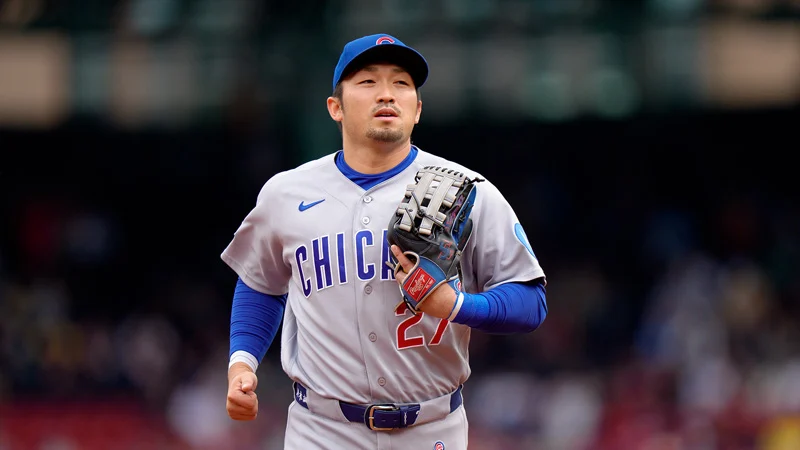
The allure of significant offensive firepower is undeniably a primary driver in Major League Baseball, and this offseason, that power is epitomized by Seiya Suzuki. The Chicago Cubs’ versatile outfielder and designated hitter is emerging as arguably the most impactful free agent bat available, capable of transforming an offense with his prodigious strength at the plate. Beyond his impressive slugging capabilities, the 32-year-old Suzuki is coming off what can be considered the most well-rounded season of his MLB career in 2026. He not only provided a potent offensive presence but also contributed a respectable defensive effort in right field, making him a valuable commodity for any team seeking to bolster its roster. This analysis delves into three of the most compelling potential landing spots for Suzuki should he decide to venture beyond Chicago, examining the strategic fit and potential impact each club could realize.
Cincinnati Reds: Addressing a Critical Outfield Void with Proven Power
The Cincinnati Reds, a franchise perpetually striving to inject consistency and punch into their lineup, find themselves in a clear position of need, particularly in the outfield. The team has consistently struggled to generate reliable production from its outfield positions and, in fact, from its offense as a whole. The much-anticipated reunion with Eugenio Suárez in 2026, while initially promising, ultimately failed to meet expectations. Suárez, who split time between third base and designated hitter, posted a modest .212/.307/.433 slash line and is now an impending free agent, leaving another gap in the Reds’ offensive structure.
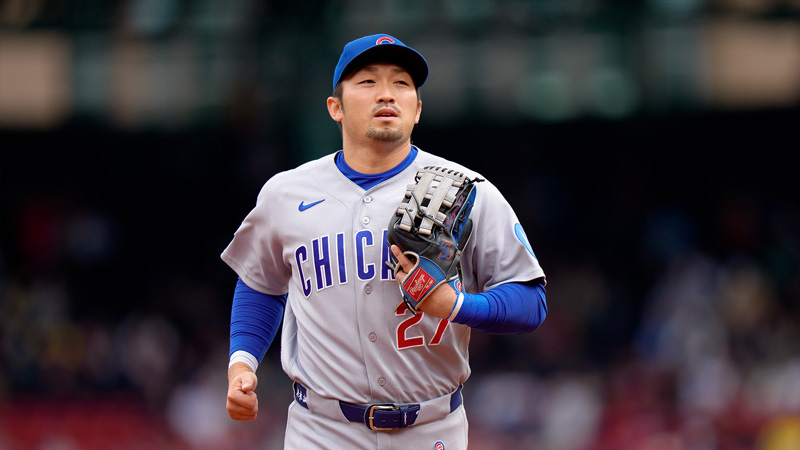
Suzuki represents an immediate and impactful solution to this outfield deficiency. His presumed role would be as the starting right fielder, bringing a veteran presence and a potent offensive complement to a lineup that desperately requires it. In 2026, the Reds’ offense languished at the bottom of MLB rankings, finishing last in hits (1,231) and on-base percentage (.305), while ranking a dismal 27th in runs scored (666) and 25th in slugging percentage (.394). Suzuki’s electrifying bat would undoubtedly provide a significant jolt to this anemic offensive output.
Prior to 2026, Suzuki served as Chicago’s primary designated hitter. However, in the most recent season, he demonstrated his adaptability by making 110 starts and appearing in 111 games in right field. This positional flexibility is crucial. His defensive performance in right field was notably strong, posting a career-high 5.1 wins above replacement (WAR) and contributing 14 defensive runs saved (DRS). This suggests he is not merely a one-dimensional offensive force but a capable defender as well.
Should the Reds prioritize the development of Héctor Rodríguez as their everyday right fielder, Suzuki could seamlessly transition into the designated hitter role. This scenario offers a strategic advantage, allowing Rodríguez to gain experience while Suzuki provides immediate offensive impact. Furthermore, Suzuki could serve as an experienced placeholder in right field, ready to step in should Rodríguez falter or if injuries arise within the outfield corps. While the Reds did manage to hit 213 home runs in 2026, ranking fourth in the league, their overall offensive production was severely lacking. Suzuki’s addition would address this critical need for consistent run production and overall offensive threat.
However, a significant hurdle for the Reds in their pursuit of Suzuki could be their perceived timeline for contention. Having finished last in the National League Central with a modest 75 wins in 2026, the front office might question the wisdom of investing a potential nine-figure contract in a free agent when they may not feel on the cusp of a championship. Instead, they might opt to build around emerging talents like Rodríguez, hoping he develops into a cornerstone player while focusing on cost-effective solutions to fill out the rest of their roster. This financial prudence, while understandable, could mean missing out on a player capable of accelerating their competitive window.

Texas Rangers: Injecting Much-Needed Oomph into a Struggling Offense
The Texas Rangers, a team that has shown flashes of brilliance but has struggled with offensive consistency, could find Seiya Suzuki to be the missing piece of their puzzle. Suzuki’s proven ability to generate power and drive in runs would provide precisely the "oomph" this offense has been lacking. In 2025, Suzuki showcased his offensive prowess with career-highs of 32 home runs and 103 RBIs, boasting a career .472 slugging percentage and a 128 OPS+. These numbers highlight his potential to elevate a Texas offense that ranked 25th in runs scored (673), 23rd in hits (1,296), and tied for 21st in slugging percentage (.396) in 2026.
The integration of Suzuki into the Rangers’ lineup presents several attractive positional possibilities. With designated hitter Joc Pederson set to become a free agent, Suzuki could easily slot into that role, minimizing disruptions to the existing outfield alignment. Alternatively, the versatile Brandon Nimmo, who has experience playing all three outfield positions, could shift to accommodate Suzuki in right field. Even with the emergence of Evan Carter as a capable center fielder, his offensive struggles in 2026 (.194 average across 455 plate appearances) create further lineup flexibility. This could involve moving Wyatt Langford from left to center field, placing Nimmo in center, or even having Suzuki assume the right field duties.
The Rangers have, aside from Langford, struggled to see their touted young position players progress as hitters. This underscores their need for established offensive talent like Suzuki. His addition would provide the much-needed slugging prowess to compete in a division often dominated by high-powered offenses. The AL West, won by the Houston Astros in 2026 with a .500 record, is a highly competitive landscape. While the Rangers boast a strong starting rotation, which led MLB with a 3.41 ERA in 2025, a more potent offense could be the decisive factor in winning the division in 2027.

Despite these compelling reasons, the Rangers might face a difficult decision regarding their current roster. Retaining Joc Pederson, who provided 26 home runs and a .487 slugging percentage in 2026, on a short-term deal as their designated hitter could be a more cost-effective strategy. This would allow them to maintain their current outfield configuration and avoid the potential complexities of reconfiguring positional assignments. However, the offensive ceiling that Suzuki offers might outweigh the comfort of maintaining the status quo.
Atlanta Braves: A Strategic Acquisition to Enhance a Contending Core
On the surface, the Atlanta Braves do not present a glaring need for a right fielder. Their outfield is typically well-stocked, and their core players are generally considered to be in their prime. However, a closer examination reveals that signing Seiya Suzuki would represent a shrewd and strategic acquisition, significantly bolstering their already formidable team.
The Braves’ 2026 postseason exit in the NL Division Series against the Los Angeles Dodgers, who were subsequently swept by the Milwaukee Brewers in the NL Championship Series, was a stark reminder of their offensive vulnerabilities. Across what was expected to be a competitive four-game series, the Braves managed a meager eight runs and 18 hits, highlighting their struggles against elite pitching. Compounding this, key players like versatile left fielder Mauricio Dubón, midseason acquisition Lane Thomas, and designated hitter/first baseman Dominic Smith are all free agents, creating openings in their offensive depth chart.

Suzuki’s ability to hit for both average and power would be a timely addition, providing immediate impact and depth to their outfield. More strategically, Suzuki offers a compelling alternative to Ronald Acuña Jr. at the corner outfield positions. Acuña Jr., while still an elite player, has experienced a slight dip in his corner outfield performance by his lofty standards, and he also made 14 starts at designated hitter in 2026. Adding Suzuki could allow the Braves to gradually transition Acuña Jr. into a more consistent designated hitter role, easing the physical demands on their star player.
Furthermore, Acuña Jr.’s injury history, including a torn ACL and persistent calf and hamstring issues, has limited his availability to just 251 regular-season games since the beginning of the 2023 season. Signing another All-Star caliber outfielder like Suzuki provides valuable insurance against potential future injuries and ensures the team maintains its offensive potency. From a roster construction and strategic perspective, Suzuki aligns perfectly with the Braves’ timeline as a perennial NL contender, featuring a core of players who are largely in their athletic prime. His addition would not only strengthen their current roster but also provide depth and flexibility for sustained success.
In conclusion, Seiya Suzuki represents a rare opportunity in the free agent market: a proven power hitter with a track record of strong all-around play, who is still in his prime. Whether it’s the Cincinnati Reds seeking to revitalize their offense, the Texas Rangers aiming to reclaim divisional supremacy, or the Atlanta Braves looking to fortify their already dominant contender status, Suzuki possesses the talent and impact to significantly alter the trajectory of any franchise that secures his services. The decision for each team will likely hinge on a complex interplay of positional needs, financial considerations, and their long-term vision for building a championship-caliber ballclub.
