
 By Lina Irawan
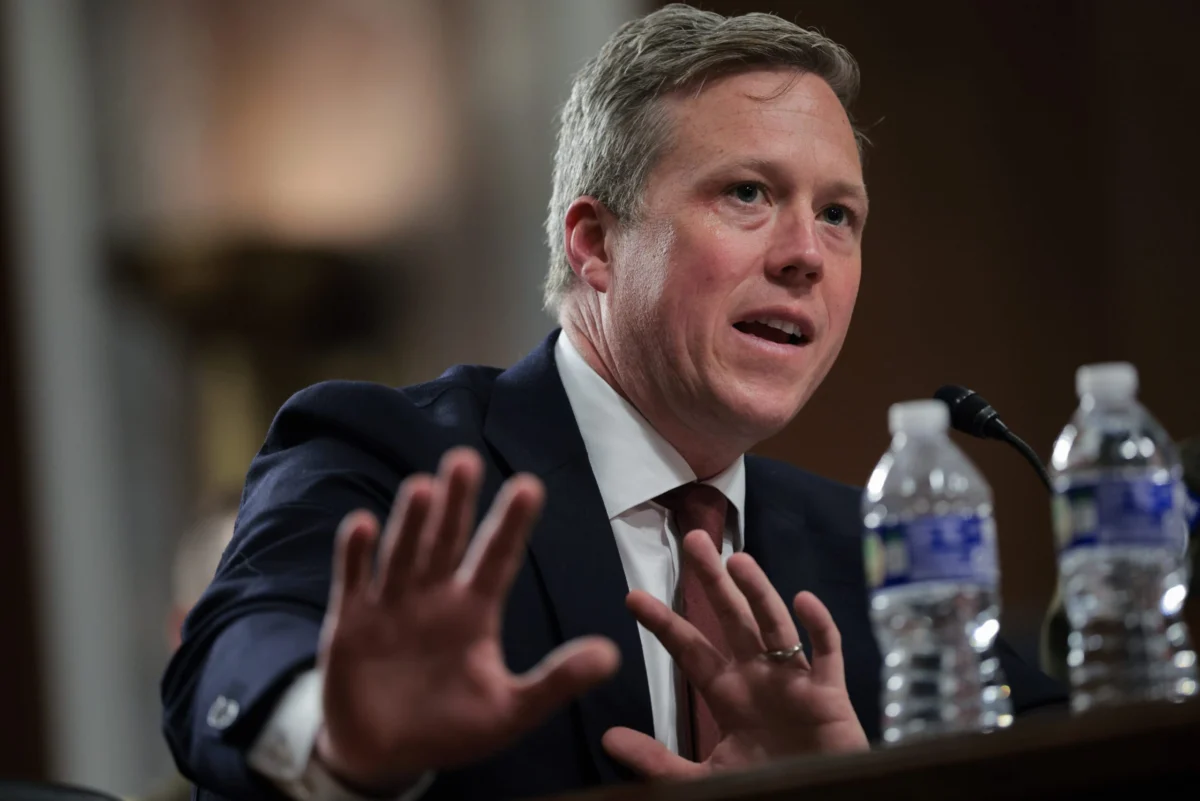
Driscoll’s arrival at OpenAI comes just two months after his contentious departure from the Trump administration, where he reportedly clashed with Defense Secretary Pete Hegseth over the pace and scope of military modernization. His tenure as Army Secretary was marked by an aggressive push for technological innovation and a willingness to challenge established bureaucratic norms, making him a fitting, if controversial, figure to lead OpenAI’s engagement with the defense community. In his new capacity, Driscoll is tasked with advising OpenAI’s public and private sector partners on how to strategically modernize policy and infrastructure to leverage AI for enhanced national security. A core tenet of his work will be to champion the responsible application of AI to bolster security among the United States and its allies, a critical distinction in an era where AI’s dual-use potential—for both beneficial and harmful applications—is a constant source of debate.
This move is far from an isolated incident; it is the latest, and perhaps most prominent, manifestation of a deliberate and accelerating strategy by OpenAI to embed itself within the defense apparatus. Gwanhoo Lee, chair of the Department of Information Technology and Analytics at American University’s Kogod School of Business, emphasizes this trend, noting that OpenAI is "continuing in its strategy of pouring resources into the defense sector, where it sees high demand for AI systems to bolster national security." Lee elaborated, telling Fortune, "This hire is a continuation of their trend to see the opportunity in hiring significant government officials to strengthen their relationship with the government and strengthen their business in dealing with the government agencies." This perspective frames the hiring spree not just as an attempt to gain expertise, but as a calculated effort to build bridges and secure lucrative contracts within a sector increasingly reliant on cutting-edge technology.
Indeed, OpenAI’s trajectory over the past couple of years paints a clear picture of this evolving strategy. In June 2024, the company significantly bolstered its board of directors by appointing retired U.S. Army General Paul Nakasone, who previously served as the director of the National Security Agency and commander of U.S. Cyber Command. Nakasone’s extensive background in intelligence and cybersecurity offered OpenAI unparalleled insights into the intricate needs and operational realities of the U.S. intelligence community. Later that same year, OpenAI solidified its defense ties further by partnering with American defense firm Anduril, a company known for its innovative approach to defense technology, particularly in autonomous systems. This collaboration aimed to integrate OpenAI’s advanced AI systems with Anduril’s extensive database of unmanned drone threats, signaling a direct application of AI to real-world military challenges. These earlier engagements laid the groundwork for the more direct and policy-oriented role that Driscoll is now poised to fill.
Driscoll’s appeal to OpenAI lies in his proven track record of advocating for and implementing modernization within the traditionally conservative military establishment. During his tenure, he was a vocal proponent of initiatives such as the development and deployment of low-cost battlefield drones, recognizing the transformative potential of such technology in contemporary warfare. He also championed efforts to cut bureaucratic red tape for defense contractors, aiming to accelerate drone development and acquisition. Perhaps most indicative of his forward-thinking approach was his push to transition the Pentagon from its long-standing practice of purchasing custom-built, proprietary software to embracing commercial off-the-shelf software solutions—a move that promised greater efficiency, cost-effectiveness, and access to rapidly evolving technologies.
Beyond his technological reform efforts, Driscoll also distinguished himself as an unlikely, yet effective, negotiator in complex geopolitical arenas. He reportedly made several trips across Europe to broker talks between Ukrainian and European officials in efforts to end the war with Russia, and even embarked on a clandestine journey to the Middle East to meet with Russian officials. This demonstrated a pragmatic, results-oriented approach to international relations, transcending traditional military roles. OpenAI CEO Sam Altman, in a statement accompanying the press release, highlighted this aspect, stating, "The U.S. has an extraordinary opportunity to work with other countries to spread the adoption of democratic AI" following Driscoll’s hire. Driscoll himself articulated his motivation: "This technology will help them keep pace by cutting through paperwork, making sense of more information, and getting the right answer to the right person faster. I’m joining OpenAI to help the United States and our allies put this technology to work responsibly, for the people who keep us safe." His vision aligns with OpenAI’s stated mission of ensuring AI benefits all of humanity, even as it delves into the complexities of national security.
Driscoll’s departure from the Pentagon in September, after just 18 months on the job, was widely reported as a consequence of significant tensions with Defense Secretary Pete Hegseth. These disagreements reportedly centered on issues such as military promotions and, crucially, the desired scale and pace of the Pentagon’s modernization efforts. Driscoll’s aggressive push for rapid technological adoption and systemic change seemingly clashed with Hegseth’s more cautious approach, leading to an untenable working relationship. His exit was part of a broader exodus of senior military officials during that period, including the ousting of Gen. Randy George, the agency’s top uniformed official, in April, and the resignation of Gen. Christopher Donahue, a vocal advocate for unmanned drone use in Ukraine, in June. This pattern suggests a deeper ideological struggle within the Pentagon regarding its future technological direction, with Driscoll firmly on the side of accelerated innovation—a stance that makes him particularly valuable to a company like OpenAI. Prior to his government service, Driscoll had a background in the private sector, serving as chief operating officer at venture capital firm Flex Capital and as a partner at private equity firm 100watt. He also had military experience, serving in the U.S. Army from 2007 to 2011, including a deployment to Baghdad, Iraq, in 2009. This blend of military, business, and policy experience positions him uniquely to bridge the gap between cutting-edge AI development and the complex demands of national defense.
However, Driscoll’s move to OpenAI immediately raises concerns about the "revolving door problem," a phenomenon where former government officials transition into private sector roles that allow them to leverage their prior connections and insider knowledge. Gwanhoo Lee articulated these worries, noting that such hires could create "potential conflicts of interest [that] could impact the government’s procurement process, or how it decides with private entities from which to buy goods and services." The concern is that if AI companies can readily recruit high-level officers from the Pentagon or other critical government agencies shortly after their public service, the fairness and impartiality of government procurement processes could be compromised. "If that procurement is based upon relationships rather than merits and strengths of technology, that puts us at risk," Lee warned, emphasizing the crucial need for robust technological solutions in national security. "As AI companies take on national security risks, we need clearer rules on oversight and conflict interest, so I think there is some governance concern." OpenAI, for its part, has stated that all parties are aware of post-employment restrictions and will comply, a standard assurance that often fails to fully alleviate public scrutiny regarding the perception of undue influence.
Beyond the "revolving door," OpenAI’s deepening relationship with the Pentagon has sparked broader ethical and privacy concerns among tech policy experts. The company had already secured a substantial $200 million contract from the Department of Defense in June 2025 to develop AI tools for national security challenges. This was followed by an even more significant development in February, when OpenAI signed a new deal with the Pentagon to deploy its AI models within the agency’s secure networks. This agreement notably came on the heels of a public standoff between the Trump administration and OpenAI’s rival, Anthropic. Earlier that month, Defense Secretary Hegseth had issued an ultimatum to Anthropic CEO Dario Amodei, demanding the company remove safety guardrails on its AI models that restricted their use for mass domestic surveillance and autonomous weaponry. Anthropic, known for its strong ethical stance, refused to comply. In an unprecedented move against an American company, Trump subsequently instructed federal agencies to cease using Anthropic’s products, and Hegseth designated the company a national security "supply chain risk," effectively blacklisting it from future government contracts. This incident served as a stark warning to AI developers about the administration’s expectations regarding military applications of their technology.
OpenAI’s subsequent deal with the Pentagon, while still incorporating some limitations on how its technology could be used, notably included an "all lawful use" clause, offering significantly broader deployment within legal confines. This clause immediately raised red flags for experts like Samir Jain, vice president of policy at the Center for Democracy & Technology. Jain expressed concern that this seemingly innocuous phrase could create legal loopholes for activities tantamount to mass surveillance. "Right now, under U.S. law, it’s lawful for government authorities to buy up commercially available information from data brokers and other third parties," Jain told Fortune earlier this year. "If you buy up massive amounts of data and allow AI to analyze it, you may end up, in effect, engaging in mass surveillance of Americans through that process. It’s not currently restricted by law or prohibited by law." This highlights a critical tension: what is technically legal may not align with ethical principles of privacy and civil liberties.
In response to these growing concerns, OpenAI updated a blog post in March outlining its agreement with the Department of Defense. The company explicitly added language clarifying that, in accordance with the Fourth Amendment of the Constitution, the National Security Act of 1947, and other applicable laws, its AI system would not be intentionally used for domestic surveillance. Furthermore, it noted that the Pentagon understood limitations prohibiting the deliberate tracking of U.S. persons or nationals, including through the procurement or use of personal information from commercial third parties. While this clarification aimed to reassure the public, the devil often lies in the details of interpretation and enforcement. The concept of "intentional" use, for instance, can be open to various interpretations, and the potential for unintended consequences or secondary uses of AI-analyzed data remains a significant area of ethical debate.
The broader context for OpenAI’s foray into defense is the intensifying global AI arms race, particularly between the United States and strategic rivals like China. Both nations recognize that leadership in AI will be paramount for future economic and military dominance. The integration of advanced AI into defense systems is seen as crucial for maintaining a technological edge, enhancing intelligence capabilities, and developing next-generation autonomous systems. Driscoll’s background in pushing for rapid technological adoption, especially with drones and commercial software, directly addresses the need for agility and innovation in this competitive landscape. His hiring, therefore, is not just about securing contracts but about shaping the strategic direction of AI in national security, aligning OpenAI directly with U.S. geopolitical objectives.
As OpenAI continues its evolution from a research-focused "frontier lab" to a prominent player in the global defense ecosystem, the challenges and scrutiny will only intensify. The company faces the delicate task of balancing its commercial interests and strategic partnerships with its foundational commitment to responsible AI development. The recruitment of figures like Dan Driscoll underscores a pragmatic realization that cutting-edge AI will inevitably play a transformative role in national security. The crucial question that remains is whether OpenAI and its partners can navigate this complex terrain in a manner that truly serves the "democratic AI" ideal, ensuring that technological advancement in defense is coupled with robust ethical safeguards, transparency, and accountability, rather than becoming a source of new risks to privacy and fundamental rights.
