
 By admin
A catastrophic collision between a state-owned Renfe train and a privately operated Iryo service last Wednesday, which resulted in injuries and significant disruption, appears to have been precipitated by a bewildering instruction from a control centre operator to proceed at "normal speed" despite a critical signalling system failure and one of the trains being stationary on the track. The incident, which occurred on a stretch of railway where all services had been halted due to a reported computer malfunction in the automatic signalling system, has raised grave concerns about operational protocols and safety procedures within Spain’s rail network.
The collision involved a Renfe train carrying 397 passengers and a stationary Iryo train with 147 passengers on board. The gravity of the situation was underscored by the immediate aftermath, with reports indicating that the Iryo carriages were "struck from behind" by the Renfe service. While the exact number of injuries has not been definitively stated, the scale of the passenger numbers involved suggests a potentially significant number of individuals could have been affected.
Leaked audio recordings, published by Spanish media outlets shortly after the crash, have provided a chilling glimpse into the final minutes leading up to the disaster. These recordings, capturing conversations between train drivers and the Madrid control centre, strongly suggest that the Renfe train was given clearance to resume its journey and proceed at normal operational speed, even though the Iryo train was already stopped on the same track, approximately 25 kilometers (15 miles) ahead.
One particularly damning excerpt from the leaked audio features an exchange between a control centre operator and the driver of the Renfe train, which was reportedly experiencing some technical difficulties. After a series of communications, the control centre operator is heard instructing the Renfe driver: "Continue your journey and then proceed under [Lateral Signalling Block], at normal speed with normal operation." The driver, audibly surprised, questions, "At normal speed?" to which the controller emphatically replies, "Yes." This exchange is critical because the "Lateral Signalling Block" is explicitly described as a back-up system, intended for use precisely when the primary automatic signalling or data transmission systems fail. The instruction to proceed at normal speed under such a backup system, without any apparent speed restrictions or heightened caution, is now being widely questioned.
Simultaneously, other leaked recordings reveal the predicament of the Iryo train’s driver. In one instance, the Iryo driver communicates to the control centre that communication with the train-control system has been lost, rendering the train immobile. The driver explicitly states, "The train is stationary in front of the entry signal at Urda." Following a series of exchanges, the Iryo driver is also instructed to "resume the journey" normally. However, in a subsequent recording, the Iryo driver contacts the control centre again, expressing their inability to initiate movement: "The train won’t allow me to control the [security] system. That’s why I am still stopped in front of the entry signal." This final communication strongly implies that the control centre was aware of the Iryo train’s continued stationary position even as the Renfe train was being cleared to proceed.
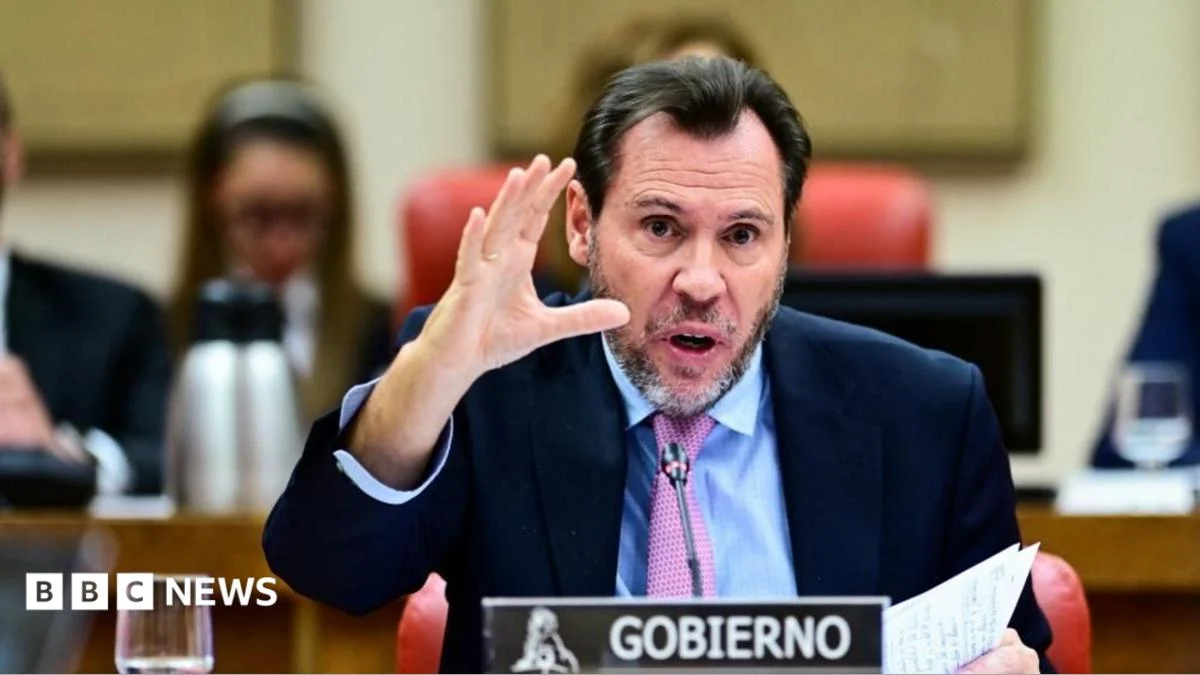
The revelation of these audio recordings has ignited a firestorm of criticism and demands for a thorough investigation. The Minister of Transport, Óscar Puente, himself acknowledged the gravity of the situation last week, describing the decision to instruct the trains to move again, without any speed restrictions, as "inexplicable." This candid admission from a high-ranking official further amplifies the public’s concern and underscores the apparent departure from standard safety protocols.
The incident raises several critical questions about the functioning of Spain’s rail infrastructure and the protocols in place during system failures. The automatic signalling system, a crucial component for ensuring safe train movements and preventing collisions, is designed to automatically halt trains when it detects an issue or when tracks ahead are occupied. The reported computer failure, therefore, should have triggered a fail-safe mechanism, leading to a complete cessation of all train movements on the affected segment until the system was fully restored and verified.
The use of the Lateral Signalling Block, while a necessary backup, necessitates a higher degree of caution. It typically involves drivers manually confirming their passage through signals and often requires reduced speeds to allow for greater reaction times in the event of unforeseen obstacles. The instruction to proceed at "normal speed" under this system, especially when another train was known to be stationary on the track, appears to be a direct contradiction of safety principles.
The dual operation of rail services by both a state-owned operator (Renfe) and a private operator (Iryo) also introduces a layer of complexity in terms of operational oversight and shared responsibility. While the control centre is likely managed by a unified authority, the distinct operational systems and potential communication nuances between the two companies could be a factor in understanding how the situation escalated. The fact that the Iryo train was struck from behind further suggests a failure in the system’s ability to track and communicate the precise location and status of all trains on the network.
Expert perspectives on rail safety often highlight the paramount importance of redundancy and rigorous adherence to protocols during system failures. Dr. Elena García, a prominent rail safety consultant, commented, "In any transportation system, especially one as complex as a railway network, failures in automated systems are anticipated. However, the response to these failures must be meticulously planned and executed. The recorded instruction to proceed at normal speed in a situation where a signalling system has failed and a train is stationary on the line is deeply concerning and deviates from standard emergency operating procedures. It suggests a potential breakdown in communication, a misunderstanding of the system’s status, or, most alarmingly, a deliberate disregard for safety protocols."
The economic implications of such an incident are also significant. Beyond the immediate costs of rescue, repair, and compensation for affected passengers, the disruption to rail services can have a ripple effect on supply chains and commuter travel. Spain’s rail network is a vital artery for both passenger and freight transport, and incidents of this nature can erode public confidence and lead to increased scrutiny and potentially more stringent regulations, which could impact future operational efficiency and costs.
The investigation into this collision will undoubtedly focus on several key areas: the exact nature of the automatic signalling system’s computer failure, the decision-making process within the control centre, the communication protocols between the control centre and the train drivers, and the training and adherence to procedures by all personnel involved. The role of the Lateral Signalling Block and the interpretation of its operational parameters will also be under intense scrutiny.
The leaked audio recordings have provided a crucial starting point for the investigation, but a comprehensive inquiry will require access to all operational logs, system data, and thorough interviews with all parties involved. The public’s demand for transparency and accountability is high, and the findings of this investigation will be critical in restoring confidence in the safety of Spain’s rail network. The "inexplicable" nature of the instruction to proceed at normal speed, as stated by Minister Puente, suggests that the root cause may lie not just in a technical malfunction, but in a human error or a systemic flaw in the command and control structure that tragically led to this preventable accident. The tragic events of last Wednesday serve as a stark reminder that even with advanced technology, human judgment and strict adherence to safety protocols remain the ultimate guardians against disaster on the rails.
