
 By Lina Irawan
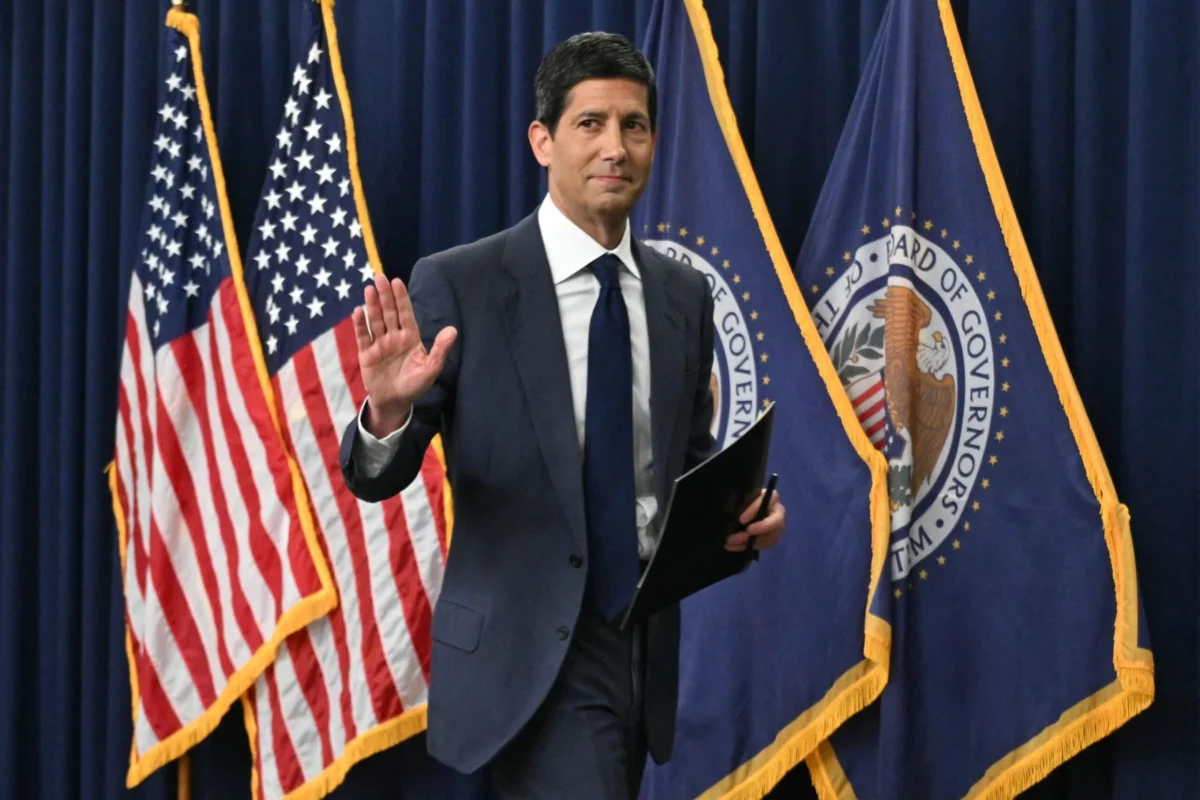
The career trajectory of Kevin Warsh, a former Federal Reserve Governor and now the hand-picked Federal Reserve chairman under President Donald Trump, has always positioned him at the nexus of monetary policy debate. Given his appointment by a president who often expressed a preference for lower interest rates and a more accommodative monetary stance, initial expectations were that Warsh would steer the Fed toward a looser policy. This anticipation was rooted in the belief that he would prioritize economic growth, perhaps at the expense of stricter inflation control, aligning with the administration’s broader economic goals. However, Warsh quickly defied easy categorization, leading market participants and economists on a convoluted journey through his seemingly contradictory pronouncements and decisions.
Early in his tenure, Warsh delivered a striking declaration that "inflation was a choice," a statement that immediately sent ripples through financial markets. This phrase, far from suggesting a relaxed approach, implied a firm commitment to price stability and a readiness to take aggressive measures to curb rising costs. For many, it signaled a hawkish inclination, indicating that the Fed under Warsh would be vigilant against inflationary pressures and prepared to raise interest rates as necessary, even if it meant potentially slowing economic expansion. This sharply contrasted with the initial dovish expectations surrounding his appointment, sowing the first seeds of confusion regarding his true policy leanings.
As the summer progressed, Warsh offered glimmers of a more accommodating stance. He began suggesting that the Federal Reserve should consider alternative inflation gauges, moving beyond traditional metrics like the Consumer Price Index (CPI) or the Personal Consumption Expenditures (PCE) index. This could involve examining more nuanced measures, such as sticky-price inflation (items whose prices change infrequently) versus flexible-price inflation, or exploring trimmed-mean inflation rates that exclude volatile components. The implication was that a broader perspective might reveal a less alarming inflation picture, thereby reducing the urgency for aggressive monetary tightening. Concurrently, he hinted that the bond market itself might do "some of the Fed’s tightening work." This concept suggests that if long-term Treasury yields rise significantly due to market expectations of future inflation or increased government borrowing, they would naturally tighten financial conditions by making borrowing more expensive for businesses and consumers. In such a scenario, the Fed might not need to raise its benchmark interest rate as aggressively, as market forces would already be applying the brakes to the economy. These comments, coming on the heels of his earlier hawkish remarks, were interpreted as a subtle pivot toward a less aggressive policy path, further muddying the waters for those trying to discern his long-term strategy.
However, any emerging consensus on Warsh’s dovish tendencies was abruptly shattered by his hawkish speech at the prestigious Jackson Hole Economic Symposium in August. This annual conference, a crucial forum for central bankers and economists, is often used to signal shifts in monetary policy thinking. Warsh’s address was widely perceived as a strong affirmation of the Fed’s commitment to fighting inflation, suggesting that the central bank was prepared to act decisively to ensure price stability. This rhetoric was swiftly followed by concrete action: the Federal Reserve, under his leadership, executed a unanimous rate hike in September. This decisive move, a clear signal of tightening monetary policy, reinforced the image of a hawkish chairman willing to take palpable steps to rein in inflation, regardless of earlier suggestions of a softer touch.
The most recent turn in this perplexing narrative occurred last week when Warsh conspicuously held off on backing another rate hike, despite fresh data indicating that inflation was heating up once again. His decision to remain silent, offering no explanation or hints about the Fed’s next policy move, created an overall dovish effect. In the absence of a clear commitment to further tightening when inflation data warranted it, markets interpreted his reticence as a signal that the Fed might be less inclined to hike rates in the immediate future. This latest action further deepened the enigma surrounding Warsh’s monetary policy philosophy, leaving observers questioning whether he was genuinely inconsistent or operating under a different, unarticulated framework.
It is precisely this pattern of mixed signals that prompted Robin Brooks, a distinguished senior fellow at the Brookings Institution, to argue that asking whether Warsh is a hawk or a dove is fundamentally the wrong question. Brooks contends that viewing Warsh’s seemingly contradictory messages through the traditional hawk-dove lens fails to capture the underlying rationale. In a thought-provoking Substack post published on Thursday, Brooks asserted, "We’re not in hawkish or dovish land. What’s happening is yield curve management, which itself is a function of how precarious the U.S. debt picture is." He elaborates that the recent hot inflation readings, while significant, cannot fully rationalize the twists and turns in Warsh’s statements and the Fed’s actions.
Brooks’s thesis posits that the Federal Reserve’s true preoccupation, and by extension, Warsh’s guiding principle, is not merely inflation control or economic growth in isolation, but rather the urgent need to manage the U.S. government’s colossal debt burden. The magnitude of this challenge is staggering: the U.S. national debt now exceeds $40 trillion in gross terms, with publicly held debt having swelled to a precarious 100% of GDP. This year has witnessed a significant surge in Treasury yields, a development that directly threatens to worsen an already grim fiscal outlook. Higher yields mean the government must pay more to borrow money, dramatically increasing its debt-interest costs. Indeed, in fiscal year 2026, which concluded in September, the federal government’s debt-interest payments soared past $1 trillion, remarkably surpassing even defense spending – a stark illustration of the escalating financial strain.
"The bottom line is that inflation and other macro data are secondary," Brooks added, underscoring his central argument. "The twists and turns in Fed policy are about what’s going on with long-term yields." This perspective suggests that traditional economic indicators, while still important, are being overshadowed by the imperative to maintain stability in the bond market and keep borrowing costs for the government manageable.
Brooks further suspects that the Federal Reserve and the Treasury Department are operating under a de facto accord, a tacit agreement to coordinate efforts aimed at stabilizing borrowing costs. He points to several actions that bolster this hypothesis. One significant example is Treasury Secretary Scott Bessent’s surprise announcement to buy back more long-term bonds. This move, by reducing the supply of long-term government debt in the market and increasing demand for existing bonds, briefly but effectively lowered yields. Such an intervention directly supports Brooks’s theory of active yield curve management.
Another telling intervention cited by Brooks involved Bessent’s actions in the currency market to prop up the Japanese yen. This move was crucial because Japan is one of the largest foreign holders of U.S. debt. If the yen were to depreciate sharply against the dollar, Japan might be compelled to sell off some of its substantial holdings of U.S. Treasury bonds to support its own currency. Such a massive sell-off would flood the market with U.S. debt, inevitably driving up Treasury yields. By intervening to stabilize the yen, Bessent effectively prevented a scenario that would have exacerbated the U.S. debt crisis, again highlighting a coordinated effort to manage yields.
However, the actual effectiveness of these attempts at managing bond yields is a complex and ongoing story, subject to a myriad of domestic and international forces. Despite coordinated efforts, several factors have conspired to push yields higher. Expectations for a re-escalation of the Iran war, for instance, have sent global oil prices soaring. Higher energy costs directly fuel inflation, leading investors to demand higher yields on government bonds to compensate for the erosion of their purchasing power. Concurrently, persistent signs that the U.S. economy is running hot, exhibiting robust growth and strong labor markets, have also raised inflation expectations and, consequently, forecasts for future interest rate hikes. These factors put upward pressure on yields, challenging the Fed and Treasury’s management efforts.
Yet, the U.S. economy has also caught some unexpected breaks that have, at times, provided relief from upward yield pressure. Fears that the much-touted AI boom, a significant driver of recent GDP growth, might go bust have led to a tempering of long-term growth and inflation expectations. This easing of economic optimism has, paradoxically, taken some pressure off bond yields. Furthermore, recent political turmoil and deepening fiscal dysfunction in France have sparked worries that the nation could trigger a broader debt crisis that spreads across the eurozone. In times of global instability, investors traditionally flock to safe-haven assets, and U.S. Treasury debt remains the ultimate destination. This renewed embrace of Treasuries has increased demand, helping to push the benchmark 10-year yield back below 5% again, providing a temporary reprieve.
"Warsh is neither hawk nor dove," Brooks declared, cutting through the conventional labels. "Instead—like Bessent—he’s just trying to keep long-term yields manageable." This reframing of Warsh’s actions paints a picture of a central bank chairman navigating a treacherous fiscal landscape, where the traditional tools of monetary policy are increasingly intertwined with the urgent need for debt sustainability.
However, such aggressive management of the yield curve, particularly if it involves explicit or implicit coordination between the Fed and the Treasury, risks putting the U.S. economy on the perilous path toward what economists refer to as "fiscal dominance." This concerning scenario arises when the sheer weight of high government debt and persistent deficits overrides the central bank’s ability to independently manage monetary policy and fulfill its mandate to fight inflation. In a state of fiscal dominance, the Fed might be pressured to keep interest rates artificially low to prevent the government’s borrowing costs from spiraling out of control, even if doing so allows inflation to persist or accelerate. This fundamentally compromises the central bank’s independence and its primary role in maintaining price stability.
Economists have long highlighted a critical relationship for debt sustainability: as long as nominal GDP growth remains consistently above interest rates, the U.S. can avoid a debt spiral—a vicious cycle where borrowing costs accumulate faster than the economy expands, making the debt increasingly difficult to service. However, bond yields have risen so high and so quickly this year that they have dramatically blown past long-term estimates, sounding alarms about the nation’s debt trajectory.
The Congressional Budget Office (CBO), the non-partisan watchdog, was recently tasked with assessing various scenarios where yields are significantly higher than its baseline forecast of 4.3%. Specifically, they examined scenarios where yields are 150 basis points and 50 basis points higher. Under the more pessimistic 150-point scenario, net interest costs for the federal government would surge by an additional $4.9 trillion over the next 10 years, and publicly held debt would reach a staggering 133% of GDP by 2036. While yields have recently pulled back slightly, they had, at one point, jumped more than 100 basis points over the CBO’s baseline earlier in the year, underscoring the immediate relevance of these dire projections.
Analysts at Bank of America, scrutinizing the CBO’s numbers, estimated that in the alternate scenario of sustained higher yields, the effective interest rate on government debt would exceed the assumed long-term nominal GDP growth rate of 4% as early as fiscal year 2028, which commences in October 2027. This would signal the onset of a debt spiral, where the cost of servicing the national debt outstrips the economy’s capacity to grow.
For the moment, nominal GDP growth remains robust, clocking in at 5.6% in the third quarter. This strength has been partly attributed to the ongoing AI boom, which has injected vitality into various sectors, and the persistently high inflation, which inflates nominal figures. However, Bank of America tempered optimism in an October 19 note, cautioning, "However, both forces are likely to prove more temporary than permanent unless AI adoption ultimately delivers substantial productivity gains." The bank concluded with a sobering assessment: "Should that occur, concerns around fiscal sustainability would ease materially. Even so, we believe it is optimistic to assume the United States can simply grow its way out of its mounting debt burden."
In essence, the complex dance of Kevin Warsh’s policy signals is less about a traditional ideological battle between hawks and doves, and more about a desperate struggle to maintain equilibrium in the face of an unprecedented national debt. As Robin Brooks eloquently puts it, Warsh, much like Treasury Secretary Bessent, is engaged in a delicate act of yield curve management, attempting to thread the needle between fighting inflation and preventing the U.S. government’s borrowing costs from spiraling out of control. This strategic imperative, however, carries the profound risk of eroding the Federal Reserve’s independence and ushering in an era of fiscal dominance, where the nation’s fiscal woes dictate monetary policy, with potentially far-reaching consequences for long-term economic stability and inflationary pressures.
