
 By Lina Irawan
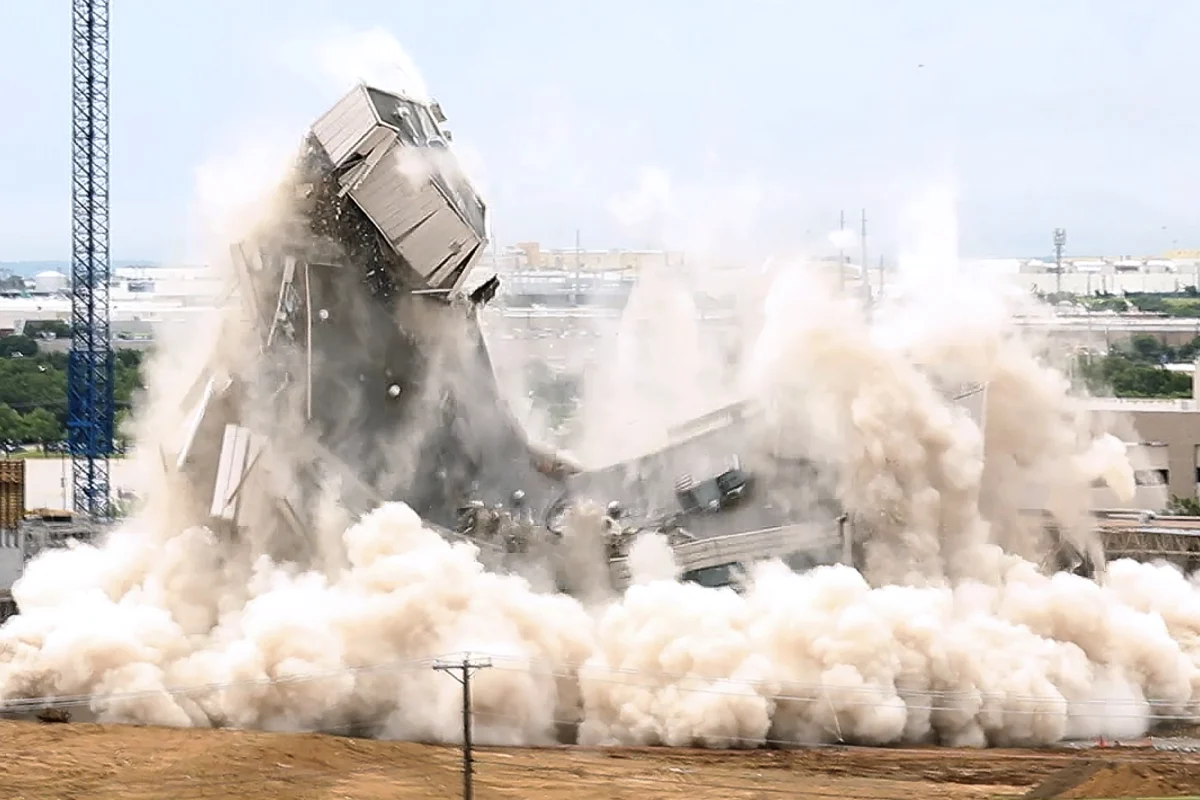
The tech-heavy Nasdaq Composite bore the brunt of this abrupt reversal, plummeting by more than 1,340 points, or 5.2%, in midday trading. This single-day rout erased an staggering $3 trillion in market capitalization across the tech sector, marking its most significant daily drop since the "Liberation Day" tariff announcement in April 2025. That previous event, stemming from escalating global trade tensions and punitive measures against key technology imports, had sent shivers through the industry, but Thursday’s selloff was distinct in its origins, rooted deeply in domestic policy shifts and local voter mandates. The Philadelphia Semiconductor Sector index (SOX), a critical barometer for the chips business, which forms the bedrock of AI computing, suffered an even more catastrophic blow, shedding over 1,000 points. This put it on track for its single biggest daily loss since March 2020, a period characterized by the initial shockwaves of a global pandemic and unprecedented economic uncertainty. The scale of Thursday’s decline underscores a profound recalibration of investor expectations for the future trajectory of AI growth within the United States.
The "Blue Tsunami" on Tuesday saw Democrats not only retain control but also strengthen their majorities in both the Senate and the House of Representatives, defying earlier predictions of a more divided government. This consolidated power, while initially celebrated by some as a pathway to legislative stability, quickly revealed its darker side for the tech industry. Crucially, alongside the congressional races, voters overwhelmingly approved a series of ballot measures across key states that directly targeted the buildout of AI data centers in the U.S. These measures, often spearheaded by grassroots environmental groups and local community activists, cited concerns ranging from massive energy consumption and strain on local power grids to exorbitant water usage in drought-prone regions, noise pollution, and the conversion of agricultural or natural lands into sprawling industrial campuses. The collective message from the electorate was clear: the environmental and societal costs of unchecked AI infrastructure expansion were no longer acceptable.
This widespread voter repudiation of the "data center boom" sent shockwaves through boardrooms and trading floors. The perception shifted from an era of relatively unhindered growth to one where regulatory scrutiny and local opposition would become formidable obstacles. The implications for companies like Meta, Microsoft, and Nvidia, which are at the forefront of AI development and depend heavily on scalable, energy-intensive data centers, became immediately apparent. These firms had invested hundreds of billions of dollars, and planned to invest trillions more, in constructing the physical infrastructure necessary to power the next generation of AI services, from advanced generative models to autonomous systems and immersive virtual realities.
Some of the biggest names in tech felt the immediate sting. Facebook parent company Meta Platforms, a pioneer in AI research and a massive investor in metaverse-related infrastructure, saw its shares tumble 3.4%. Microsoft, a dominant player in cloud computing with its Azure platform and a rapidly expanding AI portfolio, was down 2.8%. Nvidia, arguably the most critical enabler of the current AI revolution through its high-performance GPUs, experienced an 8% plunge. These declines, while significant, paled in comparison to the losses sustained by companies even more directly exposed to the hardware aspect of the AI buildout.
Indeed, the semiconductor sector, the literal engine room of AI, faced a particularly brutal reckoning. Micron Technology, one of the world’s top three makers of memory chips essential for AI processing, saw its stock crater by roughly 14%. Advanced Micro Devices (AMD), a fierce rival to Nvidia in the high-performance computing and AI chip market, suffered a similar 14% downturn. These dramatic drops reflect the direct correlation between data center capital expenditure (capex) and the demand for their specialized hardware. If the physical expansion of AI infrastructure slows, so too does the demand for their core products.
The reality of these changing business conditions began to crystallize on Thursday. Meta President Dina Powell McCormick, speaking at a Wall Street Journal-organized conference on Wednesday, had already acknowledged the new hurdles with prescient candor. "Building data centers in the U.S. is going to be harder," she stated, adding a stark warning: "I can also tell you that every hyperscaler is now thinking about ‘Do we need to build outside the United States?’ Because they’re enormous investments, hedging those investments is a wise thing to do." This statement, initially perhaps perceived as a cautionary note, resonated with far greater gravity after the full implications of the midterm results became apparent. The notion of U.S. tech giants exporting their infrastructure investments due to domestic regulatory pressures immediately raised questions about national competitiveness, job creation, and the future locus of AI innovation.
The shift in market sentiment was further cemented by leading industry analysts. Dan Ives, the usually bullish analyst at Yorkville Ives, known for his optimistic outlook on the tech sector, issued a significantly revised note to investors on Thursday. He now anticipates the tech industry’s capital expenditure growth to peak next year, a stark departure from his earlier projections of sustained growth into 2028 or 2029. This revision alone signaled a fundamental reassessment of the industry’s investment cycle.
Ives elaborated on the profound impact of the political shift. The capex spree of the past two years has been an unparalleled engine of the U.S. economy. Companies like Alphabet, Microsoft, Amazon, Meta, and Oracle, alongside emerging "neocloud" companies, have been locked in an intense race to build an unprecedented number of data centers to host and run burgeoning AI services. This endeavor has involved spending hundreds of billions of dollars annually, not just on the sophisticated chips, servers, and networking gear from companies like Nvidia and Cisco, but also on acquiring vast tracts of land, securing enormous energy supplies, and engaging in massive construction projects. The ripple effect of this spending has permeated numerous industries, from real estate and construction to utilities and specialized engineering services, creating tens of thousands of high-paying jobs.
"While Big Tech and hyperscaler capex should still easily exceed $1 trillion in 2027," Ives wrote, "the growth rate into 2028 will clearly moderate significantly as the data center buildout comes at a much slower pace given the political map especially in the state of Texas." The mention of Texas is particularly salient. For years, states like Texas, Arizona, and Georgia had aggressively courted data center developers with favorable land prices, tax incentives, and relatively permissive regulatory environments, transforming certain regions into hubs for digital infrastructure. A shift in political will or voter sentiment in such key states signals a much broader national trend. Ives’s analysis suggests that the previously anticipated exponential growth in data center capacity within the U.S. is now facing a substantial deceleration, driven by a confluence of local opposition and potential federal legislative action.
Quantifying the impact, Ives projected a tangible reduction in planned infrastructure: "We estimate on the low end 10% of the planned 800-1,000 AI focused data centers in the US will now be wiped off the roadmap, with potentially up to 20% of these facing a much longer regulatory road that could further impact the capacity buildout in the US over the next few years." This means between 80 and 200 massive AI data center projects, each representing billions of dollars in investment and years of construction, are either being canceled outright or delayed indefinitely. The implications for the entire supply chain, from the companies manufacturing server racks to those providing cooling systems and high-speed fiber optics, are immense.
The pain was not evenly distributed. "Neocloud" companies, a newer breed of infrastructure providers that have emerged to compete with the established giants like Amazon Web Services (AWS) and Google Cloud, were particularly hard hit. These firms, often specializing in high-performance computing for AI workloads, have typically taken on substantial amounts of debt to finance their ambitious data center builds. Coreweave, one of the leading neocloud players, saw its stock plummet 9% on Thursday, extending its two-day decline to a punishing 18%. Their leveraged business models make them acutely vulnerable to any slowdown in capital expenditure or increased regulatory hurdles, as their ability to service debt and attract new investment is predicated on continuous, rapid expansion.
By contrast, some of the more diversified tech giants showed a degree of resilience, albeit still registering losses. Google parent Alphabet, while a major cloud provider, benefits from its colossal and highly profitable search advertising business, which provides a significant buffer against infrastructure-specific headwinds. Its shares were down a comparatively modest 1.6% on Thursday, illustrating the advantage of diversified revenue streams in turbulent times.
The broader implications of this shift are profound. A significant slowdown in AI infrastructure buildout in the U.S. could impede the pace of innovation, potentially ceding leadership in key AI capabilities to other nations with more favorable regulatory environments or aggressive government support. It raises questions about the future of U.S. technological competitiveness and its role as a global AI superpower. Companies will be forced to re-evaluate their long-term strategies, potentially diverting investments to overseas markets, which could lead to a domestic brain drain in critical engineering and AI talent.
Moreover, the midterms have unveiled a growing societal tension between technological advancement and environmental sustainability. The "AI boom," once seen as an unmitigated good for economic growth, is now being scrutinized through the lens of its resource footprint. This new political reality suggests that future technological growth, particularly in energy-intensive sectors like AI, will require a much more integrated approach to environmental planning and community engagement, moving beyond mere economic incentives to address genuine public concerns. The sea of red that washed over tech stocks on Thursday was not just a market correction; it was a stark indicator of a fundamental shift in the landscape for artificial intelligence, signaling that the industry’s path forward in the U.S. will be far more challenging and heavily regulated than previously imagined.
With additional reporting by Scott DeCarlo.
