
 By admin
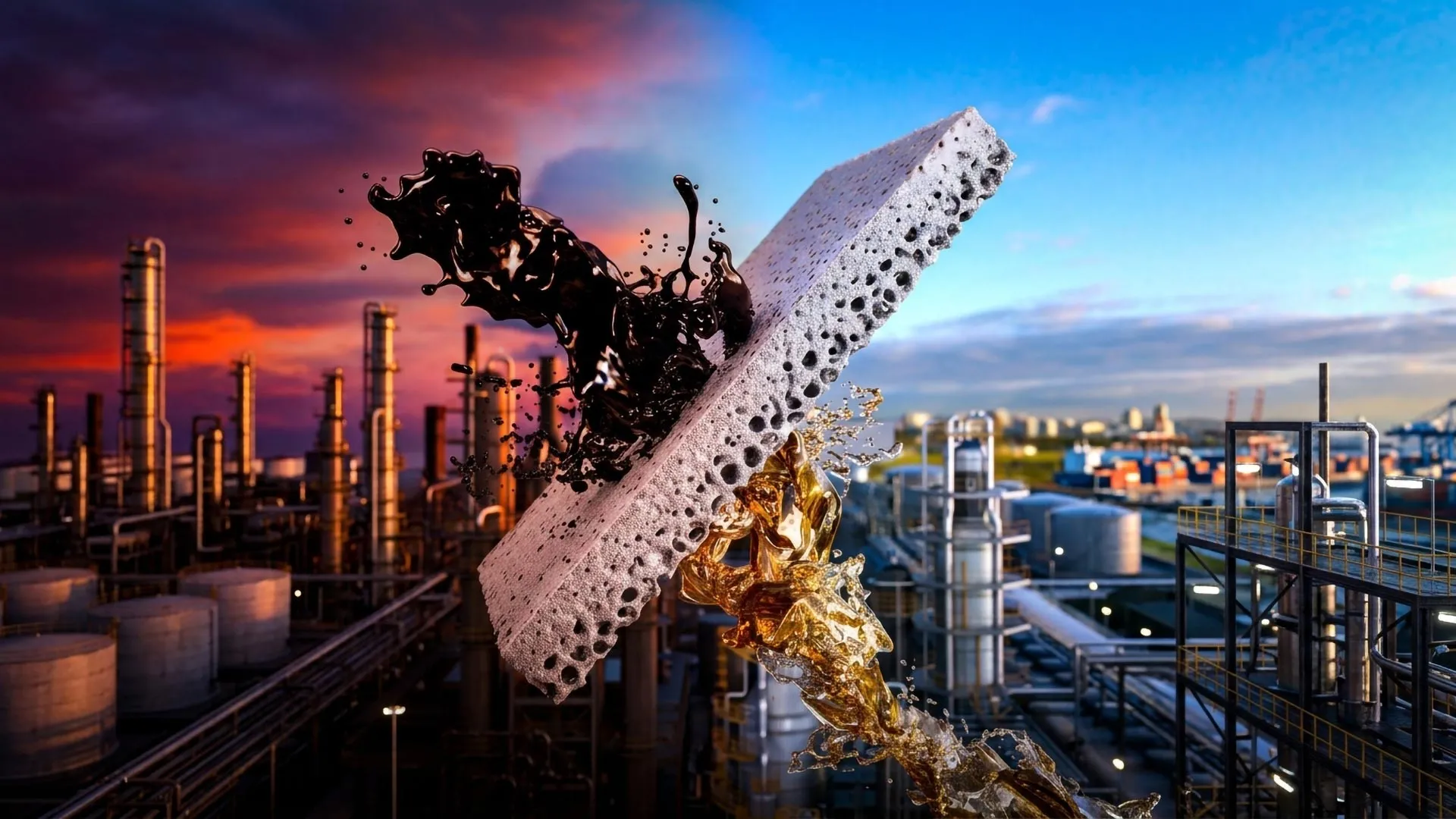
The international collaborative research effort was spearheaded by Professor Dong-Yeun Koh at the Korea Advanced Institute of Science and Technology (KAIST), working in close partnership with Professor Ryan Lively’s distinguished research group at the Georgia Institute of Technology. KAIST, under the leadership of President Kwang Hyung Lee, proudly announced the team’s successful demonstration of a novel membrane capable of efficiently separating crude oil components at room temperature – a feat long considered a holy grail in chemical engineering. The profound implications of these findings were recognized by their publication in Nature, one of the world’s most prestigious scientific journals, signaling a major leap forward for industrial sustainability.
Crude oil is far more than just the source of gasoline and other essential transportation fuels. It forms the foundational feedstock for an astonishing array of products that permeate modern life, supplying the raw materials for plastics, packaging, textiles, pharmaceuticals, and countless other everyday items. Given that refining costs directly influence the prices of these ubiquitous materials, enhancing the efficiency of this initial processing stage holds the potential for widespread economic benefits, trickling down to consumers and industries globally, alongside its substantial environmental advantages.
The Herculean Energy Demands of Traditional Crude Oil Refining
For over a century, the oil refining industry has predominantly relied on thermal distillation to break down crude oil into its valuable constituent components, or "fractions." This established method is fundamentally energy-intensive, requiring crude oil to be heated to temperatures often exceeding 350 degrees Celsius (660 degrees Fahrenheit). At these extreme temperatures, different portions of the oil vaporize at varying points, allowing them to be separated as vapors and then condensed back into liquid fractions, such as naphtha, gasoline, kerosene, diesel, and heavier fuel oils, as well as lubricants and asphalt. These fractions also serve as critical feedstocks for the vast petrochemical industry.
This century-old approach, while effective, exacts an enormous energy toll. Globally, crude oil distillation consumes an estimated 1,100 terawatt-hours (TWh) of energy annually. To put this staggering figure into perspective, this is roughly equivalent to the combined yearly electricity production of approximately 130 continuously operating nuclear power plants, each with a capacity of about one gigawatt. Alternatively, it surpasses the total annual electricity consumption of entire industrialized nations like Canada or Germany. The energy required is not just for heating; it also includes the massive cooling infrastructure needed to condense the vapors, further adding to the environmental and financial burden.
The sheer scale of this energy demand makes distillation a primary contributor to both global fuel consumption and greenhouse gas emissions within the refining sector. The relentless need for heat, steam, and cooling water translates directly into vast quantities of burned fossil fuels, exacerbating climate change and contributing significantly to air pollution. Concurrently, escalating economic pressures across global petrochemical markets, driven by fluctuating oil prices, geopolitical instability, and increasing competition, have intensified the search for more efficient, less resource-intensive technologies to separate crude oil. The drive for sustainability is no longer merely an environmental concern but a fundamental economic imperative.
Membranes: A Promising Yet Challenged Alternative
Membrane technology has long been heralded as a promising alternative for separation processes, primarily because it offers the potential to separate substances without requiring the extreme temperatures and phase changes inherent in conventional distillation. Instead, membranes act as selective barriers, allowing certain molecules to pass through while retaining others, often driven by pressure differences rather than heat. This inherent advantage positions membranes as a significantly greener and more energy-efficient option. However, despite decades of research and development, previous membrane designs have encountered formidable obstacles that have largely prevented their widespread industrial adoption in the challenging environment of crude oil refining.
Traditionally, researchers and engineers have operated under the assumption that effective molecular separation, particularly for the complex mixture of hydrocarbons found in crude oil, necessitates a membrane surface covered with an extremely thin, specialized coating. These coatings are meticulously engineered at the nanoscale to provide the necessary precision for distinguishing between molecules of slightly different sizes or chemical properties. While such precision is achievable in laboratory settings, these specialized coatings are inherently expensive to produce, often requiring complex synthesis processes and rare materials. Furthermore, the delicate nature of these ultra-thin layers makes them prone to developing defects during large-scale manufacturing, compromising their separation efficiency and durability. These limitations, coupled with concerns about chemical stability in the harsh, corrosive environment of crude oil, have made widespread industrial adoption a persistent challenge.
A Surprising Discovery Transforms Clogged Filters into an Advantage
The KAIST and Georgia Tech researchers, approaching the problem with fresh eyes, decided to challenge these long-held assumptions. Instead of attempting to engineer a complicated, expensive surface coating, they opted for a remarkably simpler solution: a bare membrane made from porous polyacrylonitrile (PAN). PAN is an inexpensive, robust, and chemically stable polymer already widely used as a supporting material in various industrial filtration systems, known for its mechanical strength and resistance to many chemicals. Its very simplicity was its radical departure.
What transpired when crude oil was passed through this seemingly ordinary PAN membrane was entirely unexpected and defied conventional wisdom. As the complex mixture of oil flowed through the membrane’s inherent pores, a remarkable phenomenon occurred: heavier hydrocarbon molecules, which are larger and more viscous, began to accumulate along the inner walls of these pores. This gradual buildup, rather than being a hindrance, actually reduced the effective size of the openings, progressively creating extremely narrow, highly selective channels measuring less than 2 nanometers across.
In a truly ingenious display of self-organization, the crude oil itself helped to create the microscopic pathways required to separate its own components. These naturally formed, nano-sized channels acted as molecular sieves, allowing lighter oil fractions – including valuable naphtha, gasoline, and kerosene – to pass through relatively quickly and efficiently. Simultaneously, the constricted pathways prevented the much larger and heavier hydrocarbon substances from traveling through the membrane with the same ease, effectively separating the mixture.
This discovery was particularly surprising because the accumulation of material inside membrane pores, a phenomenon universally known as "fouling," is almost always considered a serious operational problem in filtration. Fouling typically reduces filtration performance, clogs membranes, and necessitates frequent, costly cleaning or even premature replacement. In this unprecedented case, however, the very phenomenon that usually degrades membrane efficiency became the central mechanism that made the PAN membrane highly effective at separating different molecular components of crude oil. This paradigm shift in understanding fouling represents a significant scientific breakthrough, turning a conventional disadvantage into a powerful advantage.
The results achieved with this uncoated PAN membrane were nothing short of impressive. It demonstrated crude oil permeation rates approximately 23 times higher than those reported for previous leading crude oil separation membranes. This dramatic increase in flux means that a much smaller membrane area could process the same volume of oil, significantly improving industrial viability. Furthermore, the membrane exhibited remarkable operational stability, continuing to perform with consistent efficiency for 28 consecutive days – a crucial factor for industrial application where continuous, reliable operation is paramount.
Professor Ryan Lively from Georgia Tech underscored the significance of these findings, commenting: "One of the key challenges facing membrane systems for crude oil separation was the low productivities of the membrane units – the PAN membranes with their surprising separation mechanism – dramatically increase the productivity of the membrane unit, to the point where industry should seriously consider adopting the technology." His statement highlights that while laboratory-scale separation might be achievable, industrial viability hinges on high throughput and robust performance, areas where this new membrane excels.
A Potential Game-Changer: Cutting Oil Refining Energy Use by Nearly a Third
One of the most compelling advantages of this innovative membrane technology is its potential for seamless integration into existing refinery infrastructure. Refineries would not necessarily need to undertake the prohibitively expensive and disruptive process of replacing their entire conventional distillation equipment. Instead, the membrane system could be installed as a modular pre-filtration unit. This modular system would process crude oil before it enters the traditional distillation towers, effectively performing a crucial initial separation at room temperature. This pre-treatment would significantly reduce the volume and complexity of the crude oil mixture that then proceeds to the energy-intensive heating and separation stages, allowing facilities to continue leveraging much of their current infrastructure while dramatically boosting overall efficiency.
Detailed computer simulations, based on the membrane’s performance data, suggest that incorporating this innovative membrane into the refining process could deliver substantial improvements across multiple critical metrics. Energy consumption within the refining process could fall by an impressive 31.6%, representing a monumental reduction in operational energy demand. Concomitantly, carbon dioxide emissions, a major concern for the industry, could decrease by a remarkable 37.6%. The same comprehensive calculations projected a significant 20.7% reduction in cooling water consumption, a vital resource in many arid refining regions, and an estimated 36% decrease in overall operating costs, making the technology highly attractive from an economic standpoint.
The potential environmental benefits of widespread adoption of this technology could be truly transformative. Researchers conservatively estimate that if this system were implemented throughout Korea’s extensive refining and petrochemical industries alone, it could prevent approximately 10 million tonnes of greenhouse gas emissions each year. To put this figure into context, this is roughly equivalent to the annual emissions produced by four million vehicles powered by internal combustion engines – a tangible and significant contribution to global decarbonization efforts.
It is important to note that these substantial savings are projections derived from sophisticated process simulations rather than reductions already demonstrated across fully operating commercial refineries. Nevertheless, the compelling nature of these findings strongly suggests that membrane filtration, particularly with this novel "self-fouling" mechanism, could become a practical, scalable, and economically viable way to fundamentally improve the energy efficiency and environmental footprint of existing facilities worldwide.
Beyond Crude Oil: Broadening the Horizon of Applications
While the primary focus of this groundbreaking research was crude oil separation, the underlying principles and the versatile nature of the technology suggest its utility could extend far beyond the traditional oil and gas industry. The same innovative approach could eventually prove invaluable in several other critical industrial sectors, contributing to a more circular economy and sustainable manufacturing practices.
One particularly promising application involves the treatment of pyrolysis oil, a synthetic crude oil produced when waste plastics are broken down through thermal decomposition for recycling. Pyrolysis oil is often a complex, contaminated mixture, and efficient separation would be crucial for its effective reintegration into the petrochemical value chain. The membranes could also play a vital role in recovering and purifying solvents used in the manufacturing of advanced batteries, a rapidly expanding industry critical for the electric vehicle revolution. Furthermore, the technology could enhance the purification of pharmaceutical compounds, ensuring higher product purity and reducing energy-intensive separation steps, and improve the efficiency of biofuel production processes, contributing to renewable energy goals.
The broader opportunity unveiled by this research lies in a revolutionary approach to membrane design: utilizing complex liquid mixtures themselves to help form the tiny, highly selective filtration channels needed to separate their components. This "mixture-driven pore constriction" approach could provide a more affordable, robust, and versatile alternative to conventional membranes that rely on precisely manufactured, fragile, and often expensive surface coatings. It represents a paradigm shift from meticulously engineered surfaces to dynamic, self-adapting systems.
Professor Dong-Yeun Koh of KAIST articulated this profound insight, stating, "This study reveals a new scientific principle in which a membrane interacts with a complex mixture and spontaneously forms its own separation channels. Working with real crude oil supplied by HD Hyundai Oilbank allowed us to validate the technology under conditions relevant to industrial operation." The use of actual crude oil, rather than simplified laboratory analogs, was a critical aspect of the research, lending immense credibility to the team’s findings and demonstrating the membrane’s robustness in real-world industrial feedstocks.
Before this transformative technology can be deployed more widely on an industrial scale, the researchers plan to focus on crucial next steps. These include improving membrane production at larger scales, ensuring consistent quality and performance across vast areas, and rigorously establishing its long-term reliability during extended operation under varying industrial conditions.
Professor Jae W. Lee of KAIST, a co-corresponding author of the study, emphasized this future trajectory, adding, "By advancing large-area membrane modularization and long-term operational reliability, we hope to broaden the adoption of membrane-based processes throughout the refining and petrochemical industries." This indicates a clear pathway towards commercialization, addressing the practicalities of industrial implementation.
Dr. Jihoon Choi and Dr. Hyeokjun Seo of KAIST, the study’s co-first authors, shared their ambitious vision: "Our goal is to precisely control this spontaneous pore-constriction phenomenon and develop it into a membrane platform applicable to the entire refining process. We also aim to expand the technology to plastic recycling, biofuel purification, and other sustainable chemical processes that support carbon neutrality." Their statement underscores the multi-faceted potential and the overarching commitment to fostering a more sustainable industrial future.
The pioneering research received vital support from Korea’s Ministry of Science and ICT through the Basic Research Program for Outstanding Early-Career Researchers and the Engineering Research Center (ERC) Program, highlighting the nation’s commitment to fostering cutting-edge scientific innovation with global impact. This breakthrough represents not just an incremental improvement but a fundamental re-imagining of industrial separation, poised to usher in a new era of energy efficiency and environmental responsibility across crucial sectors worldwide.
