
 By admin
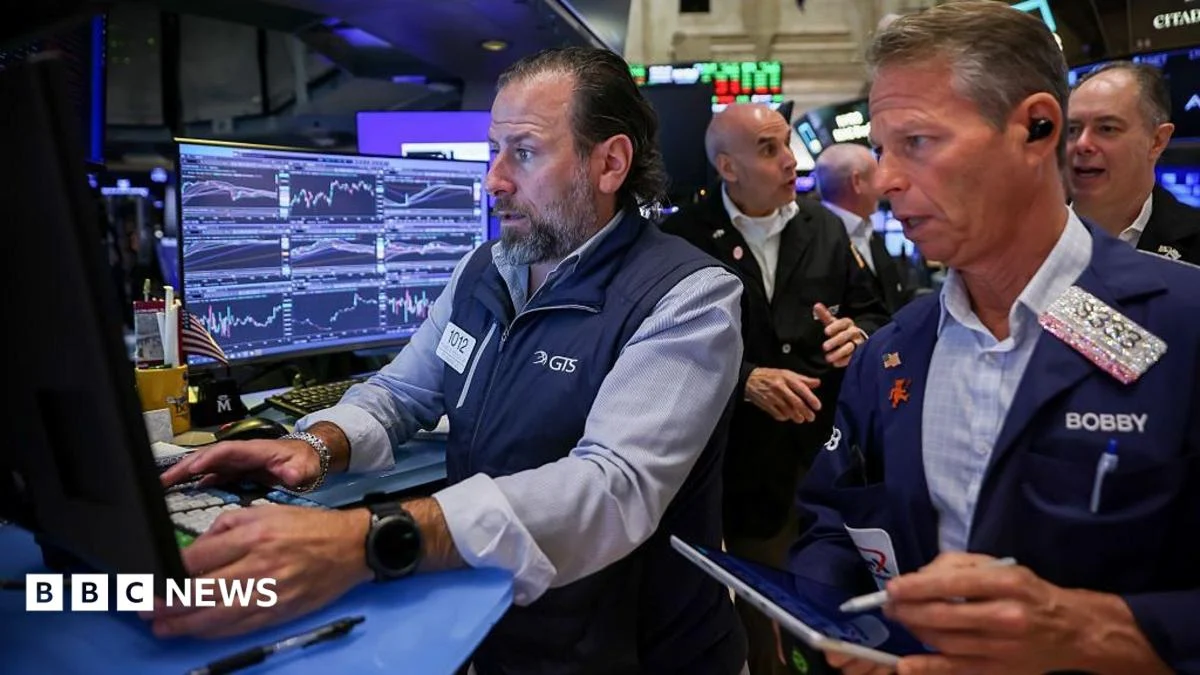
In a seismic shift that sent shockwaves through global financial markets, major technology titans, including artificial intelligence pioneer Nvidia, aerospace and satellite communications leader SpaceX, and electric vehicle and clean energy innovator Tesla, collectively witnessed the evaporation of hundreds of billions of dollars in market capitalization. This dramatic downturn was mirrored by a staggering loss exceeding $2 trillion from the tech-heavy Nasdaq Composite stock index, plunging it into what market watchers define as "correction territory" – a decline of at least 10% from its recent peak. The sell-off, predominantly triggered by the electoral success of Democrats in key data center states and a growing unease about the sustainability of the artificial intelligence boom, underscores a pivotal moment for the technology sector, forcing introspection and a strategic recalibration.
The ripple effect of this market rout was palpable across the entire tech and artificial intelligence landscape. Shares in a broad spectrum of companies, from crucial chip manufacturers to burgeoning AI startups, experienced sharp declines. The primary catalyst for this precipitous fall was the growing apprehension regarding increased regulatory scrutiny. Democratic victories in several pivotal states, where data centers and AI infrastructure are heavily concentrated, signaled a potential shift in policy that could curb the rapid, often unfettered, expansion of these critical technological hubs. This electoral outcome ignited investor fears that the golden age of unchecked growth for the tech industry might be drawing to a close, ushering in an era of more stringent oversight and potential limitations.
According to data compiled by Dow Jones, the Nasdaq Composite index alone shed over 5.5% of its value, a decline that translated to an estimated $2.5 trillion in lost market capitalization. This significant erosion of value was not confined to the tech sector; other major US stock indices also endured substantial losses. The S&P 500 index, a broader measure of the US equity market, closed down by 4.4%, while the Dow Jones Industrial Average, a blue-chip index, reversed its earlier gains to finish the trading day down by more than 3.4%. The severity of the Nasdaq’s decline marked a significant technical turning point, signaling a shift in market sentiment from exuberance to caution.
In the wake of the election results, a candid acknowledgment emerged from some prominent tech leaders: the industry needed to intensify its efforts in marketing and community engagement surrounding data centers and AI. This sentiment was echoed at the Wall Street Journal Tech conference in Napa, California, where industry heavyweights expressed their surprise at the backlash against data center development witnessed during the midterm elections. OpenAI president and co-founder Greg Brockman articulated this sentiment, stating that the industry had been caught off guard by the reaction and that more robust community outreach was imperative. "A lot of our shift over the course of this year has really been to realise that from San Francisco trying to build infrastructure in Texas, Georgia, and other places, you can’t just tweet and say: ‘This is going to be good.’ You need to be in those communities," Brockman remarked. This admission highlighted a disconnect between the technological ambitions of the industry and the concerns of local populations regarding the environmental impact and resource demands of massive data centers.
The electoral campaigns across the United States saw Democrats actively campaigning on platforms aimed at moderating the rapid expansion of data centers and artificial intelligence. This sentiment was reflected in dozens of ballot measures proposed nationwide, many of which sought to impose restrictions on the development of the very infrastructure that powers these advanced technologies. A particularly notable example was the campaign of Texas governor-elect Gina Hinojosa, who made data centers a central issue, pledging a moratorium on new construction in the sector. Texas, a state that has become a significant hub for data center development due to its favorable energy costs and land availability, now faces a potentially altered regulatory landscape.
The immediate impact of these electoral shifts was acutely felt by companies heavily invested in AI data centers. Chipmakers and semiconductor manufacturers, the linchpins of AI innovation, experienced sharp declines in their stock values on Thursday. This sell-off underscored investor anxieties that had been steadily building in the preceding weeks. Nvidia, a company synonymous with AI and a dominant force in the semiconductor market, saw its shares slide by more than 9%, resulting in a staggering loss of over $400 million from its market valuation. This decline, while significant, was not an isolated incident.
Other key players in the semiconductor industry also suffered considerable losses. AMD and Micron, both critical suppliers of computing components, saw their share prices plummet by more than 17%. Intel, a long-standing titan in the chip industry, experienced a 10.3% drop in its stock value. SanDisk, a leading manufacturer of memory cards and storage solutions, faced an even more severe downturn, with its shares plunging by over 22%. The collective pain was starkly illustrated by the performance of the Philadelphia Semiconductor Index, which tracks the fortunes of 30 of the largest companies involved in semiconductor production. This crucial industry benchmark fell by more than 12%, signaling a broad-based concern about the future growth prospects of the sector.
The market tremors extended to the high-profile companies led by Elon Musk. Shares in his aerospace venture SpaceX and his electric vehicle behemoth Tesla also experienced significant plunges. SpaceX’s stock fell by 8%, while Tesla’s shares declined by nearly 11%, collectively wiping out more than $300 million from their combined market value on Thursday alone. Musk’s involvement in political campaigns, including substantial backing of Republican candidates, added another layer of complexity to the narrative. Reports indicated that Musk had spent nearly $450 million supporting Republican campaigns, with at least $45 million directed towards Ken Paxton’s Texas Senate bid. However, the electoral landscape in Texas, often considered a Republican stronghold, experienced a significant shift, with Democrats making notable gains in what was described as a "Democratic tsunami" on Tuesday night. This political alignment, or misalignment, may have contributed to the investor sentiment surrounding Musk’s ventures.
The broader implications of the election results and the subsequent market reaction reverberated across the entire financial ecosystem. Susannah Streeter, Chief Investment Strategist at Wealth Club, characterized the steep sell-off on the Nasdaq and the S&P 500 as a potent force sending shockwaves into other markets. "Fresh panic over the AI trade has hit Wall Street hard," she stated. "Fears that the vast sums poured into AI infrastructure may not deliver the returns investors have been banking on are now colliding with the prospect of a sharp slowdown in data center construction." This dual concern – the potential for an AI bubble to burst and the imposition of regulatory headwinds – created a potent cocktail of fear and uncertainty for investors.
The narrative surrounding the sustainability of the AI boom has been a dominant theme in financial markets for the past year. Many investors have poured significant capital into companies perceived as leaders in the AI revolution, anticipating exponential growth and groundbreaking innovation. However, as the initial euphoria begins to wane, a growing number of analysts and investors are questioning whether the current valuations of some AI-focused companies are justified by their underlying fundamentals and future revenue potential. The prospect of a "bubble" that is due for a correction has been a persistent concern, and the recent market downturn has amplified these fears.
Adding to the industry’s introspection, Meta’s President, Dina Powell McCormick, also emphasized the need for a more proactive approach to public relations and marketing for AI technologies. Speaking at the same WSJ Tech conference, McCormick stressed the imperative for the industry to "double and triple down on telling the story" of AI’s benefits and potential. This sentiment reflects a growing understanding within the tech sector that simply developing groundbreaking technology is no longer sufficient; effective communication and engagement with the public and policymakers are crucial for sustained growth and acceptance.
The challenges facing the tech industry are multifaceted. On one hand, there are the immediate and tangible impacts of regulatory shifts driven by political outcomes. On the other, there are the more abstract but equally potent concerns about market sentiment, investor expectations, and the long-term viability of current growth trajectories. The events of the past week have served as a stark reminder that even the most innovative and seemingly invincible industries are subject to the forces of politics, public opinion, and the cyclical nature of financial markets. As the dust settles from this historic sell-off, technology companies will be forced to confront these challenges head-on, adapt their strategies, and rebuild investor confidence in a rapidly evolving global landscape. The era of unchecked growth may be giving way to a more measured and scrutinized period for the tech giants that have so profoundly shaped the modern world.
