
 By admin
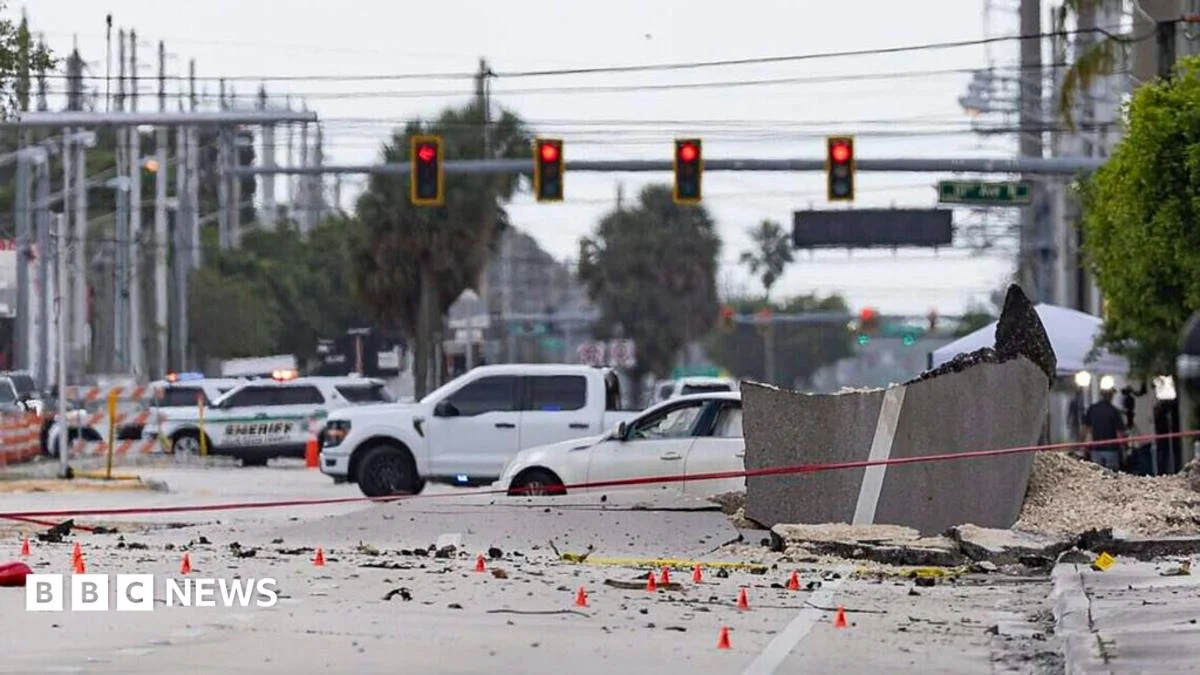
A devastating crash involving a Learjet 60 en route from Austin, Texas, to the Bahamas has sent shockwaves through the aviation community, with investigators now intensely focused on a critical piece of evidence: a missing left elevator. The aircraft plummeted into a multi-lane highway in Palm Beach, Florida, erupting in a catastrophic explosion upon impact. Seven passengers, including a prominent tech entrepreneur and his young family, along with the aircraft’s pilot and co-pilot, perished in the horrific incident.
National Transportation Safety Board (NTSB) officials, led by investigators like Mr. Chapman, have identified the absence of the left elevator as a pivotal clue in their ongoing probe. "Knowing that it was lost is a very important piece of evidence in terms of pointing us towards other things to investigate," Chapman stated, emphasizing the significance of this finding. The core of the current investigation revolves around a critical question: did the loss of the elevator directly cause the aircraft to nosedive, or was the part dislodged due to extreme forces acting upon the aircraft during its rapid descent? This distinction is crucial for understanding the sequence of events leading to the tragedy.
Chapman elaborated on the potential implications of the missing control surface, suggesting that the part of the plane responsible for controlling upward and downward movement may have become "ineffective" at the high speeds the Learjet was reportedly traveling. Aircraft control surfaces, such as elevators, are designed to operate within specific aerodynamic parameters. When an aircraft experiences conditions that exceed these parameters, such as extreme turbulence or rapid acceleration, these surfaces can be subjected to forces beyond their structural limits, potentially leading to separation.
The harrowing final moments of the flight were captured in air traffic control audio recordings, painting a grim picture of a rapidly escalating crisis. In the recordings, a voice from the cockpit can be heard reporting "moderate turbulence" and that the crew was actively "managing the ice." The presence of ice on aircraft wings and control surfaces is a well-documented hazard in aviation. Ice accumulation can disrupt airflow, reducing lift and increasing drag, which in turn can affect the aircraft’s performance and controllability. Pilots are trained to detect and manage icing conditions, often by employing de-icing systems or seeking lower altitudes where temperatures are above freezing.
The audio then reveals the crew reporting that the plane was "picking up precipitation" and that they "need to climb." This indicates a growing concern about atmospheric conditions and a desire to regain a safer altitude. However, tragically, mere moments later, the same voice reported a terrifying descent rate of 10,000 feet (approximately 3,048 meters) per minute. This is an extraordinarily rapid and dangerous rate of descent, far exceeding normal operational parameters.
The situation escalated into an immediate emergency. The pilots, in their final communications, can be heard yelling, "we are in an overspeed condition descending 20,000ft per minute." The mention of an "overspeed condition" suggests that the aircraft was not only descending at an alarming rate but was also exceeding its maximum operating speed. This combination of factors – extreme descent and excessive speed – would create immense aerodynamic stress on the aircraft. The final, chilling utterance from the cockpit was, "we are going to crash into the ground."
The NTSB is meticulously investigating the role that weather played in this catastrophic event. The preliminary reports mentioning turbulence, icing, and precipitation underscore the potential for severe weather to have been a significant contributing factor. Understanding the precise meteorological conditions at the time and location of the crash is paramount. This would involve analyzing radar data, pilot reports, and any available weather forecasts for the region.
Accessing and examining the wreckage has presented significant challenges for investigators. The impact of the Learjet created a massive crater on the highway, severely damaging the aircraft’s structure and scattering debris over a wide area. Mr. Chapman acknowledged on Tuesday that "the force of the impact severely damaged the wreckage," complicating the meticulous process of reconstructing the accident sequence. The thorough analysis of wreckage is critical for identifying structural failures, engine performance, and the condition of control systems prior to impact.
The seven passengers who tragically lost their lives have been identified in a joint statement: tech entrepreneur Adam Robinson, his wife Helen Sharp, and their two young children, four-year-old Emma and two-year-old Charlie. The statement also named family friends Rachael Reed and Charmi Fehr, along with Anita Maria Cetina, a nanny. The loss of an entire family, including young children, is a particularly heartbreaking aspect of this tragedy, underscoring the devastating human cost of aviation accidents.
The pilot of the ill-fated Learjet has been identified in media reports as 55-year-old Jeffrey Gregory. The co-pilot was reportedly Nathalia Filgueiras, who, at the young age of 20, had already earned her pilot’s license at 17, demonstrating an early passion and commitment to aviation. The experience and proficiency of the flight crew are always a factor in accident investigations, though in this instance, the extreme circumstances appear to have overwhelmed their capabilities.
The investigation into this tragic crash will undoubtedly delve into a multitude of factors. The potential failure or separation of the left elevator raises critical questions about the structural integrity of the aircraft, the maintenance history of the aircraft, and the potential for manufacturing defects. The NTSB will meticulously examine the aircraft’s maintenance logs, production records, and conduct thorough metallurgical analysis of any recovered elevator components.
Furthermore, the flight data recorder (FDR) and cockpit voice recorder (CVR), often referred to as the "black boxes," will be central to the investigation. These devices record critical flight parameters, pilot communications, and engine performance, providing invaluable insights into the events leading up to the crash. The information contained within these recorders will be meticulously analyzed to understand the aircraft’s behavior, the crew’s actions, and the environmental conditions they encountered.
The role of human factors will also be carefully considered. This includes assessing the crew’s decision-making processes, their adherence to standard operating procedures, and their response to the rapidly deteriorating situation. While the audio recordings suggest the crew was attempting to manage the crisis, understanding the precise sequence of their actions and the rationale behind them is vital.
The investigation will also explore the possibility of a cascading failure, where one event triggers a series of subsequent failures. For instance, if the initial turbulence or icing led to a loss of control, the pilots’ attempts to regain control could have imposed extreme loads on the airframe, potentially leading to the separation of the elevator. Conversely, if the elevator separated first, the resulting loss of control authority could have led to the extreme descent and overspeed condition.
The NTSB’s commitment to a thorough and impartial investigation is paramount. Their findings will not only seek to provide answers for the families of the victims but will also contribute to enhancing aviation safety. By identifying the root causes of this accident, recommendations can be made to prevent similar tragedies from occurring in the future. This might involve updates to aircraft design standards, improvements in pilot training for extreme weather conditions, or enhanced air traffic control procedures for managing high-risk situations.
The impact of this crash extends beyond the immediate loss of life. It serves as a stark reminder of the inherent risks associated with aviation and the constant need for vigilance, rigorous safety protocols, and continuous improvement within the industry. As the investigation unfolds, the world will be watching for the crucial details that will shed light on the final, desperate moments of this ill-fated flight. The missing elevator, a seemingly small piece of metal, now holds the key to understanding one of aviation’s most tragic recent accidents.
