
 By Rifan Muazin
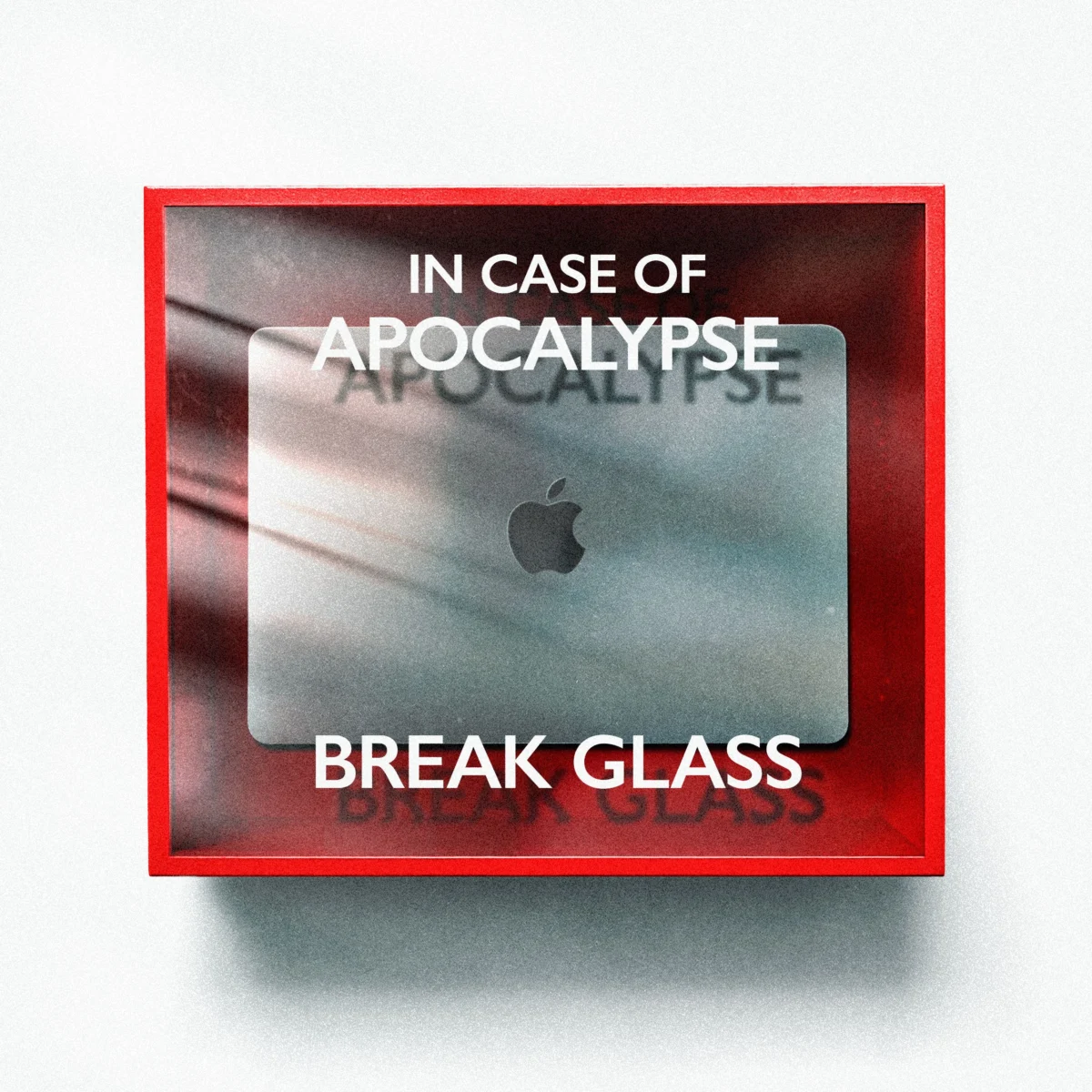
The modern human experience is increasingly defined by a profound, yet often invisible, tether to a global network of servers, satellites, and fiber-optic cables. For most, this dependency only becomes visible during the rare moments when the connection breaks. Whether it is the frustration of a stalled subway car without a cellular signal or the more systemic anxiety of a trans-Atlantic flight stripped of its Wi-Fi, the realization is the same: without our digital interfaces, we feel fundamentally incapacitated. This vulnerability was thrust into the national spotlight following a series of high-profile technological failures that paralyzed critical infrastructure across the United States. From a catastrophic disruption of Microsoft’s core systems—affecting everything from Outlook to Teams—to a nationwide grounding of flights by the Federal Aviation Administration (FAA) citing "extraordinary circumstances," the message was clear: our digital foundation is far more fragile than we care to admit.
As these outages rippled through the economy, affecting financial giants like Charles Schwab and essential services like Apple’s iCloud, a shift began to occur in the darker corners of the internet. On platforms like Reddit, the "prepper" community—traditionally associated with stockpiling canned goods, rotating water supplies, and maintaining backup generators—has begun to pivot. A new subculture of "digital preppers" is emerging, focusing less on the physical apocalypse and more on the "AI-apocalypse" or a prolonged "grid-down" scenario. For these individuals, survival is not just about calories and shelter; it is about the preservation and accessibility of information. "I’m getting serious about my preps with all the cyber attacks going on," one user recently posted to the r/preppers subreddit, a community of nearly 400,000 members. "I work for a security company so I get a front-row seat to a lot of the chaos. I’m specifically prepping for a prolonged loss of power."
This anxiety is driving a surge in interest for tools that bridge the gap between high-tech convenience and low-tech reliability. One such device gaining significant traction is Nomad, a pocket-sized, self-contained server designed to function entirely offline. Created by Jackson Studner, a student at Millersville University of Pennsylvania, Nomad represents a grassroots response to corporate centralization. Studner, who describes himself not as a CEO or a startup founder but as a student who "enjoys building useful things," originally conceived the device to solve a common annoyance: the lack of entertainment during camping trips or cross-country drives. When he and his friends would hit a "dead zone" in the wilderness, their smartphones became little more than expensive paperweights.
Nomad was the solution—a minuscule server that carries its own Wi-Fi signal and hosts a massive library of films, television shows, the entirety of Wikipedia, and detailed offline maps. Since the recent string of tech outages, Studner has seen a massive spike in traffic to his website. "I really like the reliability aspect," Studner explains. "I like to own my stuff. It’s kind of that simple." Beyond mere entertainment, Studner has expanded the device’s capabilities to include sophisticated navigation tools that do not require a GPS or cellular handshake. The system can calculate walking times, provide turn-by-turn road directions, and offer logistical data that would be vital in a scenario where Google Maps is no longer reachable.
The rise of the digital prepper movement is also fueled by the democratization of Artificial Intelligence. While mainstream AI models like ChatGPT or Claude require massive server farms and constant internet access, a new generation of "Survival LLMs" (Large Language Models) is being developed to run on local hardware. These emergency libraries can be downloaded to a standard laptop, providing a conversational interface that can dispense life-saving advice without a web connection. Projects like lastbook.org offer comprehensive how-to videos and text on everything from purifying water to basic surgical procedures. Similarly, Survival LLM integrates data from the Centers for Disease Control and Prevention (CDC) and the Federal Emergency Management Agency (FEMA), allowing users to query a local database on how to handle medical emergencies or chemical exposures when the authorities are unreachable.
Perhaps the most ambitious of these projects is "Project Nomad" (distinct from Studner’s device), helmed by Chris Sherwood, a prominent tech educator known for his YouTube channel, Crosstalk Solutions. Sherwood is a leader in the "homelab" movement—a community of enthusiasts who build enterprise-grade computing environments in their own homes to reclaim control over their data from "the cloud." The response to Project Nomad has been nothing short of overwhelming. On GitHub, the project has garnered over 40,000 "stars," a metric indicating high interest and endorsement from the developer community. Sherwood reports that his website now receives over 200,000 visitors per month, many of whom are looking for ways to make their digital lives disaster-proof.
Sherwood’s motivation for Project Nomad was not born out of doomsday paranoia, but rather firsthand experience with the fragility of modern life. He previously worked with the Information Technology Disaster Resource Center (ITDRC), a non-profit organization that deploys technical volunteers to disaster zones to restore communications. "I had the opportunity to go on deployment with [ITDRC] when Hurricane Ian came through, and I saw firsthand all these people that were offline," Sherwood said. "It was a disaster. Getting people back online was almost as important as the food and water supplies that were getting set up to help with the recovery."
In the wake of a Category 5 hurricane, the loss of the internet is not just an inconvenience; it is a barrier to rescue. Families cannot check in on loved ones, emergency services cannot coordinate via digital dispatch, and individuals cannot access banking records to pay for supplies. This realization—that connectivity is a primary human need—has shifted the perception of digital prepping from a niche hobby to a pragmatic necessity. Even Studner, who started Nomad as a project for road trips, has found himself influenced by the prepper community he now serves. "It’s for peace of mind," he admits. "I have my little go-bag. I’m not too, too worried about it, but I like to know that if there ever was a real problem, I’d be okay in that situation."
The broader implications of this movement point to a growing skepticism of "Software as a Service" (SaaS) and the "everything-in-the-cloud" model that has dominated the last two decades of tech development. For years, consumers were told that local storage was obsolete and that the cloud offered superior security and redundancy. However, the recent Microsoft and FAA outages demonstrated that the cloud also creates "single points of failure" on a global scale. If a single software update from a security firm like CrowdStrike can blue-screen millions of computers simultaneously, the "redundancy" of the cloud becomes a liability rather than an asset.
Digital prepping, therefore, is an act of decentralization. By maintaining local copies of Wikipedia, open-source maps (like OpenStreetMap), and survival manuals, individuals are creating a distributed backup of human knowledge. This is a digital version of the Global Seed Vault in Svalbard; it is an insurance policy against a "black swan" event that could temporarily or permanently disable the global web. Analysts suggest that as geopolitical tensions rise and the threat of state-sponsored cyber warfare increases, the "homelab" and offline-server markets will likely continue to expand.
Furthermore, the integration of AI into these offline systems represents a significant leap in utility. A static PDF manual on how to build a fire is useful, but an offline LLM that can troubleshoot specific problems—such as "why won’t my damp wood catch fire using a magnesium striker?"—provides a level of interactive assistance that was previously impossible without an internet connection. This "edge computing" approach ensures that the benefits of the AI revolution are not gatekept by the companies that own the biggest servers.
As we move further into the decade, the line between "prepper" and "prudent citizen" is blurring. The recent tech outages served as a "shot across the bow," a warning that the systems we rely on for our livelihoods, our safety, and our social connections are remarkably thin. While most people may not yet be building their own offline servers or downloading the entirety of Wikipedia, the success of creators like Jackson Studner and Chris Sherwood suggests a growing appetite for digital sovereignty. In an era where a single line of corrupted code can ground a nation’s air fleet, having a "Nomad" in your pocket might just be the most rational investment one can make. The digital prepper is not waiting for the end of the world; they are simply making sure they can navigate the world we already live in, even when the lights go out and the screens go dark.
