
 By Titik Puspa
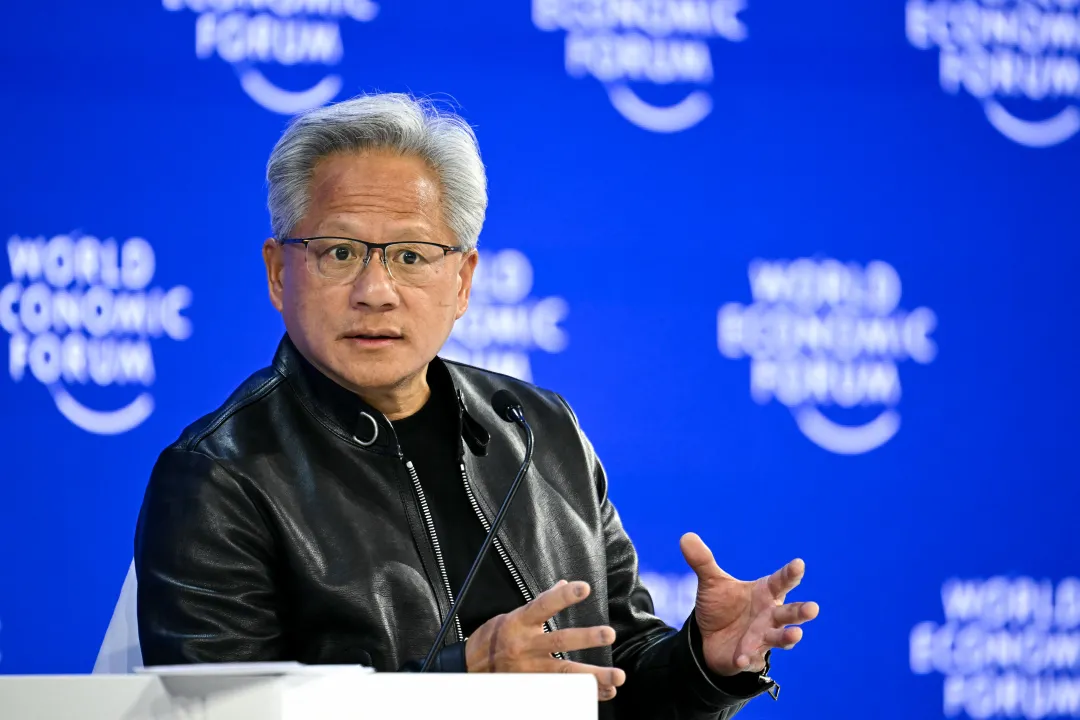
The past week has presented a starkly bifurcated view of Nvidia, a tech titan whose trajectory is currently defined by two powerful, yet seemingly contradictory, narratives. On one hand, the company has delivered an exceptionally strong earnings report, projecting continued revenue growth and reassuring investors of its current leadership’s capabilities. On the other hand, a vocal contingent of prominent tech figures, including industry heavyweights like Elon Musk, are actively campaigning for the return of former CEO Jensen Huang, even circulating petitions and highlighting Huang’s own stated readiness to step back into the role. This "tale of two Nvidias," as described by TechCrunch’s Equity podcast hosts, paints a picture of a company navigating immense financial success while simultaneously grappling with internal and external pressures surrounding its leadership.
The latest episode of TechCrunch’s Equity podcast, featuring Kirsten Korosec, Tim De Chant, and Anthony Ha, delved into this fascinating dichotomy. The discussion underscored the contrasting messages emanating from Nvidia’s current executive team and the burgeoning movement advocating for Huang’s comeback. While the company’s leadership, spearheaded by interim CEO Colette Kress, assured stakeholders that "we’ve got this," a parallel narrative unfolded with influential voices like Musk publicly advocating for Huang’s reinstatement, likening his potential ouster to benching a legendary athlete like Michael Jordan. This external pressure is amplified by Nvidia’s recent stock performance, which, according to the podcast hosts, suggests that Wall Street may not be entirely convinced by the current assurances.
A significant development contributing to the complex geopolitical and business landscape surrounding Nvidia is its decision to cease sales of its high-performance H200 chips in China. This move, directly communicated by interim CEO Colette Kress, aligns with the broader strategic tightening of export controls by the Trump administration, a trend that has continued and intensified under the Biden administration. The core issue revolves around preventing advanced AI chips from reaching China through indirect channels. Previously, data centers established in neighboring countries like Malaysia served as conduits, allowing Chinese companies to remotely access these powerful processors. Nvidia’s public declaration to shut down this loophole signifies a proactive response to these escalating restrictions, though the long-term implications remain to be seen, with speculation about potential shifts in this policy perhaps in the first half of 2027.
The intricate nature of these export controls and their impact on Nvidia’s business was a key point of discussion. Tim De Chant highlighted the historical context, noting that export restrictions on Nvidia’s chips to China were significantly more stringent during the latter part of the first Trump administration and persisted through the Biden administration. He suggested that a recent shift or reinterpretation of these regulations might have previously opened avenues for Nvidia’s sales in the country, making the current rollback even more significant.
Anthony Ha further elaborated on the potential economic ramifications of Nvidia’s China strategy, revealing that critics estimate as much as 20% of Nvidia’s business could be linked to China. While these figures may not be directly reflected in official financial statements due to the indirect sales channels, the implication is substantial. If Nvidia is indeed serious about enforcing these restrictions, the redirection of chips through intermediary nations could represent a considerable blow to the company’s bottom line, a factor that investors are likely scrutinizing closely.
Despite these potential headwinds, Nvidia’s financial performance in the latest reporting period was nothing short of stellar. Kirsten Korosec emphasized that Nvidia’s bottom line remains robust, with earnings guidance exceeding expectations and a healthy, long-term sales pipeline. This financial strength forms the bedrock of the current leadership’s confidence. However, this impressive financial report unfolded against a backdrop of intense social media discourse and discussions at major tech conferences like the Dealbook Summit. At these events, highly influential figures in the tech world, including Elon Musk, weighed in on the leadership situation, with Jensen Huang himself acknowledging his willingness to return. This juxtaposition of strong financial results and external calls for leadership change creates the "tale of two Nvidias," where the company’s current executives project an image of control and competence, while a powerful external force advocates for a return to a perceived golden era under Huang.
Anthony Ha posited that proponents of Huang’s return might view the current quarter as the last of the "good times" under his leadership, suggesting that the true test of Nvidia’s future performance without him is yet to be seen. He pointed out the apparent contradiction in Nvidia’s public statements: a week and a half prior to the earnings report, the company expressed unwavering confidence in Huang’s leadership, only to firmly reject the calls for his return following the positive financial results. This shifting public stance, Ha suggested, could be influenced by various pressures, and while a return may seem unlikely now, it’s not an impossibility that could be entirely ruled out in the future.
The possibility of Jensen Huang’s return, however remote it may currently seem, is a subject of ongoing speculation. Kirsten Korosec echoed the sentiment of "never say never," acknowledging the dynamic nature of business and leadership. Tim De Chant, however, suggested that Nvidia’s swift and decisive rejection of the petitions calling for Huang’s return might indicate deeper machinations behind the scenes. This suggests that the situation is more nuanced than it appears on the surface, warranting close observation in the coming weeks.
Kirsten Korosec further theorized that the Nvidia board is likely striving to maintain control of the decision-making process, aiming to avoid being coerced into a leadership change by influential figures like Elon Musk. Even if a scenario arises where Jensen Huang were to return – a prospect she deemed "pretty unlikely," especially given the ongoing investigations into alleged secret chip sales to China – the board would want to project an image of deliberate control rather than deference to external pressure from tech billionaires. This approach is likely informed by a desire to avoid the chaotic leadership transitions that have recently plagued other major tech companies, such as OpenAI.
Tim De Chant drew a parallel to the events at OpenAI, suggesting that Nvidia’s board would be keen to avoid repeating similar leadership turmoil. The dynamic at Nvidia, being a publicly traded company, adds another layer of complexity. Anthony Ha, while not an expert in corporate governance, speculated that it would be considerably more challenging for Jensen Huang to orchestrate a return and immediately depose board members in a public company setting compared to a private entity. This suggests that any potential leadership transition at Nvidia would likely be a more measured and deliberative process, guided by shareholder interests and corporate governance principles, rather than a swift, executive-driven maneuver. The interplay between Nvidia’s impressive financial achievements, the geopolitical complexities of its global operations, and the persistent calls for a leadership change under a revered former CEO creates a captivating narrative that is far from over.
